Showing posts with label François I. Show all posts

Saturday, May 14, 2022

Party Central: L'Art de la Fête à la cour des Valois


Renaissance courtiers loved a good party. Fêtes, or celebrations, at court lasted for days and included any number of events: lavish banquets, jousts and mock battles, dramatic spectacles, elaborate costume balls. Festive gatherings served a multitude of purposes: impressing visiting dignitaries, marking births and marriages, commemorating important victories, displaying the skills and ingenuity of court artists--and, of course, manifesting the munificent generosity of the king.

Above and beyond their political purposes, parties were just plain fun. 

Photo credit: Cleveland Museum of Art 

Despite the frequency and extravagance of Renaissance court festivals, however, they are difficult to document. Parties are, after all, ephemeral things: the food is consumed, the decorations discarded, the music fades away. Before the invention of photography, it was impossible to capture such events in real time. Modern historians must rely on written memories and rare artifacts as they attempt to reconstruct the look, activity, and tenor of celebrations at the Renaissance court.

A current exhibition at the Château of Fontainebleau, the primary residence of François I and a favorite of his son Henri II and grandson Henri III, attempts to recreate the Renaissance celebration for modern-day visitors. L'Art de la fête à la cour des Valois, which runs through July 4, presents over one hundred works, many lent from international collections, in an attempt to capture these festivals in all their splendor and document the extensive behind-the-scenes preparation that glory required.

Organized by curators Oriane Beaufils and Vincent Droguet, the exhibit includes paintings, tapestries, parade armor, costume sketches and commemorative pamphlets from celebrations across several reigns. From the most solemn to the most extravagant, Renaissance celebrations were living, moving, breathing works of art that sprouted from the ingenuity of some of the greatest artists of the time: Rosso Fiorentino, Francesco Primaticcio, Robert Delorme, Antoine Caron, and poet Pierre de Ronsard. The collected works at Fontainebleau resurrect the decorations, program, and costumes of some of the Valois court's most magnificent events.

Masquerade balls were central to Valois celebrations. Sketches of costumes designed by court artist Primaticcio for events like the festivities surrounding Emperor Charles V's state visit to Fontainebleau in 1539 (I blogged about that here) survive to this day. 

Photo credit: Musée du Louvre

Photo credit: Musée du Louvre

In order to recreate the feel of the fête for modern visitors, the Château engaged the costume workshop of nearby Disneyland Paris to render two of Primaticcio's sketches into life-sized garments. These faithful, fanciful costumes stand on display in the Château's ballroom, site of so many Valois parties. If you can't make it to the salle de bal in person, you can view the recreated costumes here, courtesy of La République de Seine-et-Marne.

Scribeaccroupi.fr, a French art history site, has an excellent written preview of the exposition, as well as an engaging short film animated by Oriane Beaufils herself. Her enthusiasm for the subject is palpable.

As much as I'd love to view the exposition in person, I must content myself with the printed catalogue, which I expect to arrive next week. I'll share about it soon. In the meantime....

Party on!

(You can find more about the exhibit on Twitter under the hashtags #PartyLikeaValois and #FeteAFontainebleau.)


Wednesday, October 6, 2021

Diane de Poitiers: Big Stars on the Small Screen

Fans of sixteenth century France, rejoice! A new miniseries about Diane de Poitiers, the mistress of King Henri II, is currently under production for France 2. Filmed on location at the Château de Septmonts near Soissons and various châteaux of the Loire, the cast features superstars of the French silver screen.

Photo credit: Georges Biard

Isabelle Adjani, who played Marguerite de Valois in the 1994 film La Reine Margot, stars in the title role as Diane de Poitiers.

Photo credit: Siebbi

Gérard Depardieu, a fixture of French historical drama (Germinal, Vatel, Le Retour de Martin Guerre) plays the seer Nostredamus.

Photo credit: Georges Biard

Samuel Labarthe (De Gaulle, La Forêt) portrays François I;

Photo credit: L.helas

Hugo Becker (Leonardo, Osmosis), François's son Henri II.

Photo credit: Georges Biard

Virginie Ledoyen (Les Misérables, Notre Dame) plays the part of François's mistress, Anne de Pisseleu, Duchesse d'Étampes.

Photo credit: Georges Biard

French rapper and actor JoeyStarr participates as the comte de Kervannes;

Photo credit: Georges Biard

Guillaume Gallienne (Cézanne et moi) has been cast as the famous surgeon Ambroise Paré.

Didier Ducoin, author of major television movies including Les Misérables, The Count of Monte Cristo, Balzac, and Napoléon, has penned the screenplay. Josée Dayan, of blockbuster TV series Dix Pour Cent fame, directs the miniseries. Anne Holmes, director of French fiction at France Télévisions, sees Diane de Poitiers as a "free, modern, feminist woman" who "incarnates certain of today's values." Although knowledge of the details of Diane's life remains limited, power, love, drama and jealousy--elements TV audiences gobble up--combined to produce her "exceptional destiny." The story of Diane's decades-long hold over the much younger king and her rivalry with his wily wife Catherine de Medici is sure to be a crowd pleaser.

Filming runs through October, with broadcast planned for next year. Let's hope a streaming service quickly picks it up for diffusion to English-speaking audiences.

(Information for this post comes from Le Point, "Isabelle Adjani dans la peau de Diane de Poitiers.")


Tuesday, October 20, 2020

Why Read Historical Fiction Set in Sixteenth Century France? Reason #8

The next reason I'll propose for reading historical fiction set in sixteenth century France is a corollary of Reason #7--FRANCE, but one that merits its own mention...

Reason #8--CHATEAUX

France's scenic countryside is dotted with thousands of castles. They range from ruined medieval fortresses

Château Galliard

to elaborate nineteenth century wine estates

Photo credit

to Renaissance royal palaces.


It has always been impossible for me to see these buildings and not immediately start imagining the intrigue and drama that took place within their walls--precisely what historical fiction set during the sixteenth century aims to do! So many important historical events and struggles took place at these locations, they readily lend themselves as fantastic settings for novels. Let's travel to some of the most important Renaissance châteaux and examine what happened there.

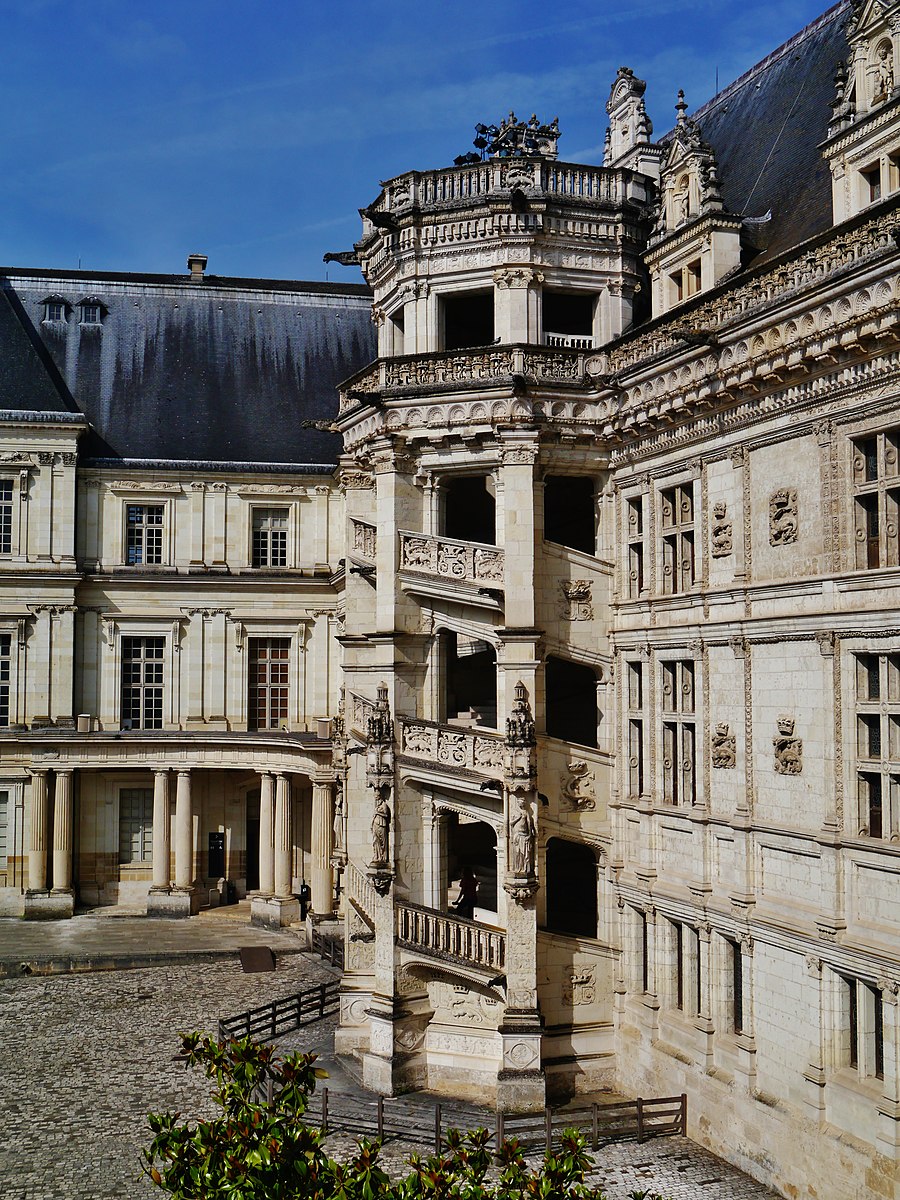
Château de BLOIS

Photo credit: Zairon

In 1515, François I and his wife Claude ascended to the throne. At Claude's urging, François began to refurbish the château de Blois, which had been used by French kings since the 13th century. He built a new wing with a spiral staircase at its center and consolidated his prodigious collection of books in the library. However, after Claude, mother of his seven children, died at the age of 24, François neglected Blois in favor of other palaces. He moved his library to Fontainebleau and seldom returned to Blois. Perhaps memories of his years there with Claude, of whom he had been fond, made François uncomfortable? Later in the century, Henri III resided at Blois with his mother, Catherine de Medici, during the chaos of the Wars of Religion. In December 1588, Henri summoned to Blois the Duc de Guise, a powerful and charismatic Catholic leader who nurtured ambitions for the throne. Once arrived, the Duc was assassinated by the king's body guard as the king looked on. How is that for an inciting incident, or a novel's climax?

Château d'AMBOISE


François I was raised at Amboise, the first French château to be "Italianized." Renovations had begun in the late 1490's under Charles VIII; François, crowned king in 1515, further embellished the buildings. At his invitation, Leonardo Da Vinci took up residence in nearby Clos Lucé from 1516-1519 and contributed to the transformation of Amboise. It was on the door of François's chamber at Amboise that Antoine Marcaut posted a list of the abuses of the "Papal Mass" during the Affair of the Placards in October 1534, outraging the king and disrupting his process of moderate ecclesiastic reform. In 1560, a Huguenot plot dubbed "The Amboise Conspiracy" attempted to kidnap the young king, François II, to remove him from the influence of the powerful Catholic uncles of his wife, Mary Queen of Scots. When the plot failed, the conspirators were arrested and hung from the château's balconies as an example. Lots of material for historical novels in the annals of this château!


Chambord is truly a Renaissance château--it was built from scratch on order of François I, beginning in 1519. Chambord, with its 440 rooms, 282 fireplaces, and 84 staircases, was never intended to serve as a primary residence, but as a symbol of François's power and aesthetic achievements. The king only slept there a total fifty days, but used Chambord to entertain his favorites and dazzle his rivals. Leonardo da Vinci was intimately involved in its design and construction; his artistry produced the château's famous double helix staircase, the center-plan design of its keep, and its double-pit evacuation system. The only historical event of note that occurred at Chambord during the sixteenth century was the visit of Charles V of Spain in December 1539, a stop on his elaborate state visit to France. I've always thought Chambord would be an excellent setting for some sort of time-slip or historical mystery novel.


Photo credit: Tim Sackton

The Château de Chenonceaux, with its arched gallery that stretches across the Cher river (see the third photo above), is one of the most readily recognized châteaux in France. It was also the location of intense passions--love, envy, and revenge. Between 1515-1521, nobleman Thomas Bohier razed the medieval fortress on the site and built a graceful new residence, where he entertained the king on several occasions. In 1535, François I seized the property in payment for outstanding debts. After he died, his son Henri II gifted the palace to his mistress, Diane de Poitiers, who built an arched bridge to the far bank and added extensive gardens. Henri's wife, Catherine de Médici, long envied the property; as soon as Henri died in 1559, she forced Diane to exchange Chenonceaux for the Château de Chaumont.

Chaumont. Photo credit: Tim Tim

Chenonceaux became Catherine's favorite residence, the one from which she administered the kingdom as Regent during her young son's reign. She built the enclosed gallery atop the bridge in 1577 and hosted elaborate parties and spectacles at the property. When Catherine died in 1589, she left the château to her daughter-in-law, wife of Henri III, who lived there in mourning for eleven years after Henri was assassinated months after his mother's death. From the love trysts of Henri II and Diane, to the showdown between Diane and the widowed Catherine, to Catherine's machinations behind the throne, to the haunted widowhood of Louise de Lorraine, the stones of Chenonceaux have witnessed their fair share of riveting intrigue.


Finally, we come to the Château de Fontainebleau, my personal favorite. Fontainebleau played a central role in history during the sixteenth century and beyond. François always considered Fontainebleau his true home. It was this château that he transformed into the showplace of the French Renaissance, building and embellishing the structure with the help of Italian artists he invited to live and work there. François housed his art collection at Fontainebleau, along with the massive library (the backbone of the Bibliothèque Nationale) he transferred from Blois. Fontainebleau seethed with competition, as artists vied for commissions, courtiers for preference, and lovers for favor. François hosted his longtime enemy Charles V of Spain at Fontainebleau in December 1539 in an attempt to shore up their tottering truce. Against a lavish backdrop of banquets and balls, pageants and hunts, the two monarchs grappled for ascendancy. The perfect setting for a historical novel, one that pits François's beloved ideal of honor against the grittier realities of gaining, and keeping, power.

Add to these amazing châteaux teeming cities like Paris and Lyon and one can claim without doubt that the sixteenth century offers an exciting array of settings for gripping historical fiction.

**********

Be sure to circle back and read Reasons #1-#7 for reading historical fiction set in sixteenth century France: ESCAPE, RELEVANCE, DRAMA, EMOTION, GLITZHISTORY, and FRANCE.


Monday, September 28, 2020

Why Read Historical Fiction Set in Sixteenth Century France? Reason #3

Still looking for reasons to read or write historical fiction set in Renaissance France? Here's one sure to convince you.

Reason #3: DRAMA

There's something about Renaissance dynasty dramas that strongly appeals to modern television audiences. From 2007-2010, THE TUDORS ruled.

Then, from 2011-2013, THE BORGIAS stole the limelight.


Even the Medici have had their day (2016-2019).

Now it's time for THE VALOIS, the dynasty that ruled France throughout the sixteenth century. 

The Valois (or more properly, the Valois-Angoulêmes) ruled France from 1515-1589. François I assumed the throne in 1515 and ruled for 32 years, until dying of illness in 1547. His son, Henri II, wed to Catherine de Medici, ruled from 1547-1559. Three of Henri's sons, François II (1559-60), Charles IX (1560-74), and Henri III (1574-1589), ruled in quick succession after him, all with the aid of their shrewd and crafty mother. The reigns of any of these rulers provides plenty of dramatic fodder for novels and film.

François I was only three years younger than England's infamous Henry VIII. The two kings were rivals their entire lives and even died the same year. Thanks to his obsessive wife-swapping, Henry is better known to modern audiences, but drama of all types riddled François's long reign. Highlights include: 

meeting with Henry VIII at the lavish event known as the Field of Cloth of Gold in 1520, where each monarch strove to out-dazzle the other with magnificent tents, clothes, feasts, jousts and games; 


being captured at the Battle of Pavia in 1525 by the troops of his archenemy Charles V of Spain, who held him prisoner at Madrid for a year until François surrendered Milan, agreed to marry Charles's sister, and handed over his two young sons, François and Henri, in exchange for his freedom;
inviting Leonardo DaVinci, Rosso Fiorentino, Benvenuto Cellini, Francesco Primaticcio and innumerable other Italian artists to France to transform the kingdom's crumbling fortresses into glittering palaces brimming with art;


enjoying the attentions of beautiful women willing to risk the wrath of his official mistress, the Duchesse d'Étampes, who schemed her way into François's heart, bed, and council chamber;


and forging an alliance with Suleiman the Magnificent and the Ottoman Empire at the expense of his ties with the Holy Roman Empire.


François's son, Henri II, ruled for twelve years after his father's and his older brother's deaths. Having spent four years (from the ages of 7 to 11) in captivity in Spain as a hostage in his father's place, he suffered psychological trauma that caused plenty of drama in his later life. At fourteen, Henri married Catherine de Medici, daughter of a leading family in Florence, who would eventually become a powerful figure in her own right. After worrisome years of no issue, Henri and Catherine eventually had ten children, three of whom took the throne of France. Drama during Henri's life includes:


carrying on a lifelong romantic affair with Diane de Poitiers, 20 years his senior, a relationship that turned physical when he was only 15;


allowing Diane and the powerful Grand Constable, Anne de Montmorency, to estrange him ever further from his father and factionalize the court;


weathering the power struggles between Catherine, Diane, and François's mistress, the Duchesse d'Étampes;


dying unexpectedly at the age of 40 in a jousting accident, when a lance splinter penetrated his eye and lodged in his brain.


François II, Henri's eldest son, ruled for only one year before dying in 1560. He was married to Mary, Queen of Scots, who had been raised at the French court and returned to Scotland upon François's death. (Mary's time in France was the subject of the TV series REIGN, which aired from 2013-2017 and was geared to a Young Adult audience.) François's short reign was marked by power struggles between his mother, the powerful Catholic Guise family, and the rising Huguenot faction, headed by the Prince de Condé.


Charles IX was only ten when he took the throne after François II passed. Because of his young age, Catherine de Medici served as regent. She wielded sweeping powers, especially during the early portion of Charles's 14-year reign, although she continued to influence his decisions throughout. Charles's reign provided plenty of political and personal drama, including


a two-year grand tour of France;


the outbreak of religious war between Catholics and Protestants in 1562, a struggle that would continue until the end of the century;


and the massacre of Protestants gathered for the wedding of Charles's sister Marguerite to the Huguenot King of Navarre in August 1572, known as the St. Bartholomew's Day Massacre.


Henri III was the last ruler of the Valois-Angoulême dynasty. Ruling Poland when his brother Charles died of tuberculosis, he returned to take the French throne in 1574. Henri's reign was a complicated one, with continuing religious war compounded by a war of succession, once it became clear that he would die without an heir. 


Courtiers and mistresses jockeyed for favor at his magnificent, highly stylized court.


He was, for a time, considered as a possible husband for Elizabeth I of England.


He was assassinated by a fanatical, knife-wielding Dominican friar who killed him while pretending to deliver important papers. Henri III's untimely death ended the rule of the Valois dynasty. The throne passed to another Henri, the Protestant King of Navarre, who converted to Catholicism and reigned as the first of the Bourbon kings.

Drama defined the course of eight decades of Valois-Angoulême hegemony: imprisonment, massacres, mistresses, murders, glory, vice, and war--and this only includes what happened at court. Take any decade of the sixteenth century in France and you'll find intrigue to rival that of the Tudors, the Borgias, and the Medici--intrigue sure to keep readers turning pages and viewers glued to their streams. It's time to let the Valois take the stage.

**********
So far, we've examined three reasons to champion sixteenth century historical fiction: ESCAPE, RELEVANCE, and DRAMA. We'll break our examination tomorrow and Wednesday for a book review and an author interview, then pick up the thread on Friday. Happy reading!


Monday, September 21, 2020

Festivals, Balls, and Hunts in Honor of Charles V

On this day in 1558, Charles V, the Holy Roman Emperor and King François I's longtime enemy, died in Spain. The official social media streams of the Château of Fontainebleau (Twitter: @CFontainebleau, Facebook: Château de Fontainebleau) are commemorating Charles Quint's passing by recalling his visit to France in 1539. The French feed reads: "In December 1539, he arrives at the Golden Gate adorned with the emblem of the King of the Renaissance! Festivals, balls and hunts follow one after the other in this dwelling decorated by the brushes of the greatest Italian artists." The feed includes lovely photos of the Porte Dorée and François's salamander emblem. You can learn about the history and architecture of the château, as well as details about Charles Quint's visit, at the Château website


Tuesday, April 24, 2018

Theft of a Queen's Heart


On Friday, April 13, 2018, a reliquary containing the heart of Anne de Bretagne, queen consort of France, was stolen from the Dobrée Museum in Nantes. Four masked intruders forced their way into the museum, smashed the glass case with an ax, and absconded with the suspended golden reliquary, dating from 1514, along with a statue and dozens of gold coins. Thankfully, only a week later, several of the perpetrators were apprehended and the items recovered in good condition. The reliquary, worth millions of Euros, holds inestimable sentimental and historical importance not only to the citizens of the Nantais region, but to the entire nation.


Anne de Bretagne (1477-1514) is the only woman to have been queen consort of France twice. As heir to the duchy of Brittany, she spent her entire life fighting to preserve the western duchy's independence from the territorial aspirations of the kingdom of France. Forced to marry King Charles VIII of France in 1491 after defeat in battle, her marriage contract expressly stated that the marriage was concluded to ensure peace between the two regions. After Charles died of an accident in 1498, Anne took personal charge of the administration of Brittany. Pressured to marry Charles's successor Louis XII, who was already married, Anne agreed on the unlikely condition that Louis receive an annulment from Rome within one year. Unfortunately for her, the Pope came through, and Anne wed Louis in 1499. Unlike Charles, however, Louis respected Anne's rights as sovereign Duchess and issued decisions in her name. For the rest of her life, Anne strove vigorously to maintain Brittany's independence, for which she earned the love and devotion of the Breton people. Despite her valiant efforts, the duchy passed permanently into French hands when Anne and Louis's eldest daughter, Claude, married Louis's successor, François I, in 1515, the year after Anne's death.


Anne died of a kidney-stone attack at the age of thirty-seven (following sixteen pregnancies between her two husbands). Royal funerary customs of the time called for the partition of the body, allowing the heart, entrails, and bones to be buried in multiple locations. Though her body was to be entombed in the royal necropolis at Saint-Denis, Anne stipulated in her will that her heart be transported to Nantes, her beloved Breton birthplace, and deposited in her parents' tomb. A hinged reliquary was fashioned of fine gold to contain it. The inscription visible in the photograph above reads:

         Ce cueur fut si tres hault 
         Que de la terre aux cieux
         Sa vertu liberalle 
         Acroissoit mieux et mieux.
         Mais Dieu en a reprins
         Sa portion meilleure
         Et ceste part terrestre
         En grand deuil nous demeure.

         This heart was so exalted
         That from Earth to the heavens
         Its bountiful virtue
         Only increased.
         But God took back
         Its best portion
         And this terrestrial part
         Remains with us, in great sorrow.
                    (Translation mine)

The reliquary was delivered to Nantes in March 1514, where it remained until 1792, when it was emptied and sent to Paris to be melted down to fund the Revolution. Miraculously, it escaped this fate, and was returned to Nantes in 1819. It has been housed at the Dobrée Museum, currently undergoing extensive renovation, since 1886.


Fearful that last week's thieves, ignorant of the reliquary's significance, would melt it down for its monetary value, police moved quickly. Using surveillance tapes, they captured two of the four suspects and recovered the reliquary intact. Great is the relief surrounding this quick resolution, for the reliquary is an irreplaceable piece of France's cultural heritage. Anne de Bretagne was not only an astute politician dedicated to preserving the rights of the Breton people, but a generous patron of the arts. She supported writers, including Jean LeMaire de Belges and Jean Marot; musicians like Johannes Ockeghem and Jean Mouton; illuminators like Jean Bourdichon; and tapestry makers, including the weaver of the famous unicorn panels now on display at The Cloisters. Anne's descendants ruled France until 1589. How tragically ironic it would have been if her reliquary, having escaped the melting pot during the republican upheavals of 1789, had succumbed to it now, only to line the pockets of thieves who had little idea of what they had stolen.

**********

You can read more about the theft at The Telegraph (in English) and Franceinfo and Le Point (in French). Wikipedia and Pinterest have a variety of information and images of Anne de Bretagne.

Tuesday, September 12, 2017

King François I, "Père des arts, des armes et des lois"


Bon vivant. Ladies' man. Humanist scholar. Patron of the arts. Warrior. King.

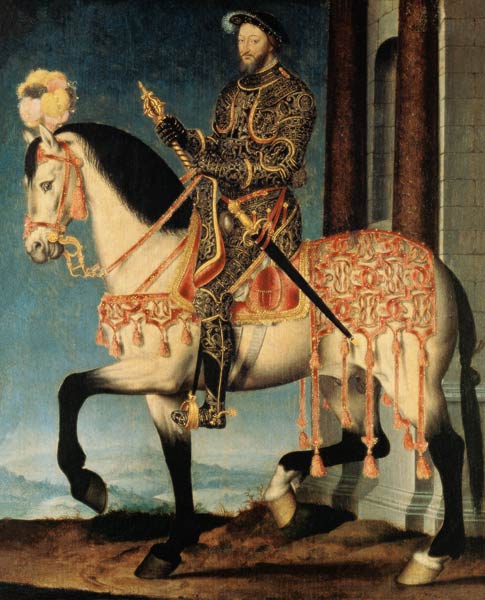
In true Renaissance fashion, François I of France, born this day in 1497, was all those things and more. Guided by a single dream--to make of France a new Italy, a center of art and culture as well as commerce--François expanded the intellectual and geographical boundaries of France, transforming the medieval kingdom into a modern state that vied with England and Spain for dominance over the European continent and the New World.

And he certainly had a good time doing so.

Scion of a minor branch of the Valois line, François was never expected to become king. His son-less cousin Louis XII named him heir presumptive in 1498. In 1514, François married Louis's only daughter, Claude; the couple ascended the throne the next year, the start of a thirty-two year reign. After Claude died in 1524, having given birth to seven children in nine years, François married Eleanor of Austria, sister of Emperor Charles V. Throughout his second marriage, Anne d'Heilly, Duchess d'Étampes, wielded power at court and over François's heart as his official mistress. François died of illness in 1547 on the twenty-eighth birthday of his son and successor, Henri II.

Jovial, athletic, and charming, François fostered chivalric ideals at a court that soon became known for its culture and sophistication. He loved to hunt and wrestle, and recreated the glory of his early military victories in Italy in frequent jousts and tournaments. His need for physical activity--both sportive and amorous--vied with his ardent intellectual curiosity. Having espoused the humanist ideals to which his tutors exposed him, François supported writers and scholars in many disciplines and invited them to court to discuss their work. He avidly collected books and manuscripts, amassing what would serve as the seed kernel of France's eventual national library.

François nurtured a similar passion for art and architecture. He invited prominent Italian artists like Leonardo Da Vinci and Rosso Fiorentino, as well as skilled artisans and craftsmen, to France. Together, these gifted men constructed and beautified the many châteaux that dotted the kingdom, transforming dreary fortifications and decrepit hunting lodges into dazzling pleasure palaces. François collected works of art like he did books, sending agents into Italy to purchase or copy works and displaying in his châteaux canvasses and statues sent to him as gifts or produced by the artists he supported.

Politically, François solidified the evolving concept of the absolute monarch and pursued the formation of a nation-state. Throughout his reign, he defended France against the designs of the Holy Roman Emperor Charles V of Spain. Bitter rivals since Charles narrowly beat him out for the elected position, the two became sworn enemies once Charles's forces captured François at the battle of Pavia in Italy in 1525. The French king spent a year in Spain as Charles's prisoner, and was only released in exchange for his two sons and his marriage to Charles's sister Eléanor. After several years, François raised the money to ransom his sons, their relationship with him forever damaged by the grueling separation. In his perpetual effort to thwart Charles, François made alliances with Henry VIII of England and Suleiman, sultan of the Ottoman empire. He was still engaged in battle with Charles at the time of his death.

François I both fostered and personified the fruits of Renaissance endeavor. With unbounded energy and relentless enthusiasm, he led his kingdom on a voyage of discovery and smoothed the rougher edges of late medieval culture into a close facsimile of the Italian splendor he so admired. If France was the "mother of arts, arms, and laws," as the poet Joachim du Bellay would soon describe her, François I was their uncontested father.

Happy Birthday, sire!