Showing posts with label Henry VIII. Show all posts

Thursday, March 19, 2015

Interview with Nancy Bilyeau, Author of THE TAPESTRY


THE CROWN (2011) and THE CHALICE (2013) introduced readers to Joanna Stafford, a young novice forced out of her convent during the Dissolution and into dangerous plots threatening the reign of King Henry VIII. In the third book of the series, THE TAPESTRY, on sale March 24, Joanna must finally choose her fate: nun or wife, spy or subject, rebel or courtier. Author Nancy Bilyeau discusses her research into this fascinating era.


In THE TAPESTRY, Joanna becomes Henry VIII’s Mistress of Tapestries, charged with purchasing, inventorying and caring for the king’s extensive tapestry collection. How did you research the Renaissance tapestry industry? Have you had the opportunity to view some of Henry’s tapestries in person?

There are several fantastic nonfiction books about Renaissance tapestries. The expert in this field is Thomas P. Campbell, now the director of the Metropolitan Museum of Art. He wrote Tapestry in the Renaissance: Art and Magnificence and Henry VIII and The Art of Majesty: Tapestries in the Tudor Court. I don’t know if many people realize what an incredible industry it was and how luxurious and intricate many of the tapestries could be, woven with gold and silver threads. Production of a set of six five-by-eight-yard tapestries would have required thirty weavers to work nonstop for over a year.

Many of Henry VIII’s tapestries are lost, but you can see some beautiful ones that have been preserved at Hampton Court. Since I live in New York City, I can’t run over to Hampton Court any time I like (unfortunately) but I can jump on a subway to the Cloisters Museum. The museum’s prize possession is seven individual hangings known as “the Unicorn Tapestries,” dated in the late 15th century. No one is sure who wove them or what they mean, but it’s wonderful fun to speculate.


Joanna is commissioned to weave the face of a certain character into a tapestry for the king. I was intrigued to read that such personalization was done after the entire tapestry had been woven. Can you explain how this was done? Was such personalization a common occurrence for commissioned tapestries?

It wasn’t common. Most tapestries were based, from beginning to end, on a detailed colored pattern known as the cartoon. That’s where the word originated from. They traced the pattern from the cartoon onto the loom. But in some cases the tapestries show recognizable faces of people who lived—patrons of the workshop or royals that they wanted to please. A tapestry was sold at Sotheby’s recently that depicted the meeting of Henry VIII and King Francis I in 1520, the Field of Cloth of Gold. You can see a real resemblance to Francis in the tapestry—yes, it’s his nose! We know that finer threads were often used in the weaves of the faces of people in these tapestries and that they were done at the end. Occasionally, there was some cheating, and someone would try to paint a face instead of weave it. In Brussels, the center of the tapestry industry, if someone was caught painting, the penalty was severe.


How did you strive to distinguish your characterization of Henry VIII from standard conceptions?

I’ve been reading about Henry VIII for many years, and what I tried to do was banish from my thoughts the depictions of the king from historical novels and movies and miniseries, and focus on the historical record. From that, I concluded he was intelligent, manipulative, talented, acquisitive, impatient, ruthless, self-indulgent, arrogant and yet charming with a dry wit. I based his appearance on descriptions in the contemporary documents. He looked nothing like Jonathan Rhys Meyers, that’s for sure!


Throughout your three novels, Joanna’s heart has been tugged between two men, Geoffrey Scovill and Edmund Sommerville. Avoiding spoilers, did you know from the beginning which of the two she would choose in the end? Could she have been happy with either man—or neither of them?

I knew from the beginning of writing THE TAPESTRY who Joanna would choose at the end. It wasn’t easy to make this decision, since I am very fond of both my “guys.” But in deciding, I thought long and hard about what Joanna’s feelings were and what Geoffrey’s and Edmund’s true feelings were too. I think both of the men have appealing and admirable qualities—along with some flaws. But in my heart, I think that Joanna also could have had a fulfilled life as a sister of the Dominican Order. I did not write her as a woman who wanted to be a nun by default—that she could not cope with being married. She had the piety, devotion, compassion and cerebral nature that would have made for an excellent nun.

Photo credit: Library of Congress Digital Collections
Did the fourth book on occult philosophy by the German theologian and alchemist Heinrich Cornelius Agrippa, for which Joanna and Edmund search in order to put an end to a curse, actually exist? Are copies extant? How did you become interested in Agrippa?

If you spend any time at all reading about beliefs in mysticism and magic in the 16th century, Agrippa will pop up pretty quickly. He is the rock star of the Renaissance-era occult. LOL. The fourth book of Agrippa is controversial. Heinrich Cornelius Agrippa was a scholar, a theologian and an astrologer—these three things often went together!—and in the early 1530s he published De Occulta Philosophia Libri Tres, which is “Three Books of Occult Philosophy.” Then there is the infamous “fourth book,” which is better described as a grimoire, a book of magic spells. It puts into practice the philosophies and ideas of the first three volumes with invocations of good and evil spirits. Researchers today use the word “spurious” when Agrippa is listed as the author of the fourth book. It first surfaced in 1559, years after Agrippa’s death, but that alone does not rule out his authorship. As you can imagine, publishing books of occult instruction was not easy during this time, with the Inquisition in full force. It could have been held back.

The fourth book is still in circulation today. I first came upon it when browsing through a bookstore in downtown Toronto. The color of its cover is a strange dark red. Looking at it gave me a chill, to be honest with you. I later ordered one for my research—from Amazon.

I love that you broaden the confines of your Tudor setting to include Charles V’s empire and the Germanic states. What particular research challenges did this pose? How did knowing your book was destined for an American audience that might not be familiar with continental events of the era affect how you presented your material?

There were significant research challenges. Apart from the life of Martin Luther, there are not that many nonfiction books written in English that cover the history of Germany in the late medieval period. I had to dig and dig just to find a few! To me this is incredible, because what happened in the German states in the 16th century had a profound effect on the modern age, and not only by introducing religious reform. The Peasants War was very significant—Karl Marx and Frederick Engels certainly thought so and wrote about it three centuries later. Also, the tensions between the Holy Roman Emperors and the states and the deepening crises that spread across Germany led to the Thirty Years War, one of the most destructive conflicts in Western history. And it’s not just dry statistics and facts that are compelling here—daily life in Germany was so interesting in this time!

I didn’t worry about Americans’ lack of familiarity with what was going on in continental Europe. That is part of my personal “mission,” which is to open up the Tudor novel. My main character is fictional, and I set her in a real world of famous Tudor figures like Henry VIII and in actual settings, like the Palace of Whitehall and the town of Dartford. So it’s not a “marquee” historical novel that revolves solely around the royals. I invent “normal” people—I can’t call them “ordinary” because in my heart there is nothing ordinary about Sister Joanna Stafford, Geoffrey Scovill and Edmund Sommerville. I don’t take the standard point of view on the Reformation, which is that the Catholic Church was corrupt and faltering and would have died out even if Henry VIII hadn’t broken from Rome. The reason for it is not that I am a religious propagandist, but because after deciding to write the story of a Catholic novice I did years of research into late medieval spirituality and monastic life and Tudor politics. I came to my own conclusions about the English Reformation, and about the motives of Henry VIII in demolishing the abbeys. What’s exciting is that I am not alone—several authors and historians are questioning the conventional wisdom. It’s a time of true revisionism.

And then, yes, I take the action of the second and third novels out of England for a period. I haven’t had any negative feedback from readers—they are, as far as I can tell, happy to travel to new places. I mean, part of this is I am not just a historical novelist, I am a thriller writer. These are historical thrillers, and thrillers need to move. A great many historical novels contain chapters of people talking in rooms, which is fine, but in my work, I send my characters hurtling in many directions, whether it’s Joanna and Brother Edmund riding to Malmesbury Abbey in THE CROWN, Joanna in disguise making her way to Antwerp and beyond in THE CHALICE, or Joanna struggling to survive a very difficult journey through the German states in THE TAPESTRY.


Do you have a favorite scene from THE TAPESTRY? Which scene had you tearing at your hair?

I have several favorites. I loved writing the passage of Joanna arriving at Whitehall and the mounting suspense, beginning with her awe mixed with uneasiness when looking at the ornate Holbein’s Gate at the palace entrance. Her supper that evening with the Howards was fun to write, as was Joanna’s eventful meal with the king and queen. I was excited to write the Germany section. One of my readers said that part of the book read like a powerful and Impressionistic dream.

Hair tearing, there was plenty. I had a very hard time writing the pivotal Westminster Hall encounter with several main characters, including Henry VIII. It’s always challenging to write something where there are a lot of key characters to account for. I went through many drafts in a particular Joanna and Geoffrey scene, because there were so many emotional shifts.

What aspect of writing a trilogy proved most difficult? Knowing now what you didn’t know when you began, would you write a multi-book series again?

This may sound strange, but I found writing a series a natural thing to do. I came up with my ideas for the books at the beginning. If you have a strong main character, it makes it much easier, I think. But that’s the creative side. The business of writing a series is hard. In today’s publishing world, there is a lot of “wait and see” on the books. They don’t want to commit to a succeeding novel until it’s clear whether the first one did well, for example. But if an author did that, waited for the sales reports to come out before beginning the next one, the books would be spaced several years apart. Readers want the books in a series to come quickly, at least one book a year. You can’t do that with “wait and see.” Also, it’s hard to secure reviews for the books in a series after the first one, yet we need reviews to appear so people know the next book is out in the world. Despite all of this, I would absolutely write another series.

Can you give us a hint about what you are working on now? 

My agent has ordered me to keep my lips sealed! But I will tell you it is a historical novel, though not set in the 16th century.

**********
Nancy Bilyeau has worked on the staffs of InStyle, Rolling Stone, Entertainment Weekly, and Ladies Home Journal. She is currently the executive editor of DuJour magazine. Her screenplays have placed in several prominent industry competitions. Two scripts reached the semi-finalist round of the Nicholl Fellowships of the Academy of Motion Pictures Arts and Sciences. Her screenplay “Zenobia” placed with the American Zoetrope competition, and “Loving Marys” reached the finalist stage of Scriptapalooza. A native of the Midwest, she earned a bachelor’s degree from the University of Michigan. THE CROWN, her first novel, was published in 2012; the sequel, THE CHALICE, followed in 2013. THE TAPESTRY will be released in March 2015.

Nancy lives in New York City with her husband and two children. Stay in touch with her on Twitter at @tudorscribe. For more information or to sign up for Nancy’s Newsletter please visit her official website.
**********
For a list of Nancy's other stops on this blog tour, please visit the Historical Fiction Virtual Book Tour website.
**********
To enter to win one of three signed hardcover copies of THE TAPESTRY, please complete the giveaway form at https://gleam.io/iyF4a/the-tapestry

RULES


Giveaway starts on March 16th at 12:01am EST and ends at 11:59pm EST on April 3rd.
Giveaway is open to residents in North American and the UK.
You must be 18 or older to enter.
Winners will be chosen via GLEAM on April 4th and notified via email.
Winners have 48 hours to claim prize or new winner is chosen.
Please email Amy @ hfvirtualbooktours@gmail.com with any questions.

Wednesday, March 18, 2015

Review: THE TAPESTRY by Nancy Bilyeau


Ever since her Dominican priory was closed by order of Henry VIII, Joanna Stafford has tried to live a quiet life weaving tapestries in the small town of Dartford. Yet fate refuses to allow her respite. In Nancy Bilyeau’s THE TAPESTRY (Touchstone, 2015), the third and final installment of a three-book series that includes THE CROWN (2012) and THE CHALICE (2013), King Henry summons Joanna to court to discuss a tapestry commission. Reluctant to serve a king she has twice tried to dethrone, yet desperate for an income that will allow her to raise her young nephew, Joanna obeys. Minutes after her arrival at Whitehall, a mysterious man attempts to murder her. Thrust into a web of international intrigue that pits her against an array of new and former nemeses, Joanna must rely on wits, courage and integrity to her protect herself and her friend Catherine Howard, the king’s latest favorite, from forces determined to alter England’s unprecedented course.


THE TAPESTRY vividly captures the unsettled, suspicious atmosphere of mid-sixteenth century England. The country is in a state of constant turmoil as it struggles to embrace the changes wrought by King Henry’s whims. In this new world where a common upstart like Thomas Cromwell can gain an earldom—and the king’s confidence—noblemen fret over the security of their positions; courtiers jockey for favor; ambitious wives and wards seek to catch the king’s roving eye. As defrocked priests and nuns struggle to support themselves outside the dismantled walls of their monasteries, the clerical hierarchy barter their souls for benefices. Rich and poor alike guard their tongues as opportunists seek to profit through denunciation. Against this backdrop of festering mistrust, putrid as King Henry’s infected leg, Bilyeau weaves an intricate plot that meshes the international the national, the personal with the political, the secular with the religious. As much as Joanna longs to escape the court and its machinations, her protective concern for Catherine’s fate compels her to stay. She soon uncovers a mysterious “covenant” dedicated to toppling Cromwell so as to restore the Catholic faith in England. The occult nature of this covenant and its effects reinforces the authenticity of the setting, for sixteenth-century culture professed a deep and abiding interest in the dark arts. Joanna’s unquestioning acceptance of the power of the covenant and her quest to locate an arcane text that might undo its effects prove her to be a true daughter of her time.

Rare is the Tudor novel that ventures beyond the confines of England; THE TAPESTRY opens vistas well beyond the usual realm of Tudor fiction. Imperial agents who, in THE CHALICE, coerce Joanna to cooperate in an attempt to assassinate the king, continue to dog her steps at the English court, complicating lives and politics. German artist Hans Holbein offers a continental perspective on events and becomes Joanna’s trusted friend and adviser. In a surprising development, Joanna exploits her appointment as Tapestry Mistress to quit England in search of her former fiancé, Edmund Sommerville. After brief stays in Paris and Flanders, she journeys deep into Germany, a dangerous region suffering from famine and revolt. The adventures that befall her there introduce the reader to aspects of Renaissance history not normally explored in historical fiction (the Diet of Regensburg, anyone?) and add an intriguing flavor to an already singular story.

But it is Joanna herself, more than the story’s rich setting or deft plot, who entrances the reader. Beset by troubles and surrounded by unscrupulous schemers, Joanna never compromises her integrity. Though she  mourns her lost life as a nun and resents her uncertain future, she refuses to despair. Loyal and courageous, she fights to protect Catherine from exploitation; generous and determined, she prays with the condemned as they lay their heads on the block. Though clever enough to outwit spies and assassins, Joanna cannot understand her own heart. Torn between her love for the absent Edmund, whom she almost married, and an undeniable attraction to constable Geoffrey Scoville, her constant shadow, she reveals a touching vulnerability and a confusion that only slowly, painfully, clears. It is Joanna’s admirable humanness that has turned so many of the trilogy’s readers into devoted fans.

In THE TAPESTRY, Nancy Bilyeau brings the adventures of her spirited heroine to a triumphant close. Mystery and romance, research and imagination, realism and magic combine in perfect proportion, immersing the reader in the past, enthralling her in the present, and leaving her in hope that Bilyeau will resurrect her intrepid ex-nun in the not-too-distant future.

**********
Nancy Bilyeau has worked on the staffs of InStyle, Rolling Stone, Entertainment Weekly, and Ladies Home Journal. She is currently the executive editor of DuJour magazine. Her screenplays have placed in several prominent industry competitions. Two scripts reached the semi-finalist round of the Nicholl Fellowships of the Academy of Motion Pictures Arts and Sciences. Her screenplay “Zenobia” placed with the American Zoetrope competition, and “Loving Marys” reached the finalist stage of Scriptapalooza. A native of the Midwest, she earned a bachelor’s degree from the University of Michigan. THE CROWN, her first novel, was published in 2012; the sequel, THE CHALICE, followed in 2013. THE TAPESTRY will be released in March 2015.

Nancy lives in New York City with her husband and two children. Stay in touch with her on Twitter at @tudorscribe. For more information or to sign up for Nancy’s Newsletter please visit her official website.
**********
For a list of Nancy's other stops on this blog tour, please visit the Historical Fiction Virtual Book Tour website.
**********
To enter to win one of three signed hardcover copies of THE TAPESTRY, please complete the giveaway form at https://gleam.io/iyF4a/the-tapestry

RULES
Giveaway starts on March 16th at 12:01am EST and ends at 11:59pm EST on April 3rd.
Giveaway is open to residents in North American and the UK.
You must be 18 or older to enter.
Winners will be chosen via GLEAM on April 4th and notified via email.
Winners have 48 hours to claim prize or new winner is chosen.
Please email Amy @ hfvirtualbooktours@gmail.com with any questions.


Friday, October 25, 2013

Sixteenth Century Quote of the Week

"From the Cunstable as yet for my repair to the Court I have hard nothing, who dothe promise many things, and soon forget them. Such ys the nature of all Frenche men universally."

John Wallop (c. 1490-1551), English diplomat assigned to France
Letter to King Henry VIII, 27 October 1540

Tuesday, August 6, 2013

Guest Post: "Life and Hope--Why I Write Historical Fiction for Teens" by Katherine Longshore

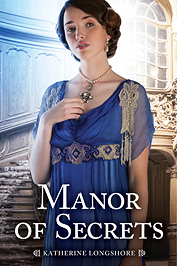
I met Katherine Longshore last winter at a reading of GILT (Viking Juvenile, 2012), her Young Adult novel about the friendship between Henry VIII's fifth wife, Catherine Howard, and Kitty Tilney, the abandoned youngest daughter of minor aristocracy. Since then, Katherine has published TARNISH (Viking Juvenile, 2013), a Young Adult read about Anne Boleyn and the poet Thomas Wyatt. Her forthcoming MANOR OF SECRETS is a "Downtonesque" story of two girls living very different lives in an Edwardian manor house (Scholastic, February 2014). Katherine and I share a love for the sixteenth century, and during the course of our conversation I asked her why she chooses to write for the Young Adult audience and how writing historical YA differs from writing historicals for adults. Here are her well-considered answers.

**********
Life and Hope--
Why I Write Historical Fiction for Teens 
by Katherine Longshore

When I started writing my first published novel, GILT, it never occurred to me to question why I chose to write historical fiction for teens.

I knew—intuitively, viscerally—that I wanted to write for young people.  A librarian friend of mine once said that when people approached her, looking to learn about life, she sent them to the YA section. Everything is there—friendship, betrayal, growth, wisdom, pain, death, destruction, first loves, first kisses, first grief. But because it is all from a teen’s perspective, there is also future, and to me, future means hope. A YA novel looks forward into life, instead of looking back (like adult novels written about youth—Prep by Curtis Sittenfeld, Old School by Tobias Wolff, even A Separate Peace, which is taught in high schools, but is really—in my opinion—not YA).  Looking forward is a gift. As the Lumineers say in their song Flowers in Your Hair, “’It takes a boy to live/It takes a man to pretend he was there.” I wanted to write about life. And hope. And finding the path to the person you’re supposed to be.

I stepped into the historical part of my writing after my husband reminded me of the maxim, Write what you know. “You know history. Why not write that?”

I’d been studying Henry VIII and his wives for years, trying to figure out their motivations, their strengths, their psychologies. What drove this man to cling to his tenuous birthright so determinedly?  What drove him to strive so forcefully for a male heir? What made him think he could change the world, bend it to his will? What made him believe so wholeheartedly that he was right?

And what compelled these six women to marry him? Did they leap at the chance? Stumble reluctantly toward their fates? Follow unthinkingly the reasoning of the men in their lives?

Lastly, what if the hypotheses of the historians are just that—conjecture based on limited evidence? Was Anne of Cleves truly ugly, or are those conclusions based on the hearsay of toadying courtiers? Was Jane Seymour truly just a simple, quiet, unassuming woman or was that just a ruse to trap the king? When I came to write GILT, my biggest question was, “What if Catherine Howard wasn’t an ignorant floozy, but a clever—if uneducated—girl in touch with her own sexuality?” I wanted to write for teens, I wanted to write about Henry VIII’s reign—his only teenage queen was Catherine Howard.  It seemed a good character—and a good question—with which to start. My second novel, TARNISH, is about a young Anne Boleyn—before her involvement with the king. My question was, “What if Anne wasn’t a manipulative schemer but began as a girl in search of a dream—a place in a society that forced her to be a second-class citizen?”

Then comes the difficulty. How to write about a queen whose life is ended through execution for treason and write it looking forward into life? More importantly, how do I write about a girl who lived 450 years ago and make her story relevant and relatable to a modern teenager?

I start by looking back at my own teen years. What was important to me? The two things that spring immediately to mind are friendship and dreams (which, I suppose, could also translate into ambition). I wanted to be an actress and I wanted good grades, so that’s what I spend my high school years striving toward. The moments I remember best, however, are with my friends.  Building a cake castle for my fourteenth birthday. Sitting on the balcony outside the stage door of the auditorium, watching the sunset. Hanging out on the beach and building sand sculptures the summer after I graduated.

And crushes. I was too busy—and too shy—in high school to pursue a relationship. But that didn’t stop me from wanting one. I was a bit of a late bloomer, so I look to after high school to remember what love and sex and heartbreak were like for the first time.

With those things in mind, I build a story around the scaffolding of history. The story has to be something to which modern readers can relate. In GILT, it’s a dysfunctional friendship. In TARNISH, it’s first love and pursuit of dreams. In MANOR OF SECRETS, coming out in January, it’s friendship again. And my third Tudor book, due out next summer, is about all of these—friendship, love, betrayal and loss. As devoted as I am to historical accuracy, my books are not “about” the history, but about the story. I’d like to think that if the story were somehow taken out of context and placed into a different setting—a modern high school, a spaceship, a future dystopian world—that the story would hold up (with a few tweaks—obviously the consequence of promiscuity in a modern high school would not be decapitation).

My writing style also lends itself to a more modern-sounding voice, which I hope helps teenagers to connect to the story.  I’ve had some readers write to me to say how refreshing it was to read a historical novel that didn’t use archaic language and sentence structure. (“It doesn’t sound all Shakespearean,” one reader said.) But to others, my voice sounds anachronistic.  And I voluntarily admit to using anachronistic words and phrases (best friend and sex are the two that come immediately to mind, as well as the occasional oath where I choose a more modern vocabulary to carry the impact that damn no longer does). I maintain my voice and choose my words carefully—the way I write is not accidental or through ignorance. Like I said, I want to do everything I can to make my books accessible to my audience.  Occasionally, I get slammed for it. But because I did it purposefully—and because my target audience seems to appreciate it—I take the hit on the chin and just keep writing.

The hardest part about writing historical fiction for teens is finding my audience and reaching out to it. Unfortunately, historical carries the aftertaste of history, which is all too often associated with schoolwork—long dreary days memorizing dates and placenames, and “Shakespearean” language. Reading for fun should take you away from all that, right? Many teens these days turn to futuristic worlds, contemporary worlds with magical elements or contemporary books that reflect their real lives.  Historical fiction is a “genre” still blighted by preconceptions. I just hope that with wildly popular television programs like Downton Abbey and successful historical hybrids like Robin LaFever’s GRAVE MERCY series or Libba Bray’s DIVINERS, that more teens will be turning to historical fiction as just a cracking good read—not something that has to be endured or tried under duress.

We all know how exciting history can be. The one time I met Julianne we must have spent twenty minutes chatting enthusiastically about Henry VIII and Francois I and the Field of Cloth of Gold. It’s great stuff—better than soap opera because it was real. Better than reality TV because it happened without the fabricated set-up.

I write historical fiction for teens because I want them to experience it, too.

**********
You can learn more about Katherine Longshore and her novels at her website.

Wednesday, May 1, 2013

Interview with Nancy Bilyeau, author of THE CHALICE

Today I welcome Nancy Bilyeau, author of THE CHALICE, a Tudor suspense novel published last March by Touchstone. THE CHALICE recounts the continuing adventures of ex-novice Joanna Stafford, heroine of Bilyeau's debut novel, THE CROWN (2012). I reviewed THE CHALICE yesterday.

Nancy was kind enough to answer questions I sent her about THE CHALICE and the history behind the novel.

1. Can you describe the genesis of the novel? Did a specific object or historical event serve as a catalyst? How difficult was it to mold the plot to the framework of historical events?

THE CHALICE is a sequel to THE CROWN, my debut novel. The main character is Joanna Stafford, a Dominican novice pledged to Dartford priory just when Henry VIII crushed the monasteries: the late 1530s. At the end of THE CROWN, the priory is "surrendered" to the king in 1538. What I wanted to do in the second book is explore what would happen to a person after losing their way of life, how would they handle it emotionally. What kind of despair and anger would these displaced people feel, and what would they do about it? The specific events that the book molds around are the arrests in the Courtenay Conspiracy, the king's betrothal to Anne of Cleves, the Act of Six Articles and, in Flanders, the Revolt of Ghent. I enjoy incorporating real events into my novels. The only problem they cause is elongating the timeline at some points. A thriller should move quickly but when you're working with things that really happened you have to allow the proper amount of time.

2. What was it about the years 1538-1540 that grabbed your attention and sparked your imagination?

That's a tense, strange time in the reign of Henry VIII. Most people look at it as an in-between time: after the death of his third wife and leading up to marriage to his fourth, Anne of Cleves. Part of the action of THE CHALICE wraps around the arrival of Anne. And without giving too much away, this marriage is key to the plot. That marriage--and its failure--is well known. Less well known is that England was braced for war, for invasion by a combined army of Charles V and Francis I, egged on by the Pope who had excommunicated Henry VIII. This is what runs through the entire plot: the fear, the paranoia, of Henry. Joanna doesn't directly interact with the king in this book, but his actions ripple out toward her in many ways. She sees people she cares for die because of the king's fears.

3. Joanna Stafford is a woman with strong loyalties to her Catholic faith, her noble family, and her country, England--loyalties which often conflicted with each other and complicated her course of action. As you wrote, did any of Joanna's choice surprise you? Do you think any of them surprised her?

Joanna had to make many choices in the book that have to do with faith and love and loyalty and courage. Hard choices. I was often moved by what Joanna had to do in THE CHALICE, because it required sacrifices. In this novel she is tested and yes, she would be surprised herself at how she survives those tests.

4. The Holy Roman Emperor, Charles V, was as important a player on the European stage as his peers Henry VIII and Francis I, yet he has been largely neglected in historical fiction. Why do you think this is the case? What are your impressions of the man?

That is a good question! He was an enormously important person--he was in power during the birth of Protestantism, the exploration of the Americas, cataclysmic wars with France and the rising Muslim power. Yet in much historical fiction he's ignored. I wonder if it's because he's not a romantic figure compared to Henry VIII and Francis I, both handsome men with multiple wives and mistresses. Charles was a homely man who I think seemed morose to others. I actually have some sympathy for him because of the absolutely enormous, crushing burden of his empire and the sense I get that he hated it and that is why he "retired" at a certain point and had a few years of quiet, private life with his family. His family was fiercely loyal to him, in a way that you don't see in the English or French royal families. His sister Mary of Hungary, after her husband was killed in battle, basically worked for her brother for the rest of her life--she took on the extremely difficult job of Regent of the Netherlands. She represented his interests and never remarried, retiring from the regency when Charles V resigned his position of emperor. When she died, she left her brother all her possessions. Hard to imagine Mary or Margaret Tudor doing any of that for Henry.

5. What prompted you to include fantasy elements in THE CHALICE?

The mid-16th century was filled with mystical beliefs in prophecy and astrology and necromancy, and I researched those very deeply. I was surprised by how the beliefs co-existed with Christianity. Devout Catholics also had their astrological charts done--by their physicians! I think it wasn't until Protestants had advanced their beliefs, and gained strength, that some of the skepticism set in and there were efforts to stamp out "pagan" beliefs. For instance, the Puritans tried to do away with Halloween...but it was too popular!

6. What was your favorite scene to write? The most difficult?

I think my favorite scenes were when Sister Joanna and Brother Edmund find themselves in an empty Blackfriars monastery all night, and I have to admit that an execution on Tower Hill was something I've always wanted to write. The most difficult were in the first third, when Joanna was in London and getting more and more suspicious and worried because all is not what it seems. The revelations had to be made so slowly and carefully, but not too subtly either. It's a challenging balance.

7. The fates of several characters are left unresolved at the end--will there be a third book in the series?

It looks that way! There will be an announcement soon. 

8. Are there other eras or settings you would like to write about?

Oh yes, I am interested in the 18th century and drawn to it almost as much as I am to the Tudor era. I wrote a screenplay about Mary Wollstonecraft, who lived and wrote in the late 18th century. I have other ideas for this time period, too.

9. How does your training in magazine journalism help or hinder you in writing fiction?

It helps me with research but with the actual writing of the prose, it doesn't help or hinder. They are completely different skill sets, editing articles for a magazine and writing a novel. Far different uses of creativity. Except for the determination to use good spelling and grammar, perhaps. I always try to do that! Too many rigorous bosses shouting in my ear to ever let that go.


**********
Thank you for a marvelous interview, Nancy, to go with your wonderful novels!

You can learn more about Nancy and her work at her website.

Monday, April 29, 2013

Review: THE CHALICE by Nancy Bilyeau

Nancy Bilyeau's THE CHALICE (Touchstone, March 2013) offers an engrossing and original take on aspects of the Tudor era that historical fiction seldom explores. The novel presents an enticing blend of history, romance and page-turning suspense that invigorates the discussion of religious turmoil in England and provides an entertaining and convincing escape into an important yet often overlooked stretch of Henry's reign.

When Henry VIII closes religious houses across England, novice Joanna Stafford, daughter of an English nobleman and one of Katherine of Aragon's Spanish ladies-in-waiting, hopes to supplement her meagre pension by establishing a tapestry-weaving business. The day she lugs home the first piece of her new loom, her life changes--but not in any way she'd expected. Her cousin Henry Courtenay, a trusted relation of the king, and his wife Gertrude arrive to invite her to spend time with them in London. A high-ranking family loyal to the Catholic faith, the Courtenays secretly scheme to place the Princess Mary on the throne and restore the true faith in England. Joanna finds herself swept up in a plot targeting King Henry, a plot that hinges on Joanna herself. Years earlier, a seer who tried to prevent Henry VIII's divorce had declared Joanna to be "the one who would come after"--the one who, after hearing the entire prophecy as revealed by two additional seers, would set in motion events that would alter England's history. Joanna's involvement with Gertrude Courtenay, and through her, the Holy Roman Emperor Charles V of Spain, propels Joanna to embrace her fate and race to uncover the prophecy before Henry fathers the sons that will ensure the supremacy of the Reformed Faith in England forever.

THE CHALICE places the religious turmoil unleashed by Henry VIII in an international context, capturing the turbulence of a time when Henry seemed to waver in his religious convictions and his opponents nurtured high hopes that Charles V might set things right. The prominence of the Emperor and his representatives in THE CHALICE is a splendid addition to standard Tudor fare. Despite being one of the three preeminent monarchs of the Tudor era, Charles seldom features in historical fiction. Although he does not appear in person in THE CHALICE, his constant menace finds expression through the machinations and relentless persistence of his wily ambassador Eustace Chapuys, with whom Joanna forges a reluctant alliance. THE CHALICE dramatizes how Henry's decision to break with Rome upset the balance of power in Europe and not only placed England in danger of being invaded by Spain and France, but encouraged France to flirt openly with an Ottoman alliance. Joanna's involvement with Imperial agents in an international plot underscores how Henry changed not just the course of English history, but that of all Catholic Europe. I have been immersed in research about Charles V for my own novel, set in France during the same years as THE CHALICE (1538-40), and it is exciting to see another author evoke the complicated contours of this era.

Bilyeau balances this broad political focus with attention to the effects of Henry's actions on the lives of individual believers. The novel's principal characters all confront decisions that pit their personal beliefs against the will of the king. Powerful noblemen must choose between allegiance to their faith or to their anointed monarch; dispossessed nuns must betray their vows and marry in order to survive; defrocked monks consider violence in order to protect holy relics; servants must decide whether to protect or reveal the activities of their recusant employers. Joanna's personal conflicts are many and involve her heart as well as her head. Looming foremost is the question of whether to pursue the prophecy despite her aversion to such practices and what to do with the knowledge once she gains it. With courage and great personal sacrifice, Joanna follows a course of action that offers her Catholic brethren in England continued hope yet does not betray her principles. Convincing in her faith and endearing in her loyalties, Joanna is a heroine to admire. I look forward to following her on further adventures. In THE CHALICE, a stand-alone novel that may be read in conjunction with the author's debut, THE CROWN (2012), Bilyeau has crafted a deft novel that will appeal to readers of suspense as well historical enthusiasts looking for a unique take on a popular era.

**********

Come back tomorrow to read my interview with Nancy Bilyeau about THE CHALICE. To learn more about Nancy and her books, visit her website.

This review is part of the Historical Fiction Virtual Book Tour for THE CHALICE. To read the other reviews and interviews that are part of the tour, see the tour schedule. 


Monday, October 8, 2012

Recreating Henry VIII's Crown

King Henry VIII's crown, which was melted down by Cromwell's government in 1649, has been recreated in minute detail according to images in royal portraits and information from inventory accounts. Harry Collins, who retired this year as royal jeweler, crafted the crown using Tudor metalworking techniques. Historic Royal Palaces donated the materials, which cost an undisclosed five-figure sum. The crown will be on display at Hampton Palace after October 27. Read more here and watch the fascinating video.

Monday, February 7, 2011

Karen Harper: THE IRISH PRINCESS

Author Karen Harper writes historical fiction as well as bestselling contemporary suspense. I enjoyed her MISTRESS SHAKESPEARE, as well as THE QUEEN'S GOVERNESS, which I reviewed here. Karen's newest historical novel, THE IRISH PRINCESS (released February 1 from NAL), is the story of a would-be Irish princess who is forced from her homeland and thrust into King Henry VIII's treacherous Tudor court. From the back cover:

"Born into a first family of Ireland, with royal ties on both sides, Elizabeth Fitzgerald--known as Gera--finds her loving, carefree world overturned when tyrant Henry VIII imprisons her father, the Earl of Kildare, and brutally destroys her family.

Torn from the home she loves, and with her remaining family scattered, Gera dares not deny the refuge offered her in England's glittering royal court. There she must navigate ever-shifting alliances even as she nurtures her secret desire for revenge. Beautiful, bold, and rebellious, Gera eludes dangerous suitors, encourages others, and holds close to her heart a private attachment to Edward Clinton, a handsome, ambitious courtier who understands her strong-willed spirit. And even as Gera works to undermine King Henry and win support for her family, she seeks to protect his young daughter Princess Elizabeth, a kindred spirit fighting to survive, whose future is linked to Gera's own.

From County Kildare's lush green fields to London's rough-and-tumble streets and the royal court's luxurious pageantry, THE IRISH PRINCESS follows the journey of a daring woman whose will cannot be tamed, and who won't be satisfied until she restores her family to its rightful place in Ireland."

I will review THE IRISH PRINCESS in the coming weeks. In tomorrow's post, Karen discusses, among other things, what she looks for in a historical heroine and the different audiences for which she writes. Plus, you'll be able to enter a drawing for a copy of THE IRISH PRINCESS! Be sure to come back and help celebrate the publication of a novel which promises to deliver an intriguing new take on the Tudor court.

Thursday, November 4, 2010

Henry VIII's "Lost" Palace

Interesting article on a rare painting of Henry VIII's "lost" palace, Nonsuch, built to rival François's great châteaux and standing only 150 years before falling into disrepair. Henry began the palace in 1538 to celebrate the birth of his son and to prove that he could equal François's architectural prowess. The name he chose for it implies that no other palace could equal its magnificence. Unfortunately, Henry's grand palace was dismantled in the late seventeenth century by Charles II's mistress Barbara Villiers to pay off her gambling debts.

Joris Hoefnagel's painting is one of only four extant depictions of Nonsuch and one of the earliest surviving watercolors executed in England.

The article includes a large reproduction of the painting, amazing in its detail.

Tuesday, September 14, 2010

Young Turks

In 1520, Suleiman the Magnificent became sultan of the Ottoman world, which stretched from Hungary to Baghdad to the Eastern Mediterranean. He was only 26 years old. At the time of his accession, the leaders of the western world's three superpowers, France, the Holy Roman Empire (which included Spain and the Netherlands), and England, were just as young: François I (born the same year as Suleiman, 1494), was 26; Charles V (born in 1500) was only 20; Henry VIII (born in 1491) was eldest at 29.


To put this in perspective, imagine a world whose supreme leaders were the likes of Zac Efron, Justin Timberlake, Elijah Wood and Daniel Radcliffe (all born in the 1980's).


Scary thought, isn't it?

Of course, unlike the celebrities listed above, François, Charles, Henry and Suleiman had all been groomed since childhood in preparation for kingship. They were well-educated, trained in the arts of war and governing, and counseled by seasoned statesmen and diplomats, many of whom had served previous monarchs. Convinced of their divine right to rule, these kings knew it was their duty to serve the best interests of their people.

Still. Nowadays we consider a politician "young" at forty. But twenty?

Men in their twenties are notorious for "strutting their stuff," vying with each other to claim that "top dog" status. François, Charles, Henry and Suleiman did compete directly with each other not only for territory, but for wealth, possessions, and influence. As they fought each other for chunks of Europe, they strove to construct the most magnificent palaces, employ the most accomplished artists and maintain the most cultured courts (Henry and François dug deep into their countries' coffers to outshine the other's extravagance at the Field of Cloth of Gold in 1520; François pulled the stops again in 1539 when Charles traveled through France on a state visit). They competed for the same offices (Charles beat out François in 1519 for the title of Holy Roman Emperor) and spheres of diplomatic influence (especially papal alliances). They raced to beat the others in exploring and colonizing the New World and monopolizing trade routes. They might have shared a woman or two (rumor has it that François might have been friendly with a young Anne Boleyn). Henry and François even wrestled each other for fun in front of the court at Cloth of Gold (François won handily, I might add).

I attribute much of the vim and verve of the first half of the sixteenth century directly to the youth and raw masculinity of these four rulers. How many battles were motivated not by the best interests of the country, but by a desire to beat the other guy? How many paintings and statues were commissioned in order to claim the title of supreme patron of the arts? How many religious dissenters were persecuted in order to prove oneself the staunchest defender of the faith? How many alliances were shifted or broken in order to make life difficult for one of the others? How many miles of silk and leagues of ribbon were cut and sewn in attempts to set the trends for all of Europe? One wonders.

Kings of their countries, these four men clawed and tussled to become King of the Hill.

Imagine how celebrity rags would have read.

Thursday, June 17, 2010

Guest Post by Mary Sharratt: Reformation and Resistance in Northern England

Author Mary Sharratt has provided a wonderful two-part guest post on resistance to the Reformation in Northern England. Her articles explain the cultural, political and religious backdrop against which the events of her gripping novel, DAUGHTERS OF THE WITCHING HILL (Houghton Mifflin Harcourt), unfold. Today's portion discusses the years of Henry VIII's reign and the reigns of his son Edward VI and daughter Mary Tudor; tomorrow, the focus falls on Elizabeth I and beyond. Many thanks to Mary for her immensely informative posts!

*********


The Crucible of Faith: Reformation and Resistance in Northern England

by Mary Sharratt


[This essay is gleaned from a course I took in July 2009 at the University of Lancaster—A Crucible of Faith: the Religious Heritage of North West England. My instructors for the parts of the course dealing with the English Reformation and its aftermath were Adrian Braddon, Dr. Lisa Curry, and Jim Wadman.]


The English Reformation continues to hold an enduring fascination for a modern audience. Hilary Mantel’s Booker Award-winning masterpiece, Wolf Hall, puts forward a traditionalist view that the Reformation heralded an era of enlightenment and progress, in which humanists and forward-thinkers left the ignorance and superstition of the late medieval era behind. However, the reality is much more tangled than Mantel’s excellent fiction would have us believe.


Most of what we were taught about the English Reformation twenty to thirty years ago has been completely turned on its head. Eamon Duffy’s 1992 book, The Stripping of the Altars: Traditional Religion in England 1400-1580, laid out the thesis that the English clung to their traditional religion and were very reluctant to embrace the reformed faith. By now Duffy’s views have become mainstream.


Nowhere was this truer than in the Northwest of England, which is still the most Catholic region of England—Catholics comprise about 26% of the population compared to 8% in the rest of the country. About half of Liverpool is Catholic and about a quarter to a third of the residents of Preston. There are also rural villages such as Hurst Green, Crosby, and Ribchester that support both Catholic and Anglican churches. The high percentages are due in part to immigration from Ireland and Poland, but also to the survival and revival of Catholicism within the region, largely owing to the resistance of the gentry. Many important landowning families such as the Towneleys, Southworths, and Shuttleworths remained Catholic, despite Elizabeth I’s religious conformity laws.


Why were so many in Northwest England so reluctant to embrace the Reformation? Not only were they a long way from the power center in London, they were a very long way from Rome. Whereas the Catholic establishment in Italy during the Reformation period was rife with corruption, there is no evidence of major corruption or scandal in the English Catholic Church at this time. People wanted reform with a small “r” and it was happening. Henry VIII’s Chancellor, Cardinal Wolsey, was closing down monasteries that seemed unproductive and changing them into schools and colleges for laymen. Wolsey also reduced the power of the Church courts. Yet even after Henry VIII sacked Wolsey, stripped him of his bishopric, and appointed himself head of the Church of England, the majority of people, especially in the North, did not want radical religious change thrust upon them.

This became starkly clear during the Pilgrimage of Grace, an uprising of 400,000 armed men in the North who gathered under the banner of the Five Wounds of Christ to oppose Henry VIII’s dissolution of the monasteries. They very nearly won! Henry had no standing army. 400,000 was an incredible number when the entire English population at this time was around 2.2 million. But the Catholic nobility in the North intervened and, anxious of opposing the King, negotiated a truce. If they hadn’t, Henry’s reforms couldn’t have gone through. The closing of the monasteries was disastrous for the poor, who had relied on the now outlawed religious orders for charity and medical care. Apart from leaving the poor in the lurch, however, Henry’s reforms didn’t penetrate everyday religion so drastically. Most holidays were still celebrated and the churches retained their saints’ altars and religious images.


The real English Reformation didn’t begin until the reign of Edward VI, Henry VIII’s son and heir. Edward attacked the entire cultural framework of traditional English life. In his banning of the saints’ days and his orders for the destruction of religious statues, rood screens, stained glass, and holy shrines, Edward cut deeply into the lives of his people, destroying the ancient rhythms of the liturgical year and their round of village festivals. Church walls, traditionally covered in religious images to communicate the mysteries of faith to a largely illiterate population, were whitewashed over.


The picture below, of St. Wilfrid’s Church in Ribchester, shows the pre-Reformation fresco discovered beneath the whitewashing. The stained glass is modern.


Most people sincerely welcomed Mary Tudor’s arrival on the throne. Although she couldn’t undo the dissolution of the monasteries, she restored the Mass and the holidays, which provided much-needed recreation for hardworking commoners. When Mary fell from grace it wasn’t because of her religion but because of her unpopular marriage to the Spanish king which inspired fears that the English were to become a Spanish colony. Today “Bloody” Mary is most commonly remembered for burning nearly three hundred Protestant dissenters, Archbishop Cramner among them. She committed these atrocities against the advice of both her husband and her priest-confessor, who were worried that she was becoming a dangerous fanatic.


********


Mary Sharratt’s acclaimed new novel, Daughters of the Witching Hill, is published by Houghton Mifflin Harcourt. To learn more about Mary and the true history of the Pendle Witches and their connection to pre-Reformation beliefs, visit her website: www.marysharratt.com .


Friday, April 30, 2010

Wine Bar, à la 16th Century

A working replica of a sixteenth century wine fountain has been unveiled at Hampton Court. The fountain was modeled on those depicted in a painting of the Field of Cloth of Gold, the opulent meeting between Henry VIII and François I staged in 1520. Wine may be purchased from the fountain at a cost of £3.50 per glass from May 1. Now you, too, can "faire bonne chère" at Henry's pleasure palace. Articles, with photos, here and here.

Friday, October 23, 2009

Soccer, Anyone?

Jackie at Weave a Garland has an interesting post about soccer (football) in the sixteenth and seventeenth centuries. Henry VIII even had a special pair of soccer shoes made for himself!

Wednesday, July 15, 2009

"Henry VIII: Dressed to Kill" at the Tower of London

Catherine Delors reminded me about the fascinating exhibit being held at the Tower of London through January, 2010. "Henry VIII: Dressed to Kill" gathers together some of the world's rarest arms and armor to celebrate the 500th anniversary of Henry's accession to the throne. The exhibit displays complete sets of armor crafted for specific events, including the spectacular meeting of Henry and François I at the Field of Cloth of Gold in June 1520. If you can't visit in person, be sure to check out the exhibition website, which features slideshows, descriptions of various pieces, articles on armor and historic battles, even interactive games! This is one exhibition I'm sad I won't be able to see.

Monday, April 6, 2009

Henry VIII's Prayer Roll

Here's a link to an interesting article about the discovery of a prayer roll, a long piece of parchment inscribed with Latin prayers and devotions, that a young Henry presented to one of his attendants and which bears an inscription in Henry's own handwriting. The scholar studying the prayer roll claims it is evidence that in his youth Henry was quite pious and traditional in his relationship with the Catholic church; it was only after the difficulties he faced obtaining his divorce from Catherine of Aragon that Henry turned hostile towards Rome. 

Monday, October 20, 2008

A Second Unrealized Tudor Match

As I revealed in my last post, François's sister Marguerite d'Angoulême was offered as a child bride to the young Henry VIII of England. Fortunately for her, perhaps, she was rejected. Another match between the Tudors and the Valois--this one between François's second son, Henri, and Henry VIII's first daughter, Princess Mary--came much closer to fruition.

Mary was three years older than Henri, and discussions regarding the union of the two royal children grew serious around 1530, while the young prince was being held hostage by Charles V in Spain [subject for a post of its own]. The Peace of Cambrai (1529), which secured the ransom of François's sons, included a clause affirming the French-English marriage. But in October 1530, negotiations with England stalled, for two reasons: François suspected Henry VIII intended to use Henri as security for the debt François owed him, and secondly, questions over Mary's legitimacy were beginning to cloud the issue. Henry VIII was by this time seeking an annulment of his marriage with Mary's mother, Catherine of Aragon, and François feared marrying his son to a bastard. Negotiations did continue until 1532, but once the outcome of Henry VIII's suit became evident, François abandoned the match. Instead, he wed Henri in 1533 to Caterina Maria de Medici, the cousin (often called the niece) of Pope Clement VII. 

How would the match between Henri and Mary, had it occurred, have changed history? It's interesting to speculate. It doesn't seem as though it would have derailed Henry VIII from his quest to rid himself of Catherine of Aragon, since he continued with his suit even as he negotiated with France. What is interesting is what would have happened once Henri became Dauphin. At the time of the negotiations, he was only second in line to the French throne. However, his older brother François died in 1536. The couple would eventually have ruled both France and England. This surely would have had great repercussions on the playing out of the religious question in the two countries.

[Source: Henry II, King of France 1547-1559 by Frederic Baumgartner (Duke UP, 1988)]

Tuesday, April 8, 2008

So Close and Yet (Fortunately?) So Far

Tudormania is all the rage these days. It seems that every other historical novel published features another of Henry VIII's unfortunate wives. None of these women were French, although one Frenchwoman did come precariously close to wedding Henry: none other than François I's own sister, Marguerite d'Angoulême.

Marguerite (generally known as Marguerite de Navarre) was two years older than François and his only sibling. Like François, she was attractive, intelligent, and extremely well-educated. François's predecessor, his cousin Louis XII, tried to marry young Marguerite off to Arthur, Prince of Wales, and later to Arthur's younger brother, the future Henry VIII. But at the time of Louis's proposal, François's accession to the throne of France was not certain; there remained a chance that the elderly Louis, married to a younger queen, might still produce a son who would inherit the throne before his cousin. Because of this uncertainty, the proposal did not entice the English king, Henry VII, who turned it down. Henry did eventually change his mind and ask for Marguerite's hand either for himself or for his son Henry, but by that time it was Louis who was not interested in a match with England. Marguerite herself hoped for a French match, and in 1509 she married her first husband, the duc d'Alençon. Widowed, she later married Henri d'Albret and became Queen of Navarre. (R. Knecht, Renaissance Warrior and Patron, p. 113-114)

How might history have been different had Marguerite and Henry VIII married? Marguerite, though she never outwardly embraced Calvinism, showed herself to be open to reform of the Catholic Church from within and protected many censured theologians at her court in Navarre. Would she and Henry have introduced reform into the Church in England without severing ties with Rome? Would Henry, who had been quite loyal to Rome as a young man, ever have become embroiled in theological disputes if he had married Marguerite and produced a male heir? The questions are many, the answers unknown.

One can only be happy that Marguerite did not wind up as one of Henry's discarded wives. A woman of great accomplishment, she not only wrote poetry and prose at a time when women's voices were seldom heard, but she became an accomplished diplomat and an arbiter of learning and culture at both her brother's and her husband's courts. I often wonder what Marguerite felt as she witnessed the tragic destinies of the women who shared Henry's throne and bed.