Time for some fun. In our examination of historical fiction, we've discussed weighty matters like RELEVANCE, DRAMA, and EMOTION. Today we're going to circle back to ESCAPE and explore...
Reason #5--GLITZ
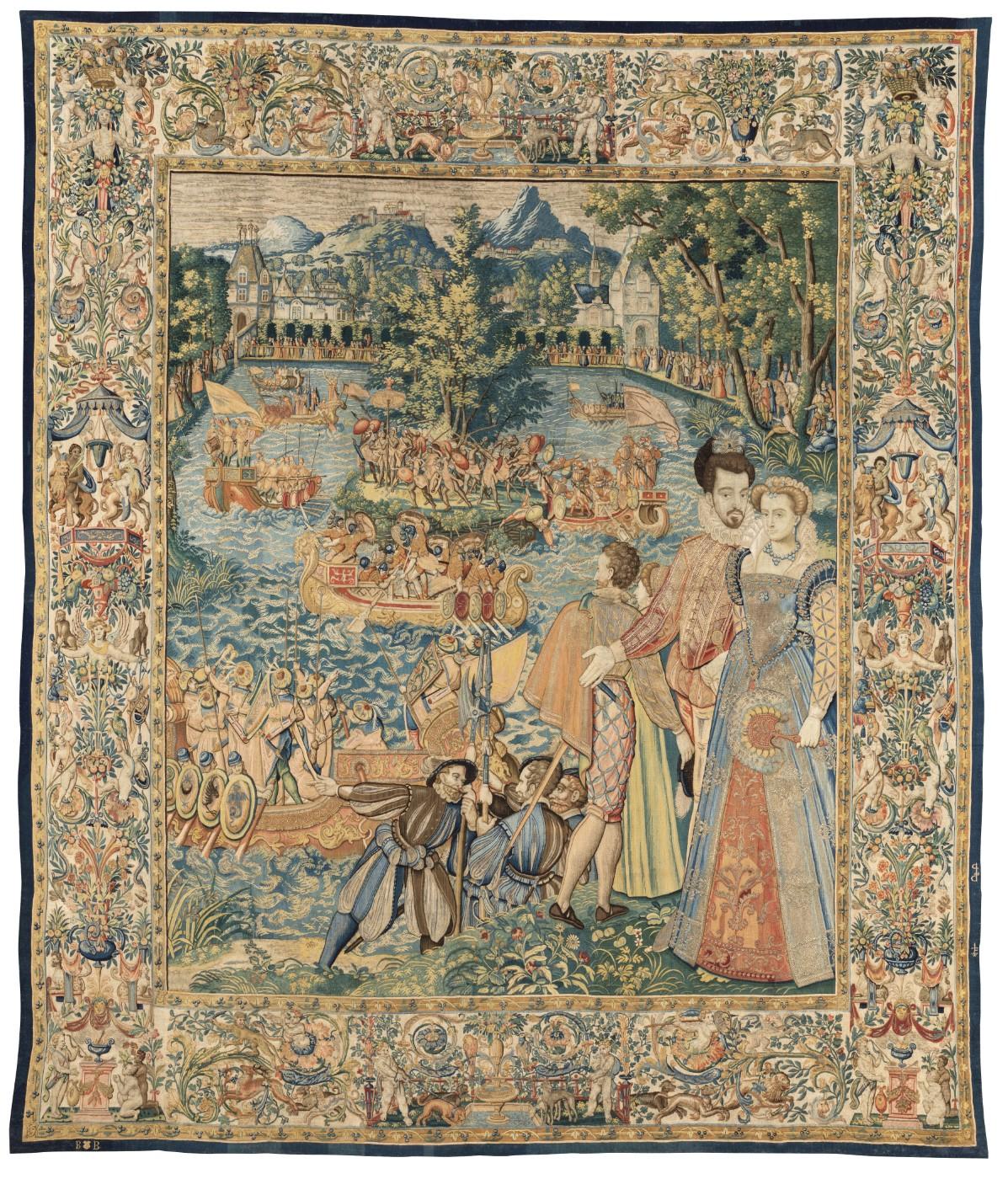
Okay, I'll admit it. I originally fell for the sixteenth century as a teenager, and for two reasons--the clothes and the castles. What better way to escape the humdrum of Midwestern suburbia than to dream of being a princess in a magnificent château? Over the years, my appreciation for the sixteenth century deepened, but I can't deny that the beauty and elegance of the Renaissance still tickles my fancy. Clothes, jewels, tableware--even everyday items added to the glamour of an era filled with pagentry.
With modern life rarely ever presenting an opportunity for fancy dress, who can help but be enchanted by the elaborate fashions and luxurious fabrics of the Renaissance?
François (1497-1547) insisted on a fashionably dressed court and often ordered--and paid for--gowns and accessories for his favorite ladies. He prized the fine silks and velvets produced in Italy and imported into France at the quarterly fairs in Lyon. In 1540, he granted Lyon a monopoly on raw silk imports, fueling the court's appetite for luxury fabric and ensuring that some of these gorgeous fabrics could be produced at home (view extant Italian samples here).
I'm not sure how comfortable any of these clothes were, but they definitely delighted the eyes!
Of course, fine clothes must be paired with exquisite jewels. Gold- and silversmiths created stunning pieces from gemstones and pearls imported from the Far East and Africa. Every courtier winked and glittered. Jewels could be sewn directly to the fabric of gowns and doublets
or set into fanciful gold and silver pendants.
Men and women alike wore concentric circles of gold chains that dangled to their waists, rigid collar-like necklaces called
carcanets, and jewelled collars that stretched from shoulder to shoulder.
Brooches, jeweled ribbons, and rings dazzled; hats and even hair were adorned with bling.
Being all dressed up with nowhere to go was never a problem for the Renaissance courtier; these courts knew how to party. Kings kept their courtiers busy hunting, dancing, feasting, and processing. Gowns and jewels could be shown off at balls,
royal entries,
and an endless stream of fêtes and festivals, held both indoors and out.
François, for example, hosted the Holy Roman Emperor Charles V on a multi-stage state journey through France in 1539, featuring days-long celebrations at Fontainebleau and Paris. Catherine de Medici arranged festivities and tournaments in Bayonne in 1565 during Charles IX's royal progress and threw a ball for the Polish ambassador at the Tuileries in 1573. There was never a shortage of activities, and the courtiers in attendance were expected to reflect the monarchs' glory in their own elaborate dress.
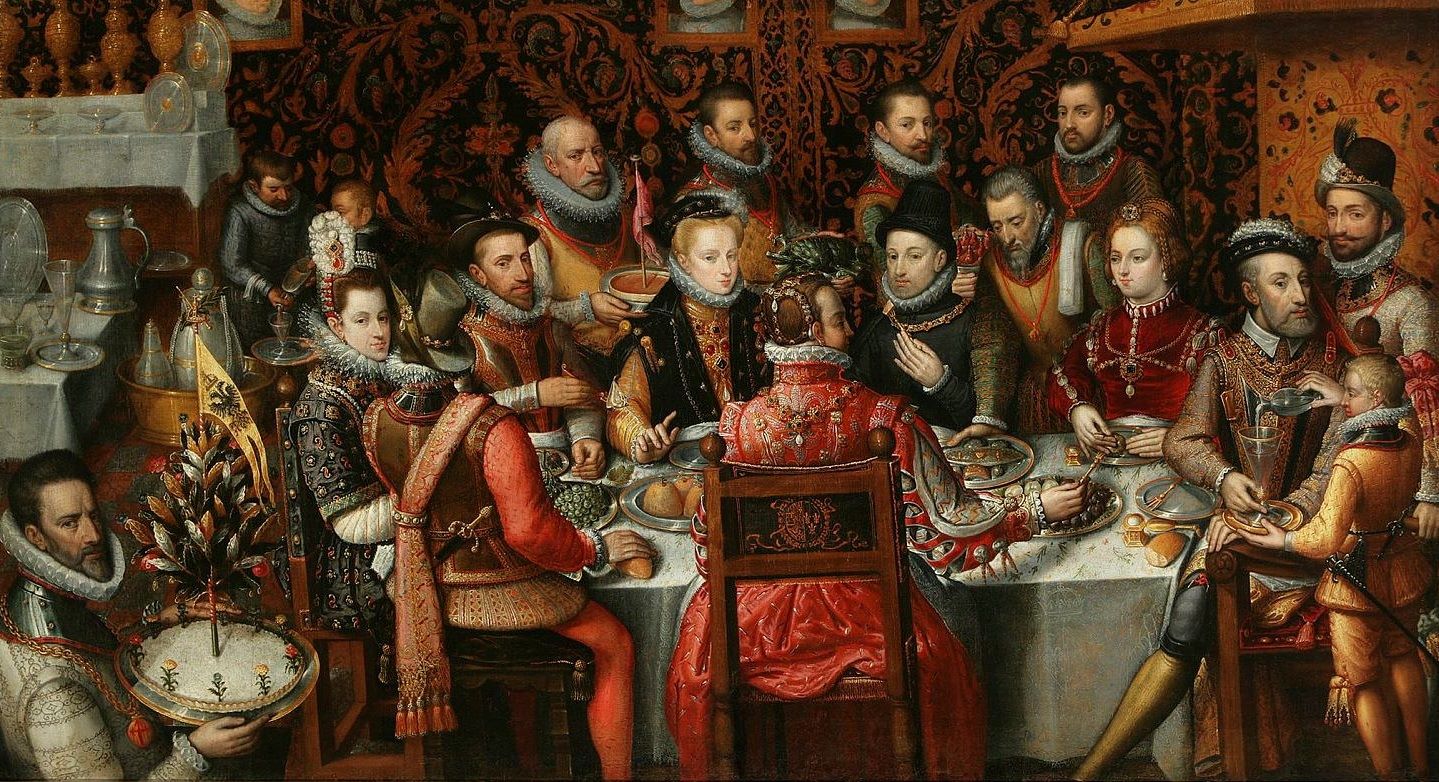
At feasts, servants poured wine from Venetian glass pitchers
and served food from enameled and majolica platters, works of art in their own right.
Courtiers ate delicacies like stuffed peacock, marzipan, seasonal fruits, and roasted game with silver Italian forks as they conversed and flirted and competed for favor.
Material culture during thte sixteenth century had an opulence and abundance quite different from today's more spare and streamlined tastes. The challenge for the novelist is to make this profusion of color, pattern, scent and texture real for the reader without overwhelming. Done well, the evocation of the Renaissance court can provide a reader of historical fiction a complete and fascinating escape from everyday twenty-first century life, one where she can experience unfamiliar beauty in a new and exciting way.






 Posts
Posts


.jpg)


