Showing posts with label guest post. Show all posts

Wednesday, September 30, 2020

Guest Post by Karen Odden: The “Mysnomer” in the Label “Historical Mystery”

I asked Karen Odden, author of the Victorian mysteries A DANGEROUS DUET (2018) and A TRACE OF DECEIT (2019) about the differences between historical mystery and straight historical fiction. Here's what she had to say!


The “Mysnomer” in the Label “Historical Mystery”
by Karen Odden

Years ago, one of the earliest readers of my first book, A Lady in the Smoke, wrote me this email: “I loved your book! My only issue was the cover. It says A Victorian Mystery, and it wasn’t really a mystery. It was all about characters and railway history—and I loved the romance!”


I stared at that message for a long time, truly perplexed. Yes, the book shows Lady Elizabeth Fraser’s difficult relationship with her mother, her dead father’s adultery, her budding relationship with the railway surgeon Paul Wilcox … but the railway crash happened because of flagrant corruption committed years before, and there’s another crime of enormous fraud about to be committed! Elizabeth and Paul must work together to uncover it before it happens. How is this not a mystery?

This question has nagged at me ever since, even as I wrote my next two books, giving rise to other questions: Where is the crossover between historical fiction and historical mysteries? And why do people who love historical fiction shy away from books labelled historical mysteries?

One clue came to me last year when I was at a mystery-writers’ conference, where two famous thriller writers agreed that they didn’t spend much time developing their secondary characters. One said, “There’s really only five types, right? A friend/ally, the villain, a thorn (bothersome but not the villain), the expert (who tells the detective something important), and the red shirt (the dead person).” Another explained that he jots down a secondary character’s age, hair color, eye color, maybe whether he smokes or drinks, a few habits—and that’s enough to start with. 

I found myself staring, disconcerted. This wasn’t how I worked. At all. I have stacks of backstory written for characters. I have a list, with every character, of physical traits, psychological aspects, bad habits, worst memories, who they love, what they want, and their deepest fears, along with pictures of objects in their homes and buildings they see on their daily walks.


Of course, thrillers are a particular sub-genre of mystery. They rely more heavily on plot than historicals or cozies tend to. And these writers are enormously successful, New York Times bestselling authors who have sold millions of books to avid fans. They’re crafting suspenseful, heart-pounding, fast-paced thriller mysteries.

But when it comes to historical mysteries, I’ve found readers have a different set of expectations.

Most readers of historicals (whether fiction or mysteries) frown when a book is poorly researched or contains anachronisms (like a Starbucks in 1970s New York). They roll their eyes at villains who have absolutely no redeeming traits and at overused tropes and conventional stereotypes, as in, “All Victorian women were prudes.” In general, readers are smart and savvy; they discuss works in book clubs; they read blogs and reviews; they want a book that entertains, provides an emotional journey, and even educates (without being a lecture). I know these readers—because I’m one of them! 

So when Julianne asked me to write about where historical novels and historical mysteries intersect, I did what I often do: I started researching by combing through my bookshelves. Like most avid readers, I own a mishmash of fiction, mystery, memoir, classics, how-to, some poetry, books from grad school and college, and some old childhood favorites I can’t part with. (Anne of Green Gables is up there, as are A Wrinkle in Time and The Witch of Blackbird Pond.) I also have (on low shelves, easily reachable) my non-fiction reference books on Victorian England railway systems, clothing, crime, country house architecture, and so on. 


I pulled down forty historical works to review, and this is what I found: the historical novels I truly love have some element of mystery, some dark secret from the past that must be discovered and resolved. And the historical mysteries that I love—many of which have received literary awards, including Canada’s coveted Costa Book of the Year and the Hammett prize for Best Novel of the Year—have complex, detailed world-building, fully developed characters, and fresh, descriptive language.

That led me to an insight. The label “mystery” is, in a way, a misnomer because it points to only one aspect of the book—the plot. This implies that the plot is paramount, as if detailed worldbuilding and complex characters and fresh, descriptive writing won’t be present, or at least not as present, as in a historical novel. 

But in reducing a book to a single element—the plot—the label “mystery” is like a cheesy trailer for what might be a great movie. It might steer some readers away from a finely wrought book that has many of the elements they love in historical novels! (Perish the thought of missing out on a good read!)

What are these elements? I’d say there are three main ones, common to historical novels and mysteries, that make a book a favorite for me:

First, all good historicals—whether novels or mysteries—rely heavily on worldbuilding. This usually means an author does enormous amounts of research. I have a map of 1870 London on my wall 


with a piece of string kept handy to map distances, so I can estimate, for example, how long it will take my main character to walk from one place to another. Solid worldbuilding means knowing how the streets are paved, who’s traveling on them at different times of day, and how they’re lit (if they’re lit). It means knowing the proper names for things: in 1870s London, a street vendor is called a “costermonger” and a sidewalk is called a “pavement.” I know what people ate in 1870s London, what sorts of books and objects were on tables in a woman’s parlor versus a man’s study, what the weather was like at different times of year, and what people wore, depending on their class.

An author of historicals also must know the specifics of historical events. For example, I set A Trace of Deceit very purposefully in 1875 because it needed to be after the Slade School of Art was founded in 1871, so my heroine Annabel could attend it, and also after the devastating Pantechnicon fire in Mayfair in 1874, so a priceless French oil painting that was supposed to have gone up in ashes can mysteriously reappear in Annabel’s brother’s studio. It’s important to get these small historical details and dates—easily fact-checked—correct. 

But more than that, it’s important to recognize the political, social, legal, and economic aspects that will govern or influence a character’s behavior. For example, in 1860s London, under the legal doctrine of “coverture,” a married woman could not keep her wages, divorce a violent husband, or claim her children as her own. But as of 1870, when the Married Women’s Property Act was passed, she could at last own property. That could be an important plot point, couldn’t it? My point is, it is important to stay true to the times. Victorian women had very real constraints put on their autonomy and behavior, and no amount of “feistiness” in a heroine can overcome that. 

Here are some of my other favorite historical mysteries for worldbuilding: David Liss’s A Conspiracy of Paper (an Edgar Award winner), set in eighteenth-century London, amidst coffee houses, drawing rooms, and bordellos. Another is The Gods of Gotham by Lyndsay Faye, set in 1845 New York, with its kerosene lamps, butcher paper, worn tombstones, New England rum, charcoal drawings, and bootprints (within the first two pages). Other favorites are A Rising Man by Abir Mukherjee, set in 1919 Calcutta; Anne Perry’s William Monk series, set in Victorian London; Baroness Orczy’s classic The Scarlet Pimpernel about the French Revolution; and Lou Berney’s November Road, set in 1963 New Orleans and beyond.


Second, both historical fiction and historical mysteries have narrative arcs that move both forward and backward. The critic Tzvetan Todorov wrote that a mystery novel “contains not one but two stories: the story of the crime and the story of the investigation.” That is, if there is a dead body on page 5, the remainder of the book is discovering how it got there in the first place (the “backstory”). But even in historical novels, there is almost always an ugly secret from the past, a sordid event, or something that led to the situation in chapter 1. If a book is to succeed, the characters have backstories—big, emotional backstories that have shaped their psychology and the way they look at the world. It’s inevitable there will be some skeletons back there. 

For example, in Kate Quinn’s historical novel The Huntress, in post-WWII Boston, the former Russian night bomber and war criminal Nina Markova is masquerading as a soft-spoken German widow. The plot is propelled forward by Ian Graham, a Nazi hunter, and young would-be photographer Jordan McBride, whose questions about The Huntress take them straight back to the crimes of the war. 


Third, they have life-like, psychologically complex characters. Precisely because we are asking readers to journey to another time and place, we have to have our characters deeply believable. They need to breath and live and love and hate before they get to the page, or they come off as mere vehicles for the plot. One of my favorite historicals for this is Stef Penney’s The Tenderness of Wolves. Set in 1867, in the Northern Territory, the main character Mrs. Ross stumbles upon a murder and sees the tracks leading from the dead man’s cabin north toward the tundra. Focalized through half a dozen characters, the story unfolds in a way that reflects the individuals’ old family hurts, systemic racism, long-standing fears and prejudices. I go back and reread this novel every few years for its a psychologically complex cast of characters. 

So I would say that historical mysteries and historical novels are really branches on the same tree. To me, the trunk of that tree is the true mystery (of books, of life)—namely, people’s psychology, motivations, fears, assumptions, behaviors, and beliefs. Where did they come from? What past experiences formed them? What misconceptions does my heroine have? And how must she grow and change in order to resolve whatever problem lies before her? This is the true mystery, after all, because all of us can only know each other in part. 

For more about the books I love, visit my book review blog. (Note: I do not review books I’d rate only one star or don’t finish.)

I’d love to hear about your favorite historicals, of whatever kind. Reach me at my website, on twitter: @karen_odden, or IG: @karen_m_odden. 

**********


Karen Odden received her Ph.D. in English literature from New York University and taught at the University of Wisconsin-Milwaukee. She has contributed essays and chapters to books and journals, including Studies in the Novel, the Journal of Victorian Culture, and Victorian Crime, Madness, and Sensation; she has written introductions for Barnes and Noble editions of books by Dickens and Trollope; and she edited for the academic journal Victorian Literature and Culture. She freely admits she might be more at home in nineteenth-century London than today, especially when she tries to do anything complicated on her iPhone. Her first novel, A Lady in the Smoke, was a USA Today bestseller and won the New Mexico-Arizona 2016 Book Award for e-Book Fiction. Her second novel, A Dangerous Duet, about a young pianist who stumbles on a notorious crime ring while playing in a Soho music hall in 1870s London, won the New Mexico-Arizona 2019 Book Award for Best Historical Fiction. A Trace of Deceit is her third novel. She resides in Arizona with her family and a ridiculously cute beagle named Rosy.

**********

Thanks to Amy Bruno of Historical Fiction Virtual Book Tours for arranging Karen Odden's tour.

Wednesday, September 4, 2019

"Writing About the Romanovs": Guest Post by Gill Paul, Author of THE LOST DAUGHTER

I'm excited to welcome Gill Paul to the blog today to talk about her latest novel, THE LOST DAUGHTER, recently released from William Morrow. I'm about a hundred pages in, and can assure you that this is a story you won't want to miss! A dual-timeline tale exploring the mystery of what truly happened to the Grand Duchess Maria Nikolaevna of Russia, daughter of the last Tsar, Gill's novel recounts the Romanov's tragic history with a captivaing blend of emotional sensitivity and narrative ingenuity.


Writing About the Romanovs
by Gill Paul

Why write a fictional account of the murder of the Romanovs when the historical facts are so dramatic and compelling? Yacob Yurovsky, leader of the execution squad, left detailed testimonies about the night of July16th, 1918. According to him, the shots the killers fired ricocheted off jewels the four daughters had sewn into the seams of their clothing, wounding but not killing them. They lay moaning in pain and shock, on a floor slippery with the blood of their mother, father and younger brother, as well as four servants who shared their fate. Then the murderers finished them off with vicious bayonet thrusts as they huddled together screaming in terror.

Olga, Tatiana, Maria and Anastasia, with Alexei,photographed in 1910.Photo courtesy of Wikimedia Commons.
The Romanovs were right up there amongst the wealthiest families of all time, closely related to most other European royals, and that gives their fate a fairy-tale dimension. There were no wicked stepmothers or scary ogres, but Nicholas and Alexandra were blinkered and unable to respond to the wind of change in Russia. They weren't lighting cigars with hundred-rouble notes, as cartoons depicted them, but there were priceless Fabergé eggs, the no-expense-spared royal yacht and train, and all those glittering palaces, while their people starved. It wasn't evil but it certainly wasn't smart.

Their children were blameless, though. The elder daughters worked as nurses during the war and helped refugees; the younger ones cut bandages and visited the wounded. They were naïve, devout young women, living the life they had been born into.

The Ekaterinburg basement.
Photo courtesy of Wikimedia Commons.
As a novelist, I couldn't resist trying to imagine how it felt to be them, through the sixteen months of house arrest, in conditions that became increasingly terrifying, and then during that last half hour in the Ekaterinburg basement. With fiction you can intensify the tragedy by letting readers relate to them as individuals. I've ventured into areas biographers can't go by giving the sisters dialogue, emotions and thoughts and a little bit of alternative 'What if?' history.

In fairy stories, princesses wait passively for rescue, and the common trope is that beautiful innocents are saved, Cinderella by her prince, Snow White by the seven dwarfs. In the 21st century we like our heroines to be braver and more in control of their fates, like Captain Marvel. Either way, the Romanovs got the wrong ending and it offends our story sense. Perhaps that is why novelists keep returning to them, as if in the retelling we can somehow make things right.

**********
Gill Paul's historical novels have reached the top of the USA Today, Toronto Globe & Mail and Kindle charts, and been translated into twenty languages. They include two novels about the Romanovs: The Lost Daughter, which has just been published by William Morrow, and The Secret Wife, which came out in 2016. Other novels include Women and Children First, set on the Titanic, and Another Woman's Husband, about mysterious links between Wallis Simpson and Princess Diana. Gill also writes historical non-fiction, including A History Of Medicine In 50 Objects. She lives in London, where she is working on her tenth novel and swims daily in an outdoor pond. Learn more about Gill Paul and her books at her website.

You can order THE LOST DAUGHTER from Amazon, Barnes & Noble, and independent booksellers everywhere.

Thursday, July 26, 2018

Guest Post: "Ohio Renaissance" by Martha Conway, Author of THE UNDERGROUND RIVER


Ohio Renaissance

Guest Post by Martha Conway,
Author of THE UNDERGROUND RIVER

In sixteenth century Ohio, there were no newspapers or printing presses, no mills or grindstones, no churches or cathedrals. There weren’t even any brick chimneys. The Native Americans who lived in the area included Chippewa, Ottawa, and Kickapoo. A few French explorers and missionaries wandered about, as well as a handful of European immigrants who were mainly fur traders or coureur de bois, backwoodsmen. In the Great Lakes region, more than a dozen Native American tribes collectively called themselves Wendat and formed what was known as the Huron Confederacy. Many of these lived along the Ohio River, too.


In the seventeenth century, the Beaver Wars (think Iroquois against everyone else) drove everyone out of Ohio for nearly one hundred years. That’s right, for nearly one hundred years the area was virtually empty of people. Can’t imagine that happening in Europe!

The Ohio River that I wrote about in my novel The Underground River— which takes place two centuries later — was a vastly different place. However, these changes had only taken place very recently. Until the turn of the nineteenth century, the river traffic was still mostly canoes. Slowly, European settlers came in with their keel boats and flatboats and barges. In 1793, Jacob Meyers started the first passenger keelboat service between Cincinnati and Pittsburgh, and in 1798 John Fitch built the first steamboat on the Ohio River.

In 1830, an actor/director named William Chapman built the first “Floating Theatre” on the Ohio River: a rectangular shed (the theatre) nailed onto a barge, which he poled downriver. His theatre troupe was comprised of his wife and eight children—a nineteenth century Partridge Family!—all of whom sang, danced, acted, and played at least two musical instruments.

They stopped in the little towns along the way, giving performances to people who did not get much in the way of entertainment in their lives. Since cash was scarce, the men and women (and children, at a reduced rate) often paid for their tickets with food, such as pies or wild game.

Chapman, a Londoner who trained in Drury Lane, shocked the rural townsfolk by having a painted drop curtain featuring a woman’s bare foot cooling in a stream. The local constable made him paint that over! He also had to contend with Yellow Fever and audiences so rustic that they sometimes didn’t understand what they were seeing was make believe. Before 1900, the showboat programs were mostly vaudeville: singers, dancers, comics, novelty acts, and the occasional short sketch or scene.


To me, the riverboat scene on the Ohio River is especially poignant because it was so short lived. Steamboats weren’t a regular feature of water travel until 1815 or so, and yet by 1845 railroads had begun their ascendancy. By the Civil War, the railroads were the preferred mode of travel.

What initially drew me to write about this period, however, was not so much the romance of water travel (although that was part of it), but the community that William Chapman and others fostered. When you go from town to town, you get to see how others live. And yet, there was tension, too. At the time of my novel (1838) the Ohio River was the natural division between the slave-holding South and the free North. This made for some conflict—which is always good for drama.

In fact, in pre-Civil War America, many slaves referred to the Ohio River as the River Jordan, a biblical name that represented freedom. Cross the Ohio River from Kentucky to Ohio (so low sometimes in summer that in parts you could wade across it), and you became free. If, that is, you weren’t caught afterwards by slave hunters; there is one of those in my novel, too.

I am from Ohio, and yet I learned more about the state and the river when I researched this novel than I ever did in my state history classes in grade school! I am amazed at the variety of what we would now call lifestyles. Ohio means “Great River” in the Seneca language, and it is.

************
Martha Conway grew up in Cleveland, Ohio, the sixth of seven daughters. Her first novel was nominated for an Edgar Award, and she has won several awards for her historical fiction, including an Independent Book Publishers Award and the North American Book Award for Historical Fiction. Her short fiction has been published in the Iowa Review, Massachusetts Review, Carolina Quarterly, Folio, Epoch, The Quarterly, and other journals. She has received a California Arts Council Fellowship for Creative Writing, and has reviewed books for the Iowa Review and the San Francisco Chronicle. She now lives in San Francisco, and is an instructor of creative writing for Stanford University’s Continuing Studies Program and UC Berkeley Extension. She is the author of THE UNDERGROUND RIVER.

For more information, please visit Martha Conway’s website. You can also find her on Facebook, Twitter, Instagram, and Goodreads.

************
Order THE UNDERGROUND RIVER from

AMAZON | BARNES & NOBLE | INDIEBOUND | BOOKS-A-MILLION | POWELL’S

************
During the Blog Tour, we will be giving away 5 custom-made coffee mugs. To enter, please use the Gleam link below.

--Giveaway ends at 11:59 pm EST on July 26th.  You must be 18 or older to enter.
--Giveaway is open to US residents only.
--Only one entry per household.
--All giveaway entrants agree to be honest and not cheat the systems; any suspicion of fraud will be decided uon by the blog/site owner and the sponsor, and entrans may be disqualified at our discretion.
--Winner has 48 hours to claim prize or a new winner will be chosen.


SaveSave

Tuesday, July 17, 2018

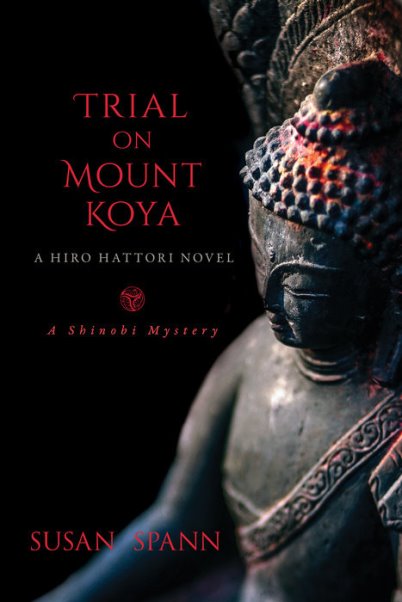
Guest Post: How Many Sticks Do You Need For A Sacred Fire? by Susan Spann, Author of TRIAL ON MOUNT KOYA


How Many Sticks Do You Need For a Sacred Fire?
by Susan Spann

Writing historical mystery means balancing a fast-paced, often intricate plot with compelling, historically accurate details. To keep the plot moving, I often have to eliminate the bulk of my research--including many details I find intriguing. Occasionally, however, the decision what to keep and what ends up on the proverbial "cutting room floor" becomes more difficult.


Case in point: the Shingon Buddhist ceremonies in TRIAL ON MOUNT KOYA.

While researching the novel, I spent time on Koyasan, staying in thousand year-old Shingon temples and attending both worship services and the goma (fire ritual) that the priests still perform each morning just after dawn. As with most religious rituals, the goma involves detailed preparations, numerous books, bowls, and implements, and follows a carefully prescribed liturgical pattern. I discussed the ceremony with the priests, observed it closely, and took copious notes (and photographs, and video recordings) to ensure I understood it in detail.


As a result, the first draft of the goma scene in TRIAL ON MOUNT KOYA ran several pages--far too long--and I found myself debating exactly how many sticks I needed to build this particular sacred fire. On one hand, the goma is an integral part of Shingon worship. I needed the ritual in the book, both to create a realistic portrait of Shingon temple life in the 16th century and to advance some character-related elements of the plot. On the other hand, too much detail bogs down the pace and bores the reader. (Never a good idea.)

Deciding which details to keep, and which to cut, seemed difficult until I re-watched the video clips and reviewed my favorite photographs of the goma ceremonies I attended. The photos, in particular, captured the ritual's essence--flickering tongues of fire in a darkened room, the shadow of a Shingon priest on the drum that accompanied his chant, and the clouds of incense I could almost still feel coating the inside of my nose.


These sensory memories set a course for my editing. By focusing on my senses--especially what I heard and smelled--I stripped away the extraneous details, leaving what I hoped would convey the sights and sounds of a dramatic Shingon ritual, wherein wooden prayers are consumed by sacred fire and carried to heaven on incense-laden smoke. While remaining true, and accurate, in the details that remained, my scene no longer contained esoteric dogma, the Sanskrit words most readers would not understand, or heavily descriptive passages that did not advance the plot.


To my surprise, the scene did a better job of conveying the ritual after editing, even though I removed almost three-quarters of the original goma scene. Less really was more--more readable, more evocative, and more successful at conveying the drama and suspense of the fire ritual.

Apparently, you don't need all that many sticks to build a sacred fire after all.

**********

Susan Spann is the 2015 Rocky Mountain FIction Writers' Writer of the Year and the author of six novels in the Shinobi Mystery series. She has a degree in Asian Studies and a lifelong love of Japanese history and culture. She is currently spending a year in Japan, researching her next two novels and climbing Japan's most famous mountains for her first nonfiction book, 100 SUMMITS, scheduled for publication in 2020. She posts photos and stories about her travels in Japan at www.susanspann.com.

**********
Read my review of Susan's novel here. Enter to win a copy of TRIAL ON MOUNT KOYA here!
Save

Friday, May 11, 2018

Guest Post by Mary Sharratt, Author of ECSTASY


SEVEN OF THE MOST MALIGNED WOMEN IN HISTORY
by Mary Sharratt
Women who stand out and dare to seize their power have been maligned throughout history. Even today many people are uncomfortable about the very idea of a powerful woman. Witness how Hillary Clinton was demonized in the 2016 presidential campaign. What other U.S. presidential candidate has been called “nasty” by their opponent or had their opponent literally looming over them during a live televised debate? Even women who would never dream of running for political office face every day misogyny and threats of violence for daring to speak out on the internet. It doesn’t matter what the woman has to say—the fact that she has spoken out at all has made her a target.  

I certainly encountered the “such a nasty woman” phenomenon while researching Alma Schindler Mahler, the protagonist of my new novel Ecstasy. Born in Vienna in 1879, Alma Maria Schindler was an accomplished pianist and aspiring composer who gave up her own music as a condition for her marriage to the great composer, Gustav Mahler. Later, after a marital crisis, she returned to composing and published three collections of her songs. She was married to—or had affairs with—some of the greatest creative geniuses of her time, including Gustav Klimt, Walter Gropius, Oskar Kokoschka, and Franz Werfel. She was also a pioneer in the field we now call artistic management and her networking skills benefitted the men she loved. But one would hardly know about her talents and gifts to read the biographies written about her.


Most of the Alma biographies are what Susanne Rode-Breymann, co-editor of the German edition of Alma’s diaries, has called “moralizing scandal biographies.” They focus almost exclusively on the sensationalistic aspects of Alma’s life—namely the fact that she dared to rewrite the feminine life script and claim her sexual freedom. Even the more “scholarly” of these tomes tend to read in places like trashy, voyeuristic novels. The biographers use Alma’s sexuality as a selling point for their books while standing in stern moral judgement of her and having nothing good to say about Alma as a human being, much less as a composer. This lurid focus on Alma’s sexuality, at the expense of all other areas of her life, demeans and degrades her. Alma is reduced to the men she was involved with and how she failed to be the ideal woman for them. Can you even imagine a biographer doing this to a “great man” like Picasso—ignoring his art to condemn him as a terrible husband and serial womanizer?
In my humble opinion, novelists have a much more difficult vocation than biographers. Unlike biographers, I must make Alma compelling and inspire the reader’s empathy. I must offer insight as to why Alma made the choices she did. I must show her in her full humanity. 
At least I know Alma is in good company. Here is a short history of “nasty women” and some excellent books that portray them in all their nuanced, multi-faceted glory.

Mary Magdalene, 1st century CE 

The most influential woman in early Christianity has been distorted beyond recognition as a weeping, humiliated ex-prostitute, despite there being no scriptural evidence to support this depiction. If that were not enough, we have the Da Vinci Code to thank for the most recent flood of new age conspiracy theories surrounding her. All of this obscures Mary’s key importance in the canonical Gospels. As one of Jesus’s closest disciples, she stood by him at the foot of the cross—after his male disciples fled. Present at his tomb, she was first witness to the resurrection. The risen Christ then bade Mary to tell the others the good news. And so she became Apostle to the Apostles. The noncanonical Gospel of Mary reveals her influence in early Christianity when her importance rivaled that of Peter’s. Whether or not she wrote the gospel attributed to her, this document certainly recognizes her authority. However in 590, Pope Gregory I decided to downgrade her by officially proclaiming her a whore. The Catholic Church didn’t recant this position until 1969.
Must read: Mary, Called Magdalene by Margaret George

Empress Wu Zetian, 624 – 705 CE 

The only female emperor in the history of China, Wu rose from humble beginnings as the fourteen-year-old concubine of Emperor Taizong, who was so captivated by her intelligence, he made her his secretary. After his death, Wu should have bowed to social expectation, shaved her head, and disappeared inside a Buddhist nunnery. Instead she married Taizong’s son Gaozong and ruled as empress consort, the true power behind her ineffectual husband’s throne. After Gaozong’s death, Wu ruled as empress dowager and placed first her eldest son and then her second-born son on the throne. When their leadership skills failed to impress her, she forced them to abdicate. From 690 to her death in 705 Wu ruled as emperor in her own name. She founded the Zhou Dynasty, introduced sweeping reforms to benefit her people, and declared herself an incarnation of the Maitreya Buddha. Ever uncomfortable with female leadership, her enemies spread many rumors about her, accusing her of all manner of treachery, including murdering her own baby daughter. After Wu’s death, they tried to erase her legacy, but all in vain. She is now remembered as one of the greatest leaders in Chinese history.

Must read: The Moon in the Palace by Weina Dai Randel


Malinche 1501-1551

The most hated woman in Mexican history, Malinche was Hernandez Cortés’s indigenous lover and chief strategist during his annihilation of Muctezuma’s Aztec Empire. Caught between clashing worlds, Malinche was one of twenty women that Tabascan chieftan Potonchan offered Cortés. Regarded initially as nothing more than a sex slave, Malinche soon distinguished herself by her negotiating skills. Fluent in both the Nahuatal languages of the interior and the Mayan languages of the coast, Malinche quickly learned Spanish and became Cortés’s main translator and guide. A complex figure, she played a pivotal role in history, bearing Cortés’s son Martin, the first mestizo of note, and later marrying the Castillian nobleman, Don Juan Xamarmillo. Has Malinche been unfairly slated? Pre-colonial indigenous Mexicans were not one unified people, but a collection of distinct cultures. To many of these people, the Aztec Empire was the hated enemy because it demanded tribute in the form of human sacrifice from subjugated tribes. What if Malinche, a woman of non-Aztec origin, was not a traitor so much as a warrior within her own context?

Must read: Malinche by Laura Esquivel


Mary I of England 1516 - 1558

The first woman to successfully claim the throne of England was the most reviled British monarch of all time. The fact that she burned 283 Protestants as heretics earned her the moniker “Bloody Mary” and history remembers her as the evil foil to her celebrated sister, “Good Queen Bess.” Yet Mary was no bloodier or more brutal than other rulers of her time. As the violence of the Reformation and Counter Reformation swept Europe, countless Catholics and Protestants on the “wrong” side of the sectarian divide were put to death—as were Jews and accused witches. On the plus side, Mary built up the British navy and reformed the militia, paving the way for Elizabeth I’s victory against the Spanish Armada. Used first by her father, Henry VIII, and later by her husband, Philip II of Spain, as a political pawn, Mary had no easy life and died in her forties. If anything, Elizabeth I was such an effective leader because she learned from her sister’s misfortune—Elizabeth made the radical choice to remain a “Virgin Queen” lest some man try to steal away her sovereignty.  

Must read: Mary Tudor: Princess, Bastard, Queen by Anna Whitelock

Catherine the Great 1729 - 1796


In the 34 years that she ruled the massive Russian Empire, Catherine the Great was the most powerful woman in the world. Born to a Prussian prince, she married into the Romanov family and became the unhappy wife of the unpopular Tsar Peter III. Catherine soon found herself involved in a coup to unseat her husband and install herself as empress. Eight days after abdicating, her husband was assassinated. Contrary to dark rumors, there’s no evidence Catherine was responsible. A highly educated polymath who corresponded with Voltaire and wrote an opera in her spare time, Catherine dragged a country still mired in a medieval mindset into the Enlightenment. Her lovers were many and she made one such paramour the King of Poland. A formidable military leader, she quelled more than a dozen uprisings. But most of her brave deeds have been forgotten—the average person on the street is more likely to know the urban myth that Catherine died having sex with a horse. She actually passed away after suffering a stroke.

Must read: The Winter Queen by Eva Stachniak


Billie Holiday 1915 - 1959 

Despite the fact that she never learned to read music and despite her struggles against racism, misogyny, and poverty, Billie Holiday triumphed to become one of the greatest jazz musicians of all time. Over fifty years after her death, her voice remains distinctive and unforgettable. Her 1939 song “Strange Fruit,” about the lynching of an African American man, was so controversial, it couldn’t be played on the radio. A powerful indictment of racism, “Strange Fruit” would become the first protest song of the 20th century. Yet for all her achievements, Holiday’s reputation remains steeped in sensationalism, especially regarding the heroin and alcohol abuse that eventually killed her at the age of 44. Why is she primarily remembered for her addiction and not her ground-breaking brilliance? “You don’t do the same thing when you talk about Sigmund Freud,” contemporary jazz musician Cassandra Wilson has pointed out. “Everyone knows he was a coke addict . . . but we don’t talk about that. We talk about him being the father of psychoanalysis.” (Link to Wilson quote: http://www.poisedmag.com/cassandra-wilson-reflects-on-billie-holiday-at-100/ )

Must read: Lady Sings the Blues by Billie Holiday and William Dufty

Ethel Rosenberg 1915 – 1953 


In 1953 Ethel Rosenberg and her husband Julius were executed by electric chair for betraying U.S. nuclear secrets to the Soviet Union. Both Rosenbergs protested their innocence up until their deaths. In the 1930s, Ethel had joined the Young Communist League, which did not help her case. While on trial for espionage in 1951, Ethel endured the heartbreak of having her own brother, himself an admitted spy, testify against her. Her refusal to burst into tears in court was interpreted to prove that she was an unwomanly monster who cared more about communism than her two young children. After the Rosenbergs’ execution, their sons, Michael and Robert, were adopted by Abel Meeropol, activist and writer of the song, “Strange Fruit.” Michael and Robert spent years trying to prove their parents’ innocence until they discovered declassified documents which indicated that their father was indeed involved in espionage. But Ethel’s role in any conspiracy seemed negligible. Her sons unsuccessfully petitioned President Obama to have their mother exonerated.

Must read: The Hours Count by Jillian Cantor

**********
Mary Sharratt is on a mission to write women back into history in their full nasty glory. Her novel, Ecstasy, about celebrated bad girl Alma Mahler, was an Amazon Best Book of the Month for April, a Chicago Review of Books Book of the Month, and a New York Post Must Read Book. Visit her website: www.marysharratt.com

**********
Visit all the stops on the ECSTASY by Mary Sharratt Historical Fiction Virtual Book Tour.

Thursday, July 2, 2015

Guest Post: "Why is a Raven like a Writing Desk?" by LJ Cohen; ITHAKA RISING Book Giveaway

For the last four years, I have been privileged to participate in an online critique group with nine fantastic writers. Not only do we live from one end of the country to the other, but we write in several different genres. Science fiction is the specialty of LJ Cohen. LJ has just published ITHAKA RISING, the second volume of her Halcyone Space series, a YA Space Opera:


A derelict ship and a splintered crew are not the rewards Ro had hoped for when she helped disrupt her father's plans to start a war with smuggled weapons. But with the responsibilities of full citizenship and limited resources, she's forced to take her father's place working as an engineer on Daedalus station while she and Barre try to repair their damaged freighter, Halcyone. Barre's brother, Jem, is struggling with the disabling effects of his head injury, unable to read or code. His only hope is to obtain a neural implant, but the specialists determine he's too young and his brain damage too extensive.

When Jem disappears, Barre and Ro race to find him before he sells his future and risks his mind for a black market neural implant. But locating The Underworld along with its rogue planet Ithaka has political consequences far beyond what Halcyone's crew imagine, pitting Jem's life against deadly secrets from a war that should have ended forty years ago.

As LJ is also an accomplished poet, I asked her how writing poetry and writing science fiction might be related.

Why is a raven like a writing desk?

LJ Cohen
www.ljcohen.net

. . . or how is writing poetry related to writing science fiction?

According to Lewis Carroll, there actually isn't a true answer to his nonsensical riddle from Alice in Wonderland, but I do have an answer to my question.

Having been a poet for a far longer time than I have been a writer of fiction, I maintain that poetry - or at least the tools of poetry - underlies all effective writing. Not only that, but in writing speculative fiction, those tools can enhance world building and reader immersion in fundamental and crucial ways.

The poetic tools I'm going to focus on are specificity, musicality, and comparisons. All three can heighten the reading experience of your novel, especially novels of speculative fiction.

Specificity:

Not only do I read and write poetry, I also teach poetry writing with school aged children and the first thing I tell them is that poetry is like orange juice concentrate: it's all the 'pow' of language without any of the water.

Which is a more vivid way of saying that in poetry every single word counts and needs to more than carry its own weight. This is where specificity becomes crucial.

This is the opening sentence from ITHAKA RISING:

Barre turned up the music, and it transformed his mind into a concert hall with perfect acoustics, transporting him more than a dozen wormhole jumps and a few centuries away from the ruined bridge of the broken ship.

It would be hard to read this as anything other than science fiction. Why? Because of the specificity of the language: transformed, transporting, wormhole jumps, centuries, bridge, ship. Any one of these words could be used in many contexts, but putting them all together, and the ship is a space ship.

A few lines further down is this:

The ancient symphony soothed him, and as his hands did the grunt work of stripping wires and creating splices, his mind composed a more modern counterpoint, weaving synthesized computer tones though the main theme.

Again, the key words are ancient, modern, synthesized, and computer. Along with the specificity that clues the reader in on setting are descriptive words of the character's physical actions. Barre isn't just working, he's 'stripping wires and creating splices.'

The English language is rich with synonyms. The one you choose to convey an action or a description will carry with it layers of meaning and resonance. Sure, your character can walk, but she can also skip (is she a child?), saunter (is she running a scam?), limp (is she injured or disabled?), lurch (is she drunk?), or stumble (is she clumsy?).  Drill down until you find the right word for the specific situation/character/action that will convey the most information in the least space. That's a key essence of poetry and it works well in fiction, too.

Musicality

You might have guessed from the two sentences above that one of my characters in ITHAKA RISING is a musician. Barre is a composer, and used a neural implant device to create and play back music. He also uses it to communicate with the ship's artificial intelligence.

Yes, that's Science Fiction, but we also use musical language to communicate. The rhythm, tone, and feel of language helps convey added meaning. Many English words come from two distinct linguistic heritages: Latin and German. Latinate words tend to be long, smooth words. They can slow the pace of a piece of writing, or create a sense of ease in the text. Germanic words are short and sharp. They can speed up the pace and enhance tension.

Some examples: Relinquish is Latinate. Leave is Germanic. Commence (Latinate) vs. start (Germanic). Purchase (Latinate) vs buy (Germanic). Prohibit (Latinate) vs ban (Germanic.) I think you get the idea.

Here we see a series of short, sharp words used to create a sense of urgency and change from the prior, more languid sentences:

An alarm tore through the music. As Barre jerked up, his head clipped the bottom lip of the console.

tore/jerked/head/clipped/lip are all words that add a staccato rhythm to the sentence. These changes in rhythm work on a very primal part of our brains to signal us to pay a different kind of attention to the language. Again, a poetic tool enhances the reader experience.

Comparisons - simile and metaphor

This may be the most powerful weapon in a writer's arsenal. (And yes, that is an example of a comparison: a metaphor.)  A simile is a comparison that uses 'like' or 'as'. A metaphor compares two things by superimposing them without using like or as.

Comparisons are so common in our everyday language, we often don't even notice them. Cool as a cucumber, white as a ghost, poor as dirt are some examples of similes. Metaphors are even more pervasive: have you ever been dog tired? Spent time? Has a remark ever been out of bounds? Those
are all comparisons we use all the time. We rarely even stop and think about where they arise from, but they are often culturally relevant.

It is that cultural relevance that makes comparisons such a powerful tool in speculative fiction.

In this segment, Jem Durbin is sneaking out of his family's quarters at night, and is concerned that his parents will find out.

Jem let the tablet dissolve on his tongue, hoping it would at least take the edge off. He ran his hand along the wall of his room toward the door. Pausing, he listened. It was well into third shift and his parents would be long asleep, unless one of them was on call and there were emergencies. Well, if
he didn’t take the jump, he’d never make it out of local space.

That final sentence is a metaphor that is completely in line with Jem's life and his experience as a child of the space-faring diaspora.

And in these two sentences, Ro Maldonado is struggling to deal with her anger and frustration. Here you see another space-related image:

Instead, she compacted the anger into a tiny black hole and added it to all the rest. Someday, it would eat its way through her, leaving emptiness behind.

Even in the dialogue, I chose to create expressions that are similar enough to current usage that they would be familiar, but also would comfortably fit in the universe of Halcyone Space. For example, the characters might say 'Holy mother of the cosmos' as an exclamation. Or 'seismic' for cool.

Each of these individual choices help to build a believable world for the reader and create an atmosphere where the story becomes real.

And that is the power of poetry.

**********
LJ has generously offered two copies of ITHAKA RISING, one trade paperback, one ebook, for a random drawing for US readers. Leave a comment below with your name, email address and format preference by 11 pm PST on July 11, 2015. Winners' names will be drawn at random and posted by Monday morning, July 13. Good luck!

**********
You can learn more about LJ Cohen and her work at her website. She also blogs regularly at Once in a Blue Muse.

ITHAKA RISING is available as a trade paperback and in all ebook formats  from Amazon, BN, Kobo, iBooks,  and Google Play. It is the companion novel to DERELICT, which New York Times bestselling author Lynn Viehl praised as "an edgy, nonstop flight into an audacious SF future." Publisher's Weekly says, "Cohen has real talent with character development and interaction, and prickly, defensive Ro is a sympathetic and interesting heroine."


Tuesday, August 6, 2013

Guest Post: "Life and Hope--Why I Write Historical Fiction for Teens" by Katherine Longshore

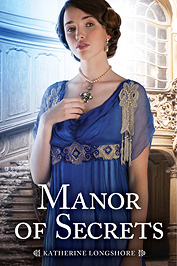
I met Katherine Longshore last winter at a reading of GILT (Viking Juvenile, 2012), her Young Adult novel about the friendship between Henry VIII's fifth wife, Catherine Howard, and Kitty Tilney, the abandoned youngest daughter of minor aristocracy. Since then, Katherine has published TARNISH (Viking Juvenile, 2013), a Young Adult read about Anne Boleyn and the poet Thomas Wyatt. Her forthcoming MANOR OF SECRETS is a "Downtonesque" story of two girls living very different lives in an Edwardian manor house (Scholastic, February 2014). Katherine and I share a love for the sixteenth century, and during the course of our conversation I asked her why she chooses to write for the Young Adult audience and how writing historical YA differs from writing historicals for adults. Here are her well-considered answers.

**********
Life and Hope--
Why I Write Historical Fiction for Teens 
by Katherine Longshore

When I started writing my first published novel, GILT, it never occurred to me to question why I chose to write historical fiction for teens.

I knew—intuitively, viscerally—that I wanted to write for young people.  A librarian friend of mine once said that when people approached her, looking to learn about life, she sent them to the YA section. Everything is there—friendship, betrayal, growth, wisdom, pain, death, destruction, first loves, first kisses, first grief. But because it is all from a teen’s perspective, there is also future, and to me, future means hope. A YA novel looks forward into life, instead of looking back (like adult novels written about youth—Prep by Curtis Sittenfeld, Old School by Tobias Wolff, even A Separate Peace, which is taught in high schools, but is really—in my opinion—not YA).  Looking forward is a gift. As the Lumineers say in their song Flowers in Your Hair, “’It takes a boy to live/It takes a man to pretend he was there.” I wanted to write about life. And hope. And finding the path to the person you’re supposed to be.

I stepped into the historical part of my writing after my husband reminded me of the maxim, Write what you know. “You know history. Why not write that?”

I’d been studying Henry VIII and his wives for years, trying to figure out their motivations, their strengths, their psychologies. What drove this man to cling to his tenuous birthright so determinedly?  What drove him to strive so forcefully for a male heir? What made him think he could change the world, bend it to his will? What made him believe so wholeheartedly that he was right?

And what compelled these six women to marry him? Did they leap at the chance? Stumble reluctantly toward their fates? Follow unthinkingly the reasoning of the men in their lives?

Lastly, what if the hypotheses of the historians are just that—conjecture based on limited evidence? Was Anne of Cleves truly ugly, or are those conclusions based on the hearsay of toadying courtiers? Was Jane Seymour truly just a simple, quiet, unassuming woman or was that just a ruse to trap the king? When I came to write GILT, my biggest question was, “What if Catherine Howard wasn’t an ignorant floozy, but a clever—if uneducated—girl in touch with her own sexuality?” I wanted to write for teens, I wanted to write about Henry VIII’s reign—his only teenage queen was Catherine Howard.  It seemed a good character—and a good question—with which to start. My second novel, TARNISH, is about a young Anne Boleyn—before her involvement with the king. My question was, “What if Anne wasn’t a manipulative schemer but began as a girl in search of a dream—a place in a society that forced her to be a second-class citizen?”

Then comes the difficulty. How to write about a queen whose life is ended through execution for treason and write it looking forward into life? More importantly, how do I write about a girl who lived 450 years ago and make her story relevant and relatable to a modern teenager?

I start by looking back at my own teen years. What was important to me? The two things that spring immediately to mind are friendship and dreams (which, I suppose, could also translate into ambition). I wanted to be an actress and I wanted good grades, so that’s what I spend my high school years striving toward. The moments I remember best, however, are with my friends.  Building a cake castle for my fourteenth birthday. Sitting on the balcony outside the stage door of the auditorium, watching the sunset. Hanging out on the beach and building sand sculptures the summer after I graduated.

And crushes. I was too busy—and too shy—in high school to pursue a relationship. But that didn’t stop me from wanting one. I was a bit of a late bloomer, so I look to after high school to remember what love and sex and heartbreak were like for the first time.

With those things in mind, I build a story around the scaffolding of history. The story has to be something to which modern readers can relate. In GILT, it’s a dysfunctional friendship. In TARNISH, it’s first love and pursuit of dreams. In MANOR OF SECRETS, coming out in January, it’s friendship again. And my third Tudor book, due out next summer, is about all of these—friendship, love, betrayal and loss. As devoted as I am to historical accuracy, my books are not “about” the history, but about the story. I’d like to think that if the story were somehow taken out of context and placed into a different setting—a modern high school, a spaceship, a future dystopian world—that the story would hold up (with a few tweaks—obviously the consequence of promiscuity in a modern high school would not be decapitation).

My writing style also lends itself to a more modern-sounding voice, which I hope helps teenagers to connect to the story.  I’ve had some readers write to me to say how refreshing it was to read a historical novel that didn’t use archaic language and sentence structure. (“It doesn’t sound all Shakespearean,” one reader said.) But to others, my voice sounds anachronistic.  And I voluntarily admit to using anachronistic words and phrases (best friend and sex are the two that come immediately to mind, as well as the occasional oath where I choose a more modern vocabulary to carry the impact that damn no longer does). I maintain my voice and choose my words carefully—the way I write is not accidental or through ignorance. Like I said, I want to do everything I can to make my books accessible to my audience.  Occasionally, I get slammed for it. But because I did it purposefully—and because my target audience seems to appreciate it—I take the hit on the chin and just keep writing.

The hardest part about writing historical fiction for teens is finding my audience and reaching out to it. Unfortunately, historical carries the aftertaste of history, which is all too often associated with schoolwork—long dreary days memorizing dates and placenames, and “Shakespearean” language. Reading for fun should take you away from all that, right? Many teens these days turn to futuristic worlds, contemporary worlds with magical elements or contemporary books that reflect their real lives.  Historical fiction is a “genre” still blighted by preconceptions. I just hope that with wildly popular television programs like Downton Abbey and successful historical hybrids like Robin LaFever’s GRAVE MERCY series or Libba Bray’s DIVINERS, that more teens will be turning to historical fiction as just a cracking good read—not something that has to be endured or tried under duress.

We all know how exciting history can be. The one time I met Julianne we must have spent twenty minutes chatting enthusiastically about Henry VIII and Francois I and the Field of Cloth of Gold. It’s great stuff—better than soap opera because it was real. Better than reality TV because it happened without the fabricated set-up.

I write historical fiction for teens because I want them to experience it, too.

**********
You can learn more about Katherine Longshore and her novels at her website.