Showing posts with label Susan Spann. Show all posts

Tuesday, July 17, 2018

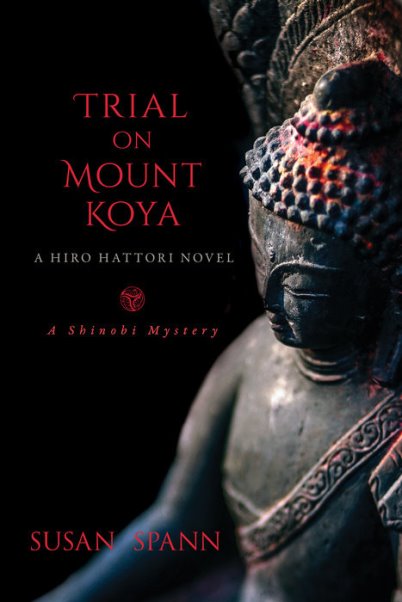
Guest Post: How Many Sticks Do You Need For A Sacred Fire? by Susan Spann, Author of TRIAL ON MOUNT KOYA


How Many Sticks Do You Need For a Sacred Fire?
by Susan Spann

Writing historical mystery means balancing a fast-paced, often intricate plot with compelling, historically accurate details. To keep the plot moving, I often have to eliminate the bulk of my research--including many details I find intriguing. Occasionally, however, the decision what to keep and what ends up on the proverbial "cutting room floor" becomes more difficult.


Case in point: the Shingon Buddhist ceremonies in TRIAL ON MOUNT KOYA.

While researching the novel, I spent time on Koyasan, staying in thousand year-old Shingon temples and attending both worship services and the goma (fire ritual) that the priests still perform each morning just after dawn. As with most religious rituals, the goma involves detailed preparations, numerous books, bowls, and implements, and follows a carefully prescribed liturgical pattern. I discussed the ceremony with the priests, observed it closely, and took copious notes (and photographs, and video recordings) to ensure I understood it in detail.


As a result, the first draft of the goma scene in TRIAL ON MOUNT KOYA ran several pages--far too long--and I found myself debating exactly how many sticks I needed to build this particular sacred fire. On one hand, the goma is an integral part of Shingon worship. I needed the ritual in the book, both to create a realistic portrait of Shingon temple life in the 16th century and to advance some character-related elements of the plot. On the other hand, too much detail bogs down the pace and bores the reader. (Never a good idea.)

Deciding which details to keep, and which to cut, seemed difficult until I re-watched the video clips and reviewed my favorite photographs of the goma ceremonies I attended. The photos, in particular, captured the ritual's essence--flickering tongues of fire in a darkened room, the shadow of a Shingon priest on the drum that accompanied his chant, and the clouds of incense I could almost still feel coating the inside of my nose.


These sensory memories set a course for my editing. By focusing on my senses--especially what I heard and smelled--I stripped away the extraneous details, leaving what I hoped would convey the sights and sounds of a dramatic Shingon ritual, wherein wooden prayers are consumed by sacred fire and carried to heaven on incense-laden smoke. While remaining true, and accurate, in the details that remained, my scene no longer contained esoteric dogma, the Sanskrit words most readers would not understand, or heavily descriptive passages that did not advance the plot.


To my surprise, the scene did a better job of conveying the ritual after editing, even though I removed almost three-quarters of the original goma scene. Less really was more--more readable, more evocative, and more successful at conveying the drama and suspense of the fire ritual.

Apparently, you don't need all that many sticks to build a sacred fire after all.

**********

Susan Spann is the 2015 Rocky Mountain FIction Writers' Writer of the Year and the author of six novels in the Shinobi Mystery series. She has a degree in Asian Studies and a lifelong love of Japanese history and culture. She is currently spending a year in Japan, researching her next two novels and climbing Japan's most famous mountains for her first nonfiction book, 100 SUMMITS, scheduled for publication in 2020. She posts photos and stories about her travels in Japan at www.susanspann.com.

**********
Read my review of Susan's novel here. Enter to win a copy of TRIAL ON MOUNT KOYA here!
Save

Monday, July 16, 2018

Review and Giveaway: TRIAL ON MOUNT KOYA: A Hiro Hattori Novel by Susan Spann


Guided by the conviction that men kill for three reasons--power, money, or love--Hiro Hattori, protagonist of Susan Spann's TRIAL ON MOUNT KOYA (Seventh Street Books), races to unravel a disturbing series of murders at a remote Buddhist temple. Sent to deliver a secret message to an Iga ninja residing there, Hiro and Father Matteo become trapped at the monastery by a violent storm. As thunder booms and snow swirls in impenetrable clouds, a murderer begins to pick off the monks one by one, leaving the victims posed as one of the thirteen jusanbutsu, or deities that judge the souls of the dead. Realizing that the number of jusanbutsu matches the number of individuals at temple--including themselves--Hiro and Matteo must unmask murderer and motive before all succumb. Judging love and money as unlikely factors behind murders at an impoverished monastery, Hiro focuses on the power struggles that complicate the monks' attempts to name a new abbot. Only when Matteo becomes the murderer's next target does Hiro recognize the error in his thinking. But how to outwit someone intent on creating a grisly council of the dead?


TRIAL ON MOUNT KOYA succeeds as both compelling mystery and rich historical fiction. The closed situation--a given number of individuals isolated in an inescapable location with an unknown killer among them--keeps tension high and forces the characters into a persistent state of mistrust. The realization that each victim personifies one of the thirteen jusanbutsu only adds to the strain, as survivors attempt to predict who will be next to die and how. The abbot falls victim early on, leaving the monks without a designated leader and exposed to the danger of factions. The presence of a prickly pilgrim allows for the possibility of outside political involvement, and Hiro and Matteo are never above suspicion in the eyes of the monks. The oppressive weather not only heightens the danger by muffling sounds and obscuring sight, but adds the stress of a ticking clock--the murderer obviously intends to complete the monastery's annihilation by storm's end. Spann manipulates these elements of suspense with great finesse, creating a true page-turner of a plot that culminates in an emotionally satisfying and logically convincing conclusion.


Even more notable in this sixth installment of the Shinobi Mysteries is the seamless fusion of psychological insight with cultural history. The murderer's modus operandi vividly exposes readers to Buddist teachings on death and final judgment. Each victim's gruesome pose permits discussion of a particular Buddist avatar, while the entire chain of murders opens discussion of how Buddhism treats the passage of souls from this life to the next. These teachings are integral to understanding the murderer's twisted motivation. None of the earlier Shinobi mysteries delves so far into religious questions, but in TRIAL ON MOUNT KOYA Buddhist and Christian teachings confront each other in a direct and sustained manner. Father Matteo finds himself forced to counter Buddhist teaching with his own Christian convictions and comes directly under suspicion for murdering in the service of a rival religion. Spann treats this clash of philosophies with admirable insight, adding depth to Matteo's character and aspirations even as she humanizes a murderer whose horrific acts have a noble, if ultimately warped, purpose.

Politics simmers below the surface in this latest Shinobi Mystery, allowing questions of a more philosophical bent to bubble to the surface. Yet the underlying threat posed by Japan's feuding overlords remains ever present and ever dangerous to the Portuguese priest and his mission. Hiro cannot afford to let guilt and the heartbreak of lost love cloud his vision as Father Matteo falls into the hands of a murderer struggling to redeem his own disappointed devotion. Ingenious, ambitious, and resoundingly successful, TRIAL ON MOUNT KOYA is Susan Spann's best novel yet.

AMAZON | BARNES AND NOBLE | INDIEBOUND


**********
Susan Spann is the award-winning author of the Shinobi Mystery novels featuring ninja detective Hiro Hattori and Portuguese Jesuit Father Matteo. 

After earing an undergraduate degree in Asian Studies from Tufts University in Boston, Susan earned a law degree.    She currently specializes in intellectual property and business and publishing contracts. Her interest in Japanese history, martial arts, and mystery inspired her to write the Hiro Hattori novels set in sixteenth-century Japan. 

Susan is the 2015 Rocky Mountain Fiction Writers' Writer of the Year, a former president of the Northern California Chapter of the Mystery Writers of America, and a member of Mystery Writers of America, Sisters in Crime, the Historical Novel Society, and the Rocky Mountain Fiction Writers. She is represented by literary agent Sandra Bond of Bond Literary Agency. 

When not writing or representing clients, Susan enjoys traditional archery, martial arts, photography, hiking, and traveling in Japan. 

For more information, please visit Susan's website. You can also find Susan on Facebook and Twitter (@SusanSpann), where she founded the #PubLaw hashtag to provide legal and business information for writers. 

**********
Giveaway

During the Blog Tour, we will be giving away 5 copies of TRIAL ON MOUNT KOYA! To enter, please use the Gleam form linked below.

Rules
--Giveaway endes at 11:59 pm EST on August 8, 2018. You must be 18 or older to enter.
--Giveaway is open to US residents only.
--Only one entry per household.
--All giveaway entrants agree to be honest and not cheat the system; suspected fraud will be decided upon by the blog/site owner and the sponsor, and entrants may be disqualified at our discretion.
--Winner has 48 hours to claim prize or a new winner is chosen.

 https://gleam.io/competitions/KPAPn-trial-on-mount-koya

**********
Blog Tour Schedule

Tuesday, July 3
Kick Off at Passages to the Past
Wednesday, July 4
Interview at Donna’s Book Blog
Thursday, July 5
Interview at T’s Stuff
Feature at The Bookworm
Friday, July 6
Guest Post at Jathan & Heather
Sunday, July 8
Review at Carole Rae’s Random Ramblings
Tuesday, July 10
Feature at Historical Fiction with Spirit
Wednesday, July 11
Review at Oh, for the Hook of a Book!
Thursday, July 12
Guest Post at Oh, for the Hook of a Book!
Friday, July 13
Review at Jorie Loves a Story
Monday, July 16
Review at Writing the Renaissance
Tuesday, July 17
Guest Post at Writing the Renaissance
Wednesday, July 18
Review at Beth’s Book Nook Blog
Friday, July 20
Feature at Maiden of the Pages
Saturday, July 21
Review at Cup of Sensibility
Tuesday, July 24
Feature at Svetlana’s Reads and Views
Thursday, July 26
Feature at Encouraging Words from the Tea Queen
Friday, July 27
Interview at Dianne Ascroft’s Blog
Monday, July 30
Review at Pursuing Stacie
Wednesday, August 1
Feature at CelticLady’s Reviews
Thursday, August 2
Review at A Book Geek
Friday, August 3
Interview at Jorie Loves a Story
Sunday, August 5
Feature at What Is That Book About
Monday, August 6
Review at Broken Teepee
Wednesday, August 8
Review at Reading the Past


SaveSave
SaveSaveSaveSaveSave

Wednesday, August 17, 2016

Interview with Susan Spann, Author of THE NINJA'S DAUGHTER


Today I welcome my friend Susan Spann, author of the popular Shinobi Mystery series set in sixteenth century Japan. Susan has just published the fourth novel in the series. In THE NINJA'S DAUGHTER (which I reviewed yesterday), master ninja Hiro Hattori and Portuguese Jesuit Father Mateo investigate the murder of an actor's daughter from the Kyoto theater district--an investigation that soon reveals a mysterious golden coin, a forbidden love affair, a missing mask, and a dangerous link to corruption that leaves both Hiro and Father Mateo running for their lives. I hope the following interview with Susan will have you running to your nearest bookstore for a copy of THE NINJA'S DAUGHTER as soon as you reach the end!

THE NINJA’S DAUGHTER is set in the theater district of sixteenth-century Kyoto, with actors as primary characters. What about this milieu particularly appealed to you as a rich setting for a historical mystery?

Medieval Japanese culture was multifaceted, with each social or mercantile group coexisting but also living distinctly separately from the others. I love exploring a different aspect of the culture in every book, and the theater world had such fascinating customs that I wanted to bring it to life. For example, the custom that only men could act on the stage made women far less prominent in the acting guilds than they often were among merchant families. The idea that an actor’s daughter might not accept her societal role—and what might happen to her as a result—intrigued me, and that in turn gave birth to THE NINJA'S DAUGHTER.


What is your favorite scene from THE NINJA’S DAUGHTER and why? Which scene was the most difficult to write?

My favorite scene is one that actually didn’t appear in the original manuscript. My fabulous agent, Sandra Bond, read the completed story before we sent it on to my editor, Dan Mayer, at Seventh Street Books. When she finished reading, she sent me an email that basically said, “it’s great . . . but it needs another death.” Without giving away too much (or any spoilers) I added a scene in which Hiro and Father Mateo have to deal with an unexpected (and unwanted) body.

All of the scenes involving the victim’s family were difficult to write, because of their high emotional charge. The victim was a teenaged girl, and portraying that loss realistically was difficult, both in the writing and on an emotional level.

Last year you were able to travel to Japan for research. How have your descriptions benefitted from your sensory experience of Japan? Did cultural or historical discoveries influence the trajectory of your plot?

I adore Japan, and spending time there definitely impacts my novels. The biggest benefit is walking in the footsteps of my characters—seeing the temples and shrines that form the settings of many scenes in the novel helps me set the scenery in a more realistic and accurate way. For example, visiting Fushimi Inari shrine helped me recreate the nō play that takes place near the base of Mt. Inari in THE NINJA'S DAUGHTER.

I spent a lot of time researching nō theater and the performers’ customs, particularly the treatment of the special, often sacred masks the performers wore on stage. Although most of that research did not make it onto the page, my fascination with masks did inspire and influence one of the story’s major subplots.


Since I’ve never written a mystery, I’d love to hear how you construct one. Do you begin from a forward-looking “what if” sort of question or work backwards from a desired end result? Do you layer in different characters’ reactions and alibis in subsequent drafts or do you have most things worked out before you begin? As you write, how do you judge whether misdirection and red herrings are working?

Since I write series mystery, I already have my detectives and their basic world in mind before I start each book. Because of that, I normally start with the setting and work from there. THE NINJA'S DAUGHTER is unusual, because it was originally supposed to be set among the outcaste classes—butchers and tanners—but I switched it to a theater book about halfway through the initial draft when I realized my original setting wouldn’t work for the plot I had in mind. (Fortunately, I already knew I wanted to write a theater book, so it was more a matter of overlaying the theater on the existing skeleton than a total rewrite.)

With most of my mysteries, including next year’s BETRAYAL AT IGA, I start with a setting—for that book, the mountain village that’s home to my detective’s Iga ninja clan—and then decide what kind of death would likely occur in that particular time and place. Since the Iga ninjas were assassins, and Hiro and Father Mateo are traveling there to keep the peace during tense negotiations with the rival Koga clan, the most alarming death I could imagine was the murder of the Koga ambassador, by poison, under conditions that made it look as if the Iga clan was responsible for his death. The rest of the plot, the suspects, and the story grew from there.

I write an 8-10 page outline before I start drafting, and most of the alibis, red herrings, and major clues get figured out at the outline stage. Once I start writing, however, the outline always changes. New characters show up unexpectedly, existing characters act in ways I hadn’t anticipated, and I often discover subplots and additional clues as I go along.

Hiro and Father Mateo have worked together now through four novels. How has their relationship changed since the first book? What obstacle/character flaw/cultural restriction poses the greatest threat to their friendship? Do you foresee a time when their mutual trust might become sorely tested?

Hiro and Father Mateo’s relationship has definitely deepened, and their friendship strengthened substantially, since CLAWS OF THE CAT. They’ve begun to trust one another more, which allows me to share more about them with readers (through their communications). Their different perspectives—Hiro’s pragmatism and Father Mateo’s faith—continue to be stumbling blocks on occasion, but their growing mutual respect allows them to get along despite their differences.

Their mutual trust will absolutely be tested in future books, starting with the next installment, BETRAYAL OF IGA.

Of the numerous secondary characters who populate your novels, which intrigues you the most? Has any character turned out very different from what you first envisioned?

I love writing secondary characters, because they can be so unique and so different—and because I don’t necessarily have to bring them back in every book. Many of them do surprise me, mainly by becoming more important to the story than I originally anticipated. In THE NINJA'S DAUGHTER, my favorite secondary character is the victim’s younger brother, Haru. The scene in which he saves a giant Japanese beetle runs a close second for my favorite scene in the book.

THE NINJA’S DAUGHTER is your fourth published novel. How have you progressed as a writer since penning the first, CLAWS OF THE CAT? How do you challenge yourself to improve and grow, especially within the confines of a series?

I try to improve my craft with every book I write (and hopefully, I succeed!). My dialogue skills have definitely improved since CLAWS OF THE CAT, and I think my characters have more depth now, too. I’ve learned to tap into deeper emotions, which was important for THE NINJA'S DAUGHTER.

From a series perspective, I don’t let myself get away with repeating tricks. Each novel has to involve a different kind of murder, in a different setting, and my ninja detective, Hiro, has to use a different kind of ninja skill or tool in every book. In the future installments, I’ll also be putting my medieval Japanese spin on a few classic mystery tropes, like the “locked room murder”—but presented in a fresh, new way.


What advice do you have for aspiring writers, especially in today’s difficult market?

To quote the movie GALAXY QUEST: “Never give up—Never surrender.” Publishing is difficult, and the journey to publication can be long, hard, and apparently never-ending. It took me ten years and five full manuscripts to find my agent and secure my first publishing deal. Many times, I wondered if the effort was worth it or if I should just give up. The problem is, you never know if the last rejection really was the last one, and the next response you receive might be the “yes” that you’ve been waiting for.

My advice is keep writing, keep believing, and keep pushing forward. As soon as you finish one book, start the next one. Each manuscript you write will make you stronger, and bring you that much closer to fulfillment of your dream.

**********
You can learn more about Susan Spann and her books at her website.


Tuesday, August 16, 2016

Review: THE NINJA'S DAUGHTER: A Hiro Hattori Novel by Susan Spann


Exciting as it is to discover a new author's works, it can be even more satisfying to watch a favorite author's novels grow richer and ever more compelling. Susan Spann takes her Shinobi Mysteries to a new level with this fourth installment, THE NINJA'S DAUGHTER, newly released from Seventh Street Books. Spann sets ninja detective Hiro Hattori and Portuguese Jesuit Father Mateo on a quest to identify the killer of an actor's daughter found strangled on a riverbank in sixteenth century Kyoto, Japan. As the men question suspects and seek motives, Spann probes the pair's pasts and scrutinizes their deepening friendship. Tantalizing glimpses of Hiro's and Mateo's inner lives enhance the novel's well-constructed plot and endow the story with an emotional richness the series' earlier books lacked.

From the back cover: When an actor's daughter is murdered on the banks of Kyoto's Kamo River, master ninja Hiro Hattori and Portuguese Jesuit Father Mateo are the victim's only hope for justice. As political tensions rise in the wake of the shogun's recent death and rival samurai threaten war, the Kyoto police forbid an investigation of the killing, to keep the peace. Undeterred, Hiro and Father Mateo undertake a secret investigation into the exclusive world of Kyoto's theater guilds, where nothing, and no one, is as it seems. Their investigation soon reveals a mysterious golden coin, a forbidden love affair, a missing mask, and a dangerous link to corruption that leaves both Hiro and Father Mateo running for their lives.

Of particular interest and importance to this book is its theatrical setting. Although their vocation required them to interact with members of the upper classes, Japanese society of the time viewed actors as social outcasts, individually dispensable and subject to strict rules of etiquette. Within a troupe itself, an actor's position and duties were determined by age, skill, and sex. Choosing an actor's daughter--the lowest of the low--as the murder victim allows Spann to not only expose her readers to a fascinating milieu, but to examine questions of personal dignity and self-determination--questions upon which Father Mateo's Christian worldview sets him in direct oppostion to Hiro's cultural mores. Plunged into a world where masks are continually donned then shed, Hiro and Mateo find their own masks--the habitual personas they've adopted to survive--beginning to slip. The murdered girl's similarity to someone in Father Mateo's past affects him deeply and causes him to reveal to Hiro memories long suppressed; Hiro, though displaying an assassin's ruthlessness when circumstances require it (and they do), finds himself questioning long-held assumptions and betraying a compassion his sardonic veneer cannot completely hide. No longer deniable, the influence of each man on the other lends a certain piquancy to their interactions and an added dimension to their investigation, which seeks to reclaim the dignity of a woman robbed of the destiny she struggled to forge.

Spann's handles the large cast of characters and intricate plot with deft assurance, taking care to insert the immediate mystery into the overarching political conflict without overwhelming it. Likewise, she provides enough context from the previous books to orient new readers without boring dedicated fans (or spoiling the earlier tales' reveals). Hiro's wry perspective and dry humor provide a delicious counterbalance to Father Mateo's honest earnestness and selfless dedication to saving souls. If you've yet to read a Hiro Hattori mystery, you're in for a treat; if you've enjoyed the earlier installments, you'll find THE NINJA'S DAUGHTER particularly satisfying--even as it leaves you hungry for Hiro's next adventure.

**********
Susan Spann has published three previous novels in the Shinobi Mystery series: CLAWS OF THE CAT, BLADE OF THE SAMURAI, and FLASK OF THE DRUNKEN MASTER. She has a lifelong love of Japanese history and culture. When not writing, Susan works as a transactional attorney and raises seahorses in her marine aquarium. You can learn more about Susan and her books at her website.

Sunday, August 9, 2015

Review: FLASK OF THE DRUNKEN MASTER by Susan Spann


FLASK OF THE DRUNKEN MASTER by Susan Spann (Minotaur, 2015) continues the exciting adventures of ninja spy Hattori Hiro and the Portuguese priest he must protect in sixteenth century Japan. While Kyoto stews in uneasy anticipation as rival warlords plot for control of the city, Hiro and Father Mateo must prove the innocence of their friend Ginjiro, a brewer accused of murdering an indebted colleague. The victim, who had been seeking Ginjiro's sponsorship for admittance into the brewer's guild despite his spendthrift son owing Ginjiro a significant sum, is found felled by violent blows to the head in Ginjiro's alley. The police immediately arrest Ginjiro, assuming he murdered the man over the unpaid debt. Ginjiro faces execution in a matter of days unless Hiro and Father Mateo can find evidence to exonerate him. The duo's shrewd investigation quickly unearths other suspects--a missing merchant, a vicious debt collector, a female moneylender--all with sufficient motive for murder. But can Hiro winnow the possibilities and name the perpetrator before the magistrate pronounces judgment--and before chaos descends upon a city, endangering the foreign priest's life and mission?

As she did in the series' previous installments, CLAWS OF THE CAT (2013) and BLADE OF THE SAMURAI (2014), Spann once again proves herself adept at constructing a compelling, watertight plot that keeps the reader wondering at the murderer's identity up until the very last pages. This meticulous storytelling unfolds against an ever-broadening evocation of sixteenth-century Japanese society. Each book in the Shinobi series concentrates its action in a specific milieu. CLAWS unveils the stylized world of the tea-house and its samurai clientele, while BLADE recreates the offices and interactions of government functionaries. FLASK moves into the commercial stratum of society, evoking the world of rice merchants, brewers, and money-lenders. Other than Hiro, only a single samurai mixes it up with the working class characters who populate this story, which leads the reader deep among the bins of rice warehouses, the vats of sake breweries, and the alleys of the merchant district. It is Father Mateo's mission and status as an outsider that permit him and Hiro to penetrate these different social niches--a pretext the author uses to full advantage. With a unique setting and particular characters, each Shinobi mystery feels fresh, even as it adds another facet to the broader historical world Spann so painstakingly reanimates.

photo credit
In any good mystery, the protagonist's quest to solve the murder serves as a crucible in which his own character is tested and transformed. THE FLASK OF THE DRUNKEN MASTER is no exception to this rule. The rigors of the investigation strain the fledging friendship between Hiro and Mateo by highlighting the differences in their outlooks and ethics. Mateo's western religion causes Hiro no end of puzzlement, specifically its condemnation of lies. The two men have a falling out over the questioning of a suspect, and Father Mateo's anger at Hiro's flippant approach to the tenets of the Christian faith causes Hiro to realize that he has, indeed, disrespected his friend's beliefs. This incident marks a change in their relationship and addresses the question that ever lurks in the reader's mind as to what degree the ninja will or will not be influenced by his exposure to Christianity. A ruthless act he commits several chapters later reminds the reader that Hiro is still very much a professional assassin, but the earlier incident establishes a precedent for potential religious/ethical questioning in a future book. In any case, it adds an interesting wrinkle to the pair's evolving relationship and proves it to be moving beyond the polite formality of employer and employed, despite Hiro's efforts prevent emotion from complicating--or compromising--his protective mission.


The tightly constructed murder mystery, the detailed look at an unfamiliar segment of Japanese society, and the deepening of Hiro's character satisfy all the more, given the seamless way Spann weaves them into the broader mystery of who has hired Hiro to guard the priest, how the imminent clash of clans might endanger Mateo, and why. The particular mystery of the brewer's murder might be solved, and convincingly so, but these overarching questions continue to tease. FLASK whets the reader's thirst to pursue answers, and Susan Spann's precise pen and vivid imagination have proven more than up to the task of providing them.


Thursday, October 16, 2014

Bags Full of Reading Goodness

Several weeks ago, I made a general plea to my Facebook author friends. I was interested in putting together a basket of autographed books for my son's school auction. I asked that anyone interested in helping donate a signed copy of her book in return for some publicity on the blog. I was astounded and humbled by the response. Eleven authors sent me one or more copies of their book(s); two others offered, but unfortunately, I was not able to receive their books in time. This generous response from the writing community allowed me to put together two baskets, each valued at approximately $185. I divided the books into two lots and packaged them in bookish totes from Barnes & Noble along with fancy bookmarks.


Here is a list of authors who donated their books. If you are looking for holiday gifts or excellent additions to your own library, please consider purchasing something from this list. I have read most of the books myself; many I've reviewed here on the blog and additional reviews will be forthcoming. They are all excellent reads.

Helene Wecker, THE GOLEM AND THE JINNI
Ann Weisberger, THE PROMISE and THE PERSONAL HISTORY OF RACHEL DUPREE
Maryanne O'Hara, CASCADE
Patricia Bracewell, SHADOW ON THE CROWN
Heather Webb, BECOMING JOSEPHINE
Anna Elliott, KITTY BENNET'S DIARY
Susan Spann, CLAWS OF THE CAT and BLADE OF THE SAMURAI
Julie K. Rose, OLEANNA
LJ Cohen, DERELICT, THE BETWEEN, and FUTURE TENSE
Marci Jefferson, GIRL ON THE GOLD COIN
MK Tod, UNRAVELLED
Lucy Pick, PILGRIMAGE
Laura Bradbury, MY GRAPE ESCAPE and MY GRAPE VILLAGE

I am very grateful to my author friends and thrilled that new readers will soon experience their wonderful books. These bags are sure to start a bidding war at the auction! I wish I could bid on them myself.

Thanks again to all involved!