Showing posts with label C.W. Gortner. Show all posts

Friday, October 23, 2020

Why Read Historical Fiction Set in Sixteenth Century France? Reason #9

Two reasons left! As a literature professor as well as a writer, I hold this one close to my heart.

Reason #9--LITERARY LINEAGE

Current historical fiction set in sixteenth century France participates in a rich tradition stretching back to the seventeenth century. In fact, the novel most scholars consider to be the very first historical novel written in French was set during the sixteenth century--La Princesse de Montpensier by Madame de La Fayette.

Penned in 1662, La Princesse de Montpensier is set a hundred years earlier, during the Wars of Religion. With great psychological depth, it tells the story of Renée d'Anjou-Mézières, a young noblewoman trapped in a loveless marriage, who falls victim to her passion for the Duc de Guise. Guise's friend, the Duc d'Anjou (who will take the throne as Henri III), himself becomes enamored of Renée, with disastrous results. La Fayette's novel is the first to take actual historical personnages as characters and set them in circumstances in which historical tensions and events (the 1572 St. Bartholomew's Day Massacre) are intrinsic to the plot. The novel was made into a successful film by noted director Bernard Tavernier in 2010


and in 2017 became the first book by a female author included on the baccaularéat littéraire, the exam that grants French youth a secondary school diploma. Madame de La Fayette's better-known novel, La Princesse de Clèves (1678), also exploits a sixteenth century setting. A psychological drama that takes place at the court of Henri II, it too explores the theme of love versus duty.

The literary roots of historical fiction set in sixteenth century France push even deeper. The era was a favorite of the prolific French author Alexandre Dumas (1802-1870). Best known for Le Comte de Monte-Cristo (1844-46) and Les Trois Mousequetaires (1844), Dumas wrote a series of seven "Valois romances." La Reine Margot (1845) tells the story of the politically-motivated marriage between Catholic Marguerite de Valois (daughter of Henri II and Catherine de Médici) and Protestant Henry of Navarre and the bloody St. Bartholomew's Day Massacre that followed it. This novel has been made into film several times, most recently in 1994.


Dumas's Valois romances also include Ascanio (1843), a novel about François I and Benevuto Cellini that became the basis of an opera, as well as novels about Henri II, Catherine de Médici, François II, and Henri III.

The twentieth century saw an explosion of interest in sixteenth century France as a setting for historical fiction. In 1935 and 1938, the German author Heinrich Mann wrote two novels about Henri of Navarre, who ruled as Henri IV.


Eleanor Hibbert, under the pseudonym Jean Plaidy, wrote three novels about Catherine de Medici,  Madame Serpent (1951), The Italian Woman (1952), and Queen Jezebel (1953), recently reissued by Atria. Plaidy's books were the ones that sparked my love for historical fiction as a teenager.


Dorothy Dunnett set two volumes of her excellent and intricate Lymond Chronicles in Renaissance France, Queen's Play (1964) and Checkmate (1975).


Robert Merle, a French author, wrote the Fortune de France series from 1977-2003. These thirteen novels view the second half of the sixteenth century through the eyes and adventures of a Huguenot doctor-turned-spy. Merle's novels have sold over five million copies in France, where he has been called "the modern Dumas." The novels are slowly being translated into English by Pushkin Press; the first four are presently available.


Kate Mosse is currently writing a series set in during the religious conflicts. The Burning Chambers came out in 2018; The City of Tears is set to published this coming January. I believe a third volume is in the works.


Among the writers who have published stand-alone novels set in sixteenth century France are Judith Merkle Riley, The Master of All Desires (1999);


Diane Hager, Courtesan (2006);


Jenny Diski, Apology for the Woman Writing (2009);


Christopher Gortner, The Confessions of Catherine de Medici (2011);


and Sophie Perinot, Médicis Daughter (2015).


Historical fiction set in sixteenth century France has a long history and vibrant future. Many angles, personalities, and events remain to be explored and transformed into compelling, thought-provoking, and entertaining novels readers will be eager to read. 

**********
Be sure to read Reasons #1-8 (ESCAPE, RELEVANCE, DRAMA, EMOTION, GLITZ, HISTORY, FRANCE, and CHATEAUX) before I unveil the final reason next week!


Thursday, March 26, 2015

Review and Giveaway: MADEMOISELLE CHANEL by C. W. Gortner


MADEMOISELLE CHANEL by C. W. Gortner
William Morrow/HarperCollins, March 2015
384 pages
ISBN: 978-0062356406

What happens when an author known for his convincing, dramatically compelling depictions of the sixteenth century tries his hand at the twentieth? He does a superb job! C. W. Gortner, who has penned vivid fictional portraits of Juana la Loca, Catherine de Medici, Isabella of Castile, Mary Tudor and Elizabeth I, reconstructs the life and ambition of early twentieth century icon Coco Chanel in his latest novel, MADEMOISELLE CHANEL. With the attention to detail and vigorous narrative drive readers of his early modern fiction have come to expect, Gortner recreates the unsettled glamor of wartime Europe and the woman who constructed both a self and a fashion empire amid grueling uncertainty and near constant upheaval.

Gortner’s novel attempts to answer the question Coco herself poses in the short prologue: “Who is Coco Chanel?” An enigmatic and intensely private woman, the historical Coco presented a carefully cultivated public persona that promoted the allure of her “look.” Yet was she as aloof and self-interested as she appeared? In his chronological exploration of her life, Gortner uncovers the psychological wounds that may have prompted Coco to withdraw behind protective defenses.

The opening chapters of the novel depict Coco's childhood as one of poverty and loss. Abandoned by her father after the death of her mother and raised in a convent orphanage, young Gabrielle has nothing but her skill with a needle, her fashion sense, and her determination with which to forge a better life. Though she dreams of opening a hat shop, with no ready capital she must supplement her meager sweatshop salary by singing in local cabarets under the sobriquet “Coco.” There, she attracts the attention of the Étienne Balsan, heir to one of the largest fortunes in France. Although she does not love him, Coco becomes his mistress. Balsan introduces her to a life of luxury, but one of industry, too. He indulges her “hat hobby” and Coco soon gains a large clientele among the socialites of Balsan’s circle. Through him she meets rich industrialist Arthur Capel, who becomes the love of her life. Capel finances her first shop in Paris (she eventually repays every penny, with interest) and slowly her business grows. By 1912 she is designing clothes as well as hats and opening far-flung boutiques. But unlike other women of her age, Coco has no desire for marriage or children. She is wedded to her work, to her success, and to her aesthetic.

As Coco's astounding career unfolds through two world wars, the reader cannot help but attribute her prickly self-reliance to an underlying fear of being abandoned yet again, of slipping back into the poverty and obscurity she only just managed to escape. This dread remains ever with her, defining her relationships with colleagues and employees, tainting her friendships, determining whom and when she will love. In probing Coco’s inner life, Gortner stirs the reader’s compassion for this controversial figure. His admiring yet candid assessment inspires respect for a complicated, resolute woman who was not above conspiring with Nazis if it might win her imprisoned nephew his freedom and her enterprise a measure of protection from the vicissitudes of war.

In his effort to understand and unveil his elusive subject, Gortner follows Chanel from backwater cabaret to busy atelier, from Parisian townhouse to elegant yacht, from occupied hotel dining room to German prison, never shirking the difficult or less than complimentary moments of her life. Who, ultimately, is Coco Chanel in Gortner’s eyes? A pragmatist. A visionary. A survivor. And like his indomitable heroine, C.W. Gortner displays, in this breakout book, an ability to rise to new challenges and succeed with admirable finesse--and good measure of panache.

**********
C.W. Gortner is the international bestselling author of six historical novels, translated in over twenty-five languages to date. His new novel, MADEMOISELLE CHANEL, traces the tumultuous rise to fame of iconic fashion designer Coco Chanel. In 2016, Random House will publish his eighth novel, VATICAN PRINCESS, about Lucrezia Borgia. Raised in Spain and a long-time resident of the Bay Area, C.W. is dedicated to companion animal rescue from overcrowded shelters. Visit his website. Follow him on Facebook and Twitter. Subscribe to his newsletter. Buy the book: HarperCollins, IndieBound, Amazon, Barnes & Noble.

**********
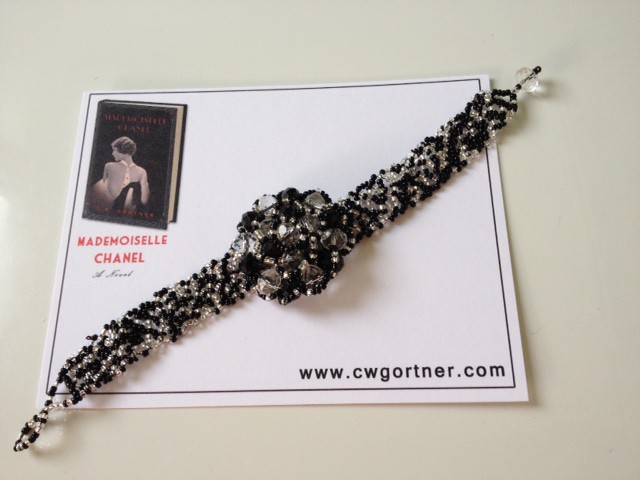
You can enter the giveaway here or on the book blogs participating in this tour. Be sure to follow each participant on Twitter/Facebook; they are listed in the entry form below. Visit each blogger on the tour: tweeting about the giveaway every day of the tour will give you 5 extra entries each time! Just follow the directions on the entry form. Six winners: five printed copies + one beautiful, handcrafted beaded bracelet inspired by Coco's black and white signature colors and camellia design. Open to US readers only.


Mademoiselle Chanel bracelet

Click on the banner to read other reviews, excerpts, guest posts and interviews

Mademoiselle Chanel banner

Thursday, October 30, 2014

Interview with C.W. Gortner, author of THE TUDOR VENDETTA

Yesterday I reviewed C.W. Gortner's newest novel, THE TUDOR VENDETTA. Today, C.W. answers some questions about the novel and his other works.

Welcome, Christopher! Congratulations on penning this most satisfying ending to your three-book Spymaster Chronicles series. It is quite evident from your writing that you felt a strong affinity for these characters. Which one of them will you miss most and why?

I’ll miss them all. I’ve lived with them for years, and as with any character that a writer creates, be it historically-based or fictional, you end up spending a lot of time with them. You get to know them intimately and they become your friends, even the ones who do rather terrible things. I also loved this series for the freedom it gave me, to search the crevices of history and develop suspenseful stories around certain events. But perhaps mostly, I’ll miss Brendan and Elizabeth. I think he has matured over the course of three books and come into his own. He’s been a wonderful, challenging character to inhabit. And Elizabeth, too, constantly surprised me as a character; she transformed, showing unexpected sides of herself. She did what she had to, to get ahead. I think she must have been quite something to know personally, and I’m honored to have had the chance to write about her.

Is there any historical evidence that someone of Brendan’s lineage might have actually existed?

There is, of course, evidence of royal bastards; Henry VIII sired at least one that we know of. But there is no evidence of someone with Brendan’s particular lineage. That was the fun part—to come up with a plausible origin for him and then explore how a man hidden from the world, unaware at first of who he is, must cope with his secret when he’s thrust into the thick of court and attempts to protect himself and those around him. I think that despite all the evidence we have of people who lived hundreds of years ago, there is still a lot we shall never know. Everyone has secrets; it’s not unreasonable to assume that Tudor royalty had secrets, too. This was a time of intense scrutiny and little privacy, but also a time of no paparazzi (though foreign ambassadors came close) and no cell phones or photos. People in the public eye could still hide things they didn’t want others to see, if they knew how to go about it.


In your opinion, were Elizabeth and Robert Dudley ever actually lovers? Do you think Elizabeth would give a man such power over her? 

I don’t personally believe Elizabeth fully consummated a sexual relationship with Dudley. I believe they were indeed lovers in almost every way that matters, certainly on an emotional basis, and to an extent, physically, as well. But I also think we romanticize them to fit our own needs; we want to believe Elizabeth found fulfillment as a woman and Dudley was her pining suitor. The truth, however, is more complex—and to me, more interesting. We must take into account the realities of sexuality in the Tudor era. Birth control was imperfect at best, and Elizabeth was no fool. Once she gained the throne, she did everything in her power to minimize risks to her position: her aversion to war, to the execution of her own cousin Mary of Scots, who posed a significant threat, among others, attest to her legendary caution. In addition, her adolescent exploits resulted in a scandal that put both her and her servants at risk, and ended with the beheading of a man who, by all accounts, she loved. And because of her mother Anne Boleyn, Elizabeth must have learned early in life to equate sexual surrender with danger and death. I think her adolescent imbroglio was the one exception; in her later years, she showed evidence of a lifelong sexual frustration through the demands she put on her women to remain unwed, her rage when one disobeyed her, and ceaseless need for adulation. But I also think she made the choice upon winning the crown to never submit, and Dudley was not a devoted lover willing to lie at her feet. He came from an ambitious family and was, like most noblemen, always seeking his advantage. He wanted more than she was willing to give, which created a tension that fueled their attraction. Elizabeth understood there is nothing more tantalizing than forbidden fruit; she knew how to play Robert and keep him enthralled, even if in turn, her ploy exacted from her a heavy toll. She never forgot that her mother lost her freedom the moment she let herself be won.

Are you surprised at the endurance of reader interest in the Tudor era? Do you think the craze will ever fizzle?

I think it has its ups and downs. Interest is waning now due to overexposure, but after another fallow period, the era will rise again. These are fascinating, larger-than-life people in a tumultuous time, who also are very human; we are drawn to them because of their struggles and weaknesses as much as their strengths or triumphs. Not a happy dynasty, but one that has all the elements we look for in stories—drama, passion, intrigue, death, love and loss. It really doesn’t get better than the Tudors, whose reigns precipitated so much upheaval and change, and whose iconography is forever cemented in our popular imagination.

Who are some “underused” historical characters from the Renaissance you would like to see feature in novels?

Certainly, Renaissance France deserves more attention. Northern Europe, as well. I’d love to see more books about the Ottoman Empire, too. English history tends to dominate historical fiction in the US because of our strong links to the UK, but the Renaissance was a widespread phenomenon. There are many underused characters whose stories are waiting to be told. The challenge is market-driven. Recognition factor is a key incentive for publishers in our current climate, so a novel about, say, the Tudors is going to be more appealing from a marketing standpoint than one about an obscure sultan in Turkey. But that might change; I think my own career has shown that you can write beyond the margins while taking into account marquee appeal, and still have strong books. Then again, it took me nearly fourteen years to get published!

As an experienced novelist, what aspect of writing still challenges you the most? Where have you made the greatest strides in your writing?

Accessibility always remains a challenge. To write the past, you must always bear in mind that your modern-day reader may know little or nothing of the era you are covering, and you can’t throw a thousand things at them. You can’t expect them to understand the world-view of your characters without detailing it, of course, but too much detail swamps the momentum of the story you’re trying to tell. Balance between everything you know with what the reader needs to know is a fine point in writing historical novels; my motto is, less is more. I’ve had a few reviewers take me to task for not “including the wider historical context.” But that’s really a compliment to me. My books focus on a single point of view in first person. I seek to reveal my character’s inner life as they navigate their particular circumstances. They only know what they know and see what they see. It makes it easier for me and my reader, because it creates intimacy. In the end, I’m not an historian seeking to teach you about Spain, France, or England in the Renaissance. I’m a storyteller, depicting one individual’s story through their eyes. I think I’ve made the greatest strides in mastering my enthusiasm for research with what actually ends up on the page. I know the wider historical context; I have to in order to write, but I’ve also learned that not everything my research has uncovered must, or even should, be included in my book. It’s my framework, the block of stone upon which I chisel out my characters. What remains is necessary: nothing more and nothing less.


Out of the seven novels you have written, do you have a favorite?

The last one is always my favorite. But beyond that, I am very proud of all of them for different reasons: THE LAST QUEEN is my novel of the heart, the one I struggled with for many years to see published, about a bold woman unjustly maligned by history. THE CONFESSIONS OF CATHERINE DE MEDICI is my most ambitious, in that I undertook an entire life in a very complex era, and found that my original intent to write a villainous narrator became a quest to reveal another woman who’s been misunderstood. THE QUEEN'S VOW was the most challenging, because of all my characters, Isabella developed her personality early in life and remained steadfast in who she was, despite her travails. Writing her was tough because in her core, Isabella did not change; she is nothing like me. But in the end, I empathized with her because I think she honestly believed she was doing her best. I don’t agree with her, but I understand her impetus. The three Spymaster books have been my playground, where my imagination could roam through a fictional male character who shares many of my beliefs about how the past can haunt us, my love for animals, my respect for loyalty and forgiveness, and the need for compromise.

Will you ever revisit Brendan, Kate and Raff again?

I hope to, in the future. I simply felt I had reached the end of this particular journey and wanted to explore other horizons. I’m not an historical novelist who can mine the same era over and over; I’m eclectic in my obsessions, with many interests beyond the Tudors. It was time to move onward, but I bear great fondness for these characters, and who knows what the future holds? For now, however, Brendan deserves this respite. He’s been through a lot!


Your newest novel, MADEMOISELLE CHANEL, about fashion designer Coco Chanel, will appear in March 2015. What prompted you to choose a subject so far removed from the Renaissance? Did writing about the 20th century pose different challenges than writing about the 16th?

Before I became a full time writer, my career trajectory included ten years of working in the fashion industry; I came to learn about Coco Chanel while undertaking my degree in fashion marketing. She was my style icon. I had a battered book of her designs that I referred to often when consulting with clients. Writing a novel about her was something I always wanted to do, but the idea sat on the sidelines for years. When I did decide to do it, it was on impulse. I had spare time after delivering two prior manuscripts; my editors were reading those, and while I waited for feedback, I made the spur of the moment choice to try writing a modern woman. I was not under contract for this book and had no idea if it would work, but once I started, I couldn’t stop. I wrote the first draft in five months— record time for me. Coco’s story presented different challenges, of course; she’s a 20th century figure who’s been extensively documented, and the choice of language and style for this novel had to fit her times. But again, my foremost challenge became what to include, much as with my 16th century novels. I had to find the intimacy in her story without overwhelming my reader with minutia. Still, writing a character who could actually telephone her friends was a plus! Communication is so much easier in our age. And portraying a woman who rose from nothing, not born to privilege yet who became a queen in her own right, was fascinating. And the clothes, of course: all those fabulous clothes. What’s not to love? She also made controversial decisions that blackened her reputation, so in some ways, MADEMOISELLE CHANEL is not so removed from what I’ve written previously. She is an extraordinary woman in an extraordinary era, who lived by her own rules, despite setbacks and personal tragedies. She shares certain traits with my 16th century ladies.

Whose journey, out of all the characters you have created, most closely mirrors your own journey as a writer?


Probably Chanel’s. Not that it’s a fair comparison; she faced obstacles I never have, foremost being misogyny. Because of her gender, she had to fight to be taken seriously in a time when women had few options. But as a gay man whose writing had been rejected over 300 times over the course of thirteen years, I understood both her frustration and determination to succeed. I also think I relate to her decision to live as she saw fit; gay men have faced prejudice and hatred because of our sexuality, and Coco experienced prejudice because of her lifestyle. She also reaped rewards, but she paid the price for who she was. I know what that feels like. Nevertheless, all of my characters carry a bit of me inside of them, or rather, I find a bit of me in them. It’s what writers do: we cannot live for years with characters we detest. We must find an echo of their souls in ours to bring them to life. Without that echo, the writing is empty.

Thank you for sharing this time with me. I hope your readers enjoy THE TUDOR VENDETTA. To find out more about my work, please visit me at: www.cwgortner.com

Wednesday, October 29, 2014

Review: THE TUDOR VENDETTA by C.W. Gortner


Time and again, Brendan Prescott has proven himself loyal to Elizabeth Tudor. As a trained intelligencer, he has uncovered lies, navigated treachery, and survived attempted assassination in his quest to protect England's new queen. But can Brendan's loyalty withstand the temptation to claim all Elizabeth has for himself? This is the challenge Brendan ultimately faces in THE TUDOR VENDETTA (St. Martin's Press, October 2014), the third and final volume of C.W. Gortner's Spymaster Chronicles.

Mere weeks after claiming her throne, Elizabeth recalls Brendan from exile in Switzerland, where he has fled for protection and further training. Her favored lady-in-waiting, Lady Parry, has vanished in Yorkshire while caring for a nephew's sick child. A scrap of paper tucked beneath the saddle of Parry's wandering horse bears an ominous message: She must pay for the sin. Fearing for her attendant's life, Elizabeth sends Brendan to search for her. Although reluctant to leave the queen, who has narrowly avoided being poisoned by a tainted coronation gift, Brendan travels north. At the home of Lord and Lady Vaughan, Catholic sympathizers of the late Queen Mary, the mystery deepens to involve an elusive stranger intent on settling a vendetta with the Protestant queen. As Brendan investigates the fate of Lady Parry, he discovers a shattering secret about Elizabeth--a secret this enemy hopes to exploit in order to bring a quick end to the new queen's reign. Can Brendan stop him in time? And even if he does, can the intelligencer resist using the dangerous knowledge he has gained to further his own ambition?


THE TUDOR VENDETTA, like its companion books THE TUDOR SECRET and THE TUDOR CONSPIRACY, is a deftly plotted mystery that seamlessly weaves plausible rumor and imaginative innuendo into an accurate and convincingly evoked historical framework. Gortner handles the difficult task of refreshing the reader's memory of the events of the previous two volumes with aplomb. He never allows the complicated politics and religious factionalism of the era to overwhelm the narrative action nor loose ends to weaken the story's grip. Wary lest the twists and revelations that structure the plot appear gratuitous or overly convenient, he takes care to prepare the ground with timely hints and supportive backstory.

But more than the tight plot, it is the finely nuanced characters that make THE TUDOR VENDETTA an enjoyable read. A foundling who shares Tudor blood, Brendan struggles to overcome feelings of inferiority even as he chooses to hide the truth of his birth. He retains an endearing vulnerability that prevents him from lashing out at past oppressors or taking advantage of improved circumstance. All he wants from life is a sense of belonging and a home to call his own, yet these are the very things he must sacrifice in Elizabeth's service. As a man who takes his responsibilities seriously, he has difficulty forgiving himself his failings, to the degree that he risks his future happiness by dwelling on past transgressions. Elizabeth is equally well-rounded, fragile yet determined, loyal yet willing to sacrifice whatever she must to maintain her grip on the throne. She allows herself one weakness, her love for the vain and power-hungry Robert Dudley; even so, she maintains a level-headed awareness of his shallowness and her own dangerous response to his attentions. Archie Shelton, Brendan's rough and tumble father, demonstrates a touching but never mawkish devotion to the son he was forced to ignore for so many years. Brendan's beloved Kate suffers no illusions about her relationship with the intelligencer and knows that his devotion to Elizabeth will forever complicate his love for her. Although she shares his devotion to the queen, Kate must decide whether she can live with Brendan's divided loyalty. (She is the one character I would have liked to have seen more of in this novel, but the plot necessarily removes her for much of the story.) Gortner's characters leap from the page in a blaze of convincingly contradictory emotions and impulses that keep the reader wholly invested in their struggles.

THE TUDOR VENDETTA brings The Spymaster Chronicles to an entertaining and satisfying conclusion, one that closes the present cycle yet leaves open the possibility for future tales of intrigue and aspiration at the Elizabethan court.

**************
C.W. Gortner holds an MFA in Writing with an emphasis in Renaissance Studies from the New College of California. After a long career in the fashion industry, he now writes full-time and is the author of seven acclaimed historical novels. You can learn more about his work at his website and blog.

**************

I wrote this review as part of a Historical Fiction Virtual Book Tour. To read other reviews of the novel and guest posts by the author, please consult the list of tour stops. Return here tomorrow to read an interview with C.W. about THE TUDOR VENDETTA and his other work.


Monday, July 29, 2013

Review: THE TUDOR CONSPIRACY by C.W. Gortner

THE TUDOR CONSPIRACY, Book 2 of C.W. Gortner's THE SPYMASTER CHRONICLES, provides an engrossing and entertaining escape into an England on the cusp of staggering change and the life of the man who can temper the blow.

It's the winter of 1554 and Mary Tudor has ascended to the throne, in no small part thanks to the efforts of Brendan Prescott, who in Book 1 of the series destroyed the Duke of Northumberland and foiled his plans to steal the crown. Queen Mary, rumored to be negotiating a marriage with Catholic Prince Philip of Spain, summons her Protestant sister Elizabeth to court and forbids her to leave. Elizabeth's protector William Cecil suspects that the Imperial ambassador, in whom Mary has placed unwavering trust, seeks Elizabeth's death in order to secure the succession for Mary and Philip's children. The spymaster also fears that Elizabeth has been drawn, willingly or not, into a plot with another claimant to the throne. Cecil challenges Brendan to return to court under his old alias and stop the ambassador. Ever loyal to Elizabeth, Brendan accepts the mission. The job ahead of him will not only test his skills as a spy, his fragile sense of self, and his personal loyalties, but his love for the woman he leaves behind.


THE TUDOR CONSPIRACY is C.W. Gortner at his best: an intriguing, well-paced plot; a lush setting replete with historically accurate details; convincing characters who continually reveal new facets of themselves. CONSPIRACY takes a lesser-known moment in Tudor history--the very first years of Queen Mary's reign--and elaborates the political situation in a clear and understandable manner so that the reader never feels lost or confused by the characters' emerging loyalties and objectives. Even better, Gortner intertwines Brendan's personal story with that of the larger situation in such a way that the suspense of each builds and feeds off the other.

Both Brendan and Queen Mary are on quests to define themselves. Brendan, having discovered part of the secret of his birth in the first book, learns even more in this one. The burden of his identity weighs upon him, especially when it becomes evident that he could use the knowledge to influence the greater course of events. Although loyal to Elizabeth, he feels a certain bond to Mary, and hopes to reconcile the two sisters. Mary, newly on the throne, is still finding her way. Despite her ties to her sister, she has come under the relentless influence of the Imperial ambassador, who feeds her hopes of restoring the Catholic faith to England. As she weighs a marriage with Spanish Prince Philip, Mary must decide whether her family loyalty, her Catholic faith, or her devotion to England will tip the scale. The looming question of Elizabeth's fate throws Mary and Brendan together and forces them to confront and decide their own destinies.

Gortner admitted to me how much fun he had writing this book, and his enjoyment is evident on every page. At total ease with Brendan's voice, Gortner writes his tale with an engaging naturalness. Loyal and true, brave and at times refreshingly foolhardy, Brendan Prescott captured my heart in this satisfying sequel. I had as much fun reading Brendan as Gortner did writing him, and I look forward to the next installment of THE SPYMASTER CHRONICLES.

**********
C.W. Gornter holds an MFA in Writing, with an emphasis in Renaissance Studies. Raised in Spain and half Spanish by birth, he currently lives in the San Francisco Bay Area. He welcomes readers and is always available for reader group chats. Please visit him at his website for more information.

I reviewed Book I, THE TUDOR CONSPIRACY, in 2011.

Wednesday, May 15, 2013

Rebuilt Ruins and Emptied Tombs: An Interview with Author C.W. Gornter


C.W. Gortner will be the featured speaker at the Saturday luncheon of the 2013 Historical Novel Society Conference, which will take place in St. Petersburg, Florida, on June 21-23. Gortner is the author of four historical novels, the most recent being THE QUEEN'S VOW, a novel about Isabella of Castile, published by Ballantine Books in 2012. THE TUDOR CONSPIRACY, Book 2 of his Elizabeth I Spymaster Chronicles from St. Martin's Press, hits the shelves on July 16. C.W. has been a frequent guest here at Writing the Renaissance. Today he addresses questions about his interests and his writing process.

1. What got you first interested in historical fiction?

I grew up in southern Spain, surrounded by history. Castles, battlefields, tombs in cathedrals: These were right outside my door. History was a part of my youth and it never intimidated me. I loved the sense that the past could permeate the present. I became interested in historical fiction when I read my first historical novel, MURDER MOST ROYAL by Jean Plaidy. It ignited my imagination; all of sudden the ghosts were clothed, the ruins rebuilt, the tombs emptied. I realized the past could be as exciting, as robust and real as the present, in the hands of a talented novelist. I was eleven years old and my life was never the same. To this day, I still have that battered edition of Ms Plaidy's book.

2. How do you find the people and topics of your books?

I'm usually attracted to the hidden history, the secret stories. The characters I choose may be famous, but they usually have a controversial legend that sets them apart. I'm most interested in people who did something extraordinary, whose became more than was expected, for better and for worse. I'm not that drawn to easy characters. Give me a bad girl or boy any day.

3. Do you follow a specific writing and/or research process?

I write every day except Sundays, which is when I catch up on my reading. For me, writing is like playing an instrument. I need to keep the muscles flexible and disciplined. I'm superstitious, too, that if I take too long a break, I may never want to go back. Writing can be demanding; it requires passion and perseverance, and a willingness to be alone a lot. I'm quite social, so I can be easily distracted if I don't stay focused. Writing daily helps keep me in that zone.

4. For you, what is the line between fiction and fact?

It often depends on the story. I've read plenty of popular history that would qualify as fiction. For example, does anyone actually believe Anne Boleyn had six fingers? But, as a general rule, for me facts are: X was born on this day. X did this. Fiction, on the other hand, involves unraveling motivations, thoughts, emotions. We can research cultural and social history, read journals and letters, when available, to get a sense of how people felt and how they perceived their era and lives, but to recreate their experiences so that readers can feel them, too: That is the art of fiction.

5. What book was the most fun for you to write?

The one I'm currently working on is always the most fun - and most challenging!

**********
You can learn more about C.W. Gortner and his books at his website. He also blogs at Historical Boys.

Thursday, April 28, 2011

Review: THE TUDOR SECRET by C.W. Gortner

Novelists necessarily begin with the question "What if...?" C. W. Gornter's THE TUDOR SECRET, the first of his Elizabeth I Spymaster Chronicles, poses a major "What if?" question about Tudor genealogy and develops it into a riveting tale of intrigue and passion. Readers willing to stretch the bounds of possibility cannot fail to be swept up into the story of the fictitious Brendan Prescott, a foundling who rises from anonymity to become Elizabeth I's devoted courtier and trusted spy.

It's 1553 and John Dudley, Duke of Northumberland, is king in all but name. He has sequestered King Edward, ailing to the point of death; Princess Elizabeth, Edward's sister, is determined to see her brother, despite the danger the visit poses to herself. She arrives in London on the same day as Brendan Prescott, a foundling raised by the Dudleys at their country estate. Brendan has been summoned to court to serve Robert, Northumberland's arrogant and ambitious son. In love with Elizabeth, Robert hopes to marry her and uses Brendan to carry his clandestine messages. But Brendan, mesmerized by Elizabeth and sympathizing with her orphaned state, warns her of Robert's machinations and quickly finds himself engaged by Elizabeth's protector, William Cecil, as a spy on her behalf. As Brendan works to keep Elizabeth free of the Dudleys' grasp, he unearths unsettling facts about his own history, facts someone at court has determined shall never come to light. By the time Brendan learns his true identity, he has gained the trust of both Elizabeth and her sister Mary; now he must decide what to do with a discovery that threatens the princesses' claims to the throne.

One of the strengths of the THE TUDOR SECRET is its male protagonist. It is refreshing to read the adventures of a main character who is free to come and go as he pleases and does not have to resort to elaborate subterfuges to escape the ever-watchful eyes of chaperones and parents. Brendan is a likeable and articulate character who has gone to great lengths to educate himself. He loves deeply and loyally and, determined to make his own way in the world, readily adapts to his changing circumstances. The infectious enthusiasm that infuses his voice makes his first-person narrative enjoyable to read.

Memorable characters are a hallmark of Gornter's fiction, and the novel's other characters are equally well-drawn. His young Elizabeth, fragile yet iron-willed, exudes an unrealized potential that captivates anyone in her orbit. She and Brendan share an immediate sympathy that blossoms into an unshakeable trust. Elizabeth's older sister, Mary, a tiny woman distrustful by nature and circumstance, nevertheless commands respect and exhibits a healthy regality. Peregrine, the quick-witted stable boy who becomes Brendan's sidekick, provides both humor and the street smarts necessary to rescue Brendan from his numerous scrapes. William Cecil straddles the moral spectrum; closed-mouthed and enigmatic, he tends his own interests as much as Elizabeth's. The villains, who will remain unnamed so as not to spoil the plot, tend toward the extreme but are given justifiable reasons for their wickedness.

The evocation of sixteenth century England resonates with well-chosen details, from the "tar-boiled heads" mounted on poles at the city gate to Mistress Alice, Brendan's surrogate mother, smoothing animal fat into leather shoes with a wooden spoon. Gortner always lavishes attention on his characters' dress, revealing personality traits through their clothing. Mary Tudor, for example, wears a "gable headdress that look[s] too heavy for her thin shoulders." Smells bring scenes to life, and the omnipresent scents of urine, vomit, and blood, as well as the sweeter odors of flowers, salve and ale, immerse the reader in the robust world of the sixteenth century.

The plot hangs together well, although the reader must pay attention to the details to understand Brendan's complicated origins and the Dudleys' convoluted schemes. It is important to remember that this novel is a mystery rather than straight historical fiction; the events depicted serve Brendan's story first and foremost. Given the power struggles surrounding the succession of Henry VIII's children to the throne, however, Gortner's imagined events are not implausible. As he explains in the interview that follows the story, "While nothing in THE TUDOR SECRET contradicts the known facts of what happened in the summer of 1553, I do mix things up and seek to reveal what might have been transpiring behind the scenes."

I thoroughly enjoyed THE TUDOR SECRET and look forward to the series' next installment. As SECRET closes, Brendan decides to keep mum about his identity for the time being. It will be interesting to see with whom he shares his discovery and how it affects his relationship with those who wield power. Add this uncertainty to the political intrigue he'll encounter as Elizabeth's spymaster and we have all we need for an engrossing and exciting series.

Learn more about C.W. Gortner and his books at his newly redesigned website.

Tuesday, February 1, 2011

THE TUDOR SECRET by C.W. Gortner

February 2011 is an exciting month for new historical fiction releases from established authors. First up is C.W. Gortner's THE TUDOR SECRET, released today from St. Martin's Griffin. THE TUDOR SECRET is the first in a series about the rise of Brendan Prescott as secret spymaster for Elizabeth I. From the back cover:
Summer 1553: a time of danger and deceit. Brendan Prescott, an orphan, is reared in the household of the powerful Dudley family. Brought to court, Prescott finds himself sent on an illicit mission to the king's brilliant but enigmatic sister, Princess Elizabeth. But Brendan is soon compelled to work as a double agent by Elizabeth's protector, William Cecil, who promises in exchange to help him unravel the secret of his own mysterious past.

A dark plot swirls around Elizabeth's quest to unravel the truth about the ominous disappearance of her seriously ill brother, King Edward VI. With only a bold stable boy and an audacious lady-in-waiting at his side, Brendan plunges into a ruthless gambit of half-truths, lies and murder.

Mr. Gortner sent me a copy of THE TUDOR SECRET, which I have just begun reading. It promises to be as exciting and engaging as THE LAST QUEEN and THE CONFESSIONS OF CATHERINE DE MEDICI. I will post a review as soon as I have finished. In the meantime, here is a guest post by the author.

********

Interweaving Fact with Fiction: On Writing THE TUDOR SECRET

by C.W. Gortner

In my latest novel, THE TUDOR SECRET, Book One in the Elizabeth I Spymaster Chronicles, I set myself to a challenge that proved more daunting than I originally thought. Despite its shorter length, compared to my other novels THE LAST QUEEN and THE CONFESSIONS OF CATHERINE DE MEDICI, THE TUDOR SECRET is deceptively complex, interweaving three storylines—a factual one; a “What if?” one; and a fictionalized one. This was also the first time I decided to work with fictional characters interacting with historical ones, and these interactions were both unexpected and exciting.

My first storyline is factual, based on the tumultuous events surrounding John Dudley, Duke of Northumberland, and his familial conspiracy to replace Princess Mary Tudor in the succession following the untimely death of Mary’s brother, Edward VI. Though this event, known as the Succession Crisis of 1553, has often gotten short thrift in both biographical accounts of the lead players and in other Tudor-themed novels, I’ve always found it fascinating— a dramatic coup d’état staged by a powerful courtier, aimed at the Catholic heir to the throne, who was herself an embattled survivor of her father’s rupture with Rome. Northumberland had risen through the ranks to the pinnacle of success. In control of the realm after the execution of Edward’s uncle, he was resolved to protect his interests at any cost. Northumberland’s frantic race against time to secure the throne offers riveting contrast to Mary’s emergence from the shadows as the stalwart granddaughter of the famed warrior-queen, Isabella of Castile. Though many initially thought her cause hopeless, history proved differently.

My second storyline focuses on: “What if?” Though it’s established that Mary did in fact visit court to see her ailing brother several months before his demise, less is known about their sister, Elizabeth. Many believe Northumberland refused Elizabeth the same privilege, thus relegating her to her country manor, isolated from the events about to unfold. But my imagination was stirred by the idea of what if she’d ignored Northumberland’s refusal. Hindsight is everything when reconstructing historical events; we now know what Northumberland planned, yet what if Elizabeth, unaware of the extent of the duke’s plot, arrived unannounced in London, determined to see her brother? Rumors of Edward’s demise ran rampant and Elizabeth was known for being both headstrong and fiercely protective of Edward. The possibilities that opened before me as I envisioned this bold nineteen year-old princess descending upon Northumberland and his clan proved irresistible.

The last storyline is fictional. The idea for this series was to explore the birth of the grand era of Elizabethan espionage. I also wanted to envision this world through the eyes of an ordinary man, a foundling (as many were) who is brought to court to act as a squire. My lead character, Brendan, only seeks to persevere in his new post, perhaps even gain his freedom from servitude. Disdained by the noble family with whom he has spent his life, still mourning the death of the woman who cared for him, but also keen and observant, if ignorant of the treachery of the court, Brendan is the perfect vehicle for my story: a seemingly every-day youth who, unbeknownst to him, carries a secret that could overturn everything he believes in. His fateful meeting with Elizabeth as she seeks an answer to her brother’s disappearance throws these two characters into a labyrinth of deceit that will test their mettle and forge a lifelong alliance.

Lastly, THE TUDOR SECRET pays humble homage to my lifelong admiration of the spirited historical adventures of Alexander Dumas, Rafael Sabatini, Lawrence Schnoover, and the swashbuckling films of the 1950s. I hope you enjoy this foray into the underworld of the Tudors— a place where dukes battle princesses, betrayal is rife, and one man fights to save a future queen from destruction while unraveling the secret of his own mysterious past.

Thank you so much for spending this time with me. To learn more about me and my books, as well as access special features, please visit me at: http://www.cwgortner.com. Happy reading!

********
Best wishes to Christopher as he launches this third book, which is sure to be one of the year's top reads! THE TUDOR SECRET can be purchased at your neighborhood bookseller as well as online. Be sure to check back soon for my review.

Monday, June 28, 2010

Winner of CATHERINE DE MEDICI


The winner of C.W. Gortner's
THE CONFESSIONS OF CATHERINE DE MEDICI
is

Marta Hoelscher

Congratulations!

Marta, please send an email to juliannedouglas05 [at] sbcglobal [dot] net with your snail mail address and I'll have the book sent out to you.

Thanks to everyone for entering the drawing!

Saturday, June 12, 2010

A Father's Love, by C. W. Gortner

Catherine de Medici shared a special relationship with her father-in-law, François I. C.W. Gortner, author of THE CONFESSIONS OF CATHERINE DE MEDICI, tells us about it in this guest post.

********

A Father’s Love: Catherine de Medici and François I

by C. W. Gortner

“I had loved François as I had loved no other man; loved him for his excesses and his foibles, for his grandeur and his weakness; but most of all, I had loved him because he had loved me. But I did not cry, not a single tear. I now had a purpose, nebulous as it might be: I would be queen. I could almost hear François laughing, his spirit alive, full of mirth at what we’d contrived to achieve. I knew then that he would never truly die; it was his final gift, one that he had ensured I would carry for the rest of my days.

In me, he had bequeathed his immortal love of France.”

— Excerpt from THE CONFESSIONS OF CATHERINE DE MEDICI © C.W. Gortner 2010.

Among the many misconceptions about Catherine de Medici, surely one of the saddest is that she was an amoral woman without a heart, who ruthlessly eliminated anyone who stood in her way. Some even went so far as to say, she did not know how to love.

However, it is not too surprising, given her background and the unfortunate circumstances in which she rose to power. In truth, Catherine has been the target of a smear campaign that began in her lifetime; of Italian birth, she came to France while a teenager to wed King François I’s second son, who later became Henri II. She was used as a pawn in an elaborate stratagem between François and Catherine’s uncle, Pope Clement VII, each of whom sought revenge against the Hapsburg emperor, Charles V. Catherine claimed noble French blood through her mother but this was secondary to the overriding xenophobia that many Frenchmen held toward Italians. The venal corruption of Rome, coupled with France’s incessant incursions to claim Milan—a chimerical obsession that wreaked havoc on both lands—had conspired to create a court that paid outward homage to the art of Italy while privately disregarding the country as anything other than a lost possession. François himself yearned to own Italy to such an extent that most of his artistic pursuits were centered on recreating the brilliance of that country’s Renaissance in his immediate environment. He imported Italian artists, including Leonardo da Vinci; what he could not import, he bartered for, stole, or paid outrageous sums to own.

Catherine was one of his finest acquisitions. Bought along with the promise of several Italian duchies, she was never considered French; her paternal ancestry as a Medici, a banking family that had made its fortune in commerce and the papacy, branded her a parvenu. Prejudice against her because of her nationality haunted her throughout her life. Italians were despised as Machiavellian experts in intrigue and the black arts; Catherine’s natural inclination toward her fellow countrymen was thus often used against her and helped seed her black legend. And when her uncle Clement VII died without releasing the duchies promised to François in her dowry, the king was said to mutter about his then-barren daughter-in-law: “I took her naked as a babe.”

Rumor ran like wildfire that François would annul his son’s marriage to Catherine and banish her. History tells us, she herself fell to her knees before the king to implore mercy, even as she acknowledged her unworthiness. Whether or not he ever intended to rid himself of her cannot be known; what is certain is that François protected Catherine for years afterwards, until she managed to bear Henri the all-important son required of her. And in those years, she and François developed a love that mirrored that of a beloved father and his daughter, a relationship that dominated Catherine’s youth, seeing as she’d never known parental love, having lost both her parents while still a babe.

François and Catherine shared more than a mutual adoration for Italy; in Catherine, François found the personification of everything he most admired about that patchwork nation of city states which had eluded his capture. She had spirit and grace; and, if not a beauty in the traditional sense, she had more important qualities for her king: she was superbly well educated in the Italian Renaissance style, literate in several languages, with an innate passion for art. Whether it was painting, architecture, sculpture, or writing, Catherine’s fine-tuned sensibilities proved perfect fodder for François’s extravagances. He often consulted her on his plans for refurbishment of his many chateaux –– he was forever remodeling — and whenever a new artist from Italy made it to his court — and they came by the hundreds, lured by his generosity and addiction to novelty — he had Catherine greet them first. Official court documents of the time are peppered with references to an aspiring artist making his way into the king’s pocket through the ‘good graces of Madame la Dauphine.’ Indeed, with her keen appreciation for the arts and keener sense of patronage, Catherine was an ideal mechanism for obtaining royal approval to set up shop. And besides childbearing, here was one area where she could excel –– even as she battled the private specter of Diane de Poitiers, her husband’s lifelong mistress who would soon overshadow her years as queen.

François’s death in 1547 devastated Catherine. She was twenty-eight; the king only fifty-two. He’d battled illness for years, the result of a lifetime of profligate indiscretion, so his death did not come as a surprise. But he had been her champion, her guardian and mentor for sixteen years. She had worked hard to win his favor and in return he rewarded her with that singular affection and loyalty for which he is famous. While Henry VIII comes down to us as a tyrant in a perpetual bad humor, François has been enshrined as the personification of bonhomie, always with an eye for a pretty blueprint, a pretty painting, and a pretty smile.

And through him, Catherine learned an invaluable lesson that she plied, often relentlessly, throughout her life: When in doubt, throw a party. For those who eat well at your table are less likely to stab you in the back.


Thank you so much for spending this time with me. To find out more about THE CONFESSIONS OF CATHERINE DE MEDICI, as well as special features about me and my work, please visit: www.cwgortner.com.

********

Thank you, Christopher, for this touching and informative post. I love the way you show how Catherine symbolized for François the Italy he coveted yet never managed to obtain. And what I wouldn't give to attend one of Catherine's parties!

Readers, be sure to enter the drawing for a copy of Christopher's wonderful new novel here before 11 pm PST on June 27.

Friday, June 11, 2010

Review (and GIVEAWAY!): THE CONFESSIONS OF CATHERINE DE MEDICI by C.W. Gortner

For Henri of Navarre, the future Henri IV, Paris was worth a Mass; for lovers of historical fiction interested in sixteenth century France, C. W. Gortner's new novel, THE CONFESSIONS OF CATHERINE DE MEDICI (Ballantine) is definitely worth a read.

Narrated in the first person by Catherine herself, the novel attempts to humanize an historical figure long vilified by partisan accounts of her role in the bloody Wars of Religion that rent France asunder during the latter decades of the century. Demonized as a ruthless regent with an unquenchable thirst for power, the historical Catherine has been accused of murdering opponents with impunity, ordering massacres of defenseless Huguenots, and sacrificing her own children in order to maintain her dominion. In contrast to this heartless monster, Gortner creates a Catherine who, though far from cuddly, nurtures a compassion born of her foreignness and her unrequited passion for a husband who spurns her. Though devoted to her children as much as a queen might be, Gortner's Catherine is willing to sacrifice their individual happiness, as well as her own, for the good of her beloved France. Threatened by enemies on all sides and watching the hopes of her house dwindle as one Valois prince after another dies, Catherine struggles to hold the imploding kingdom together through compromise, tolerance, and the dogged pursuit of a vision of religious unity. Far from the malicious "Madame Serpent" of Huguenot proproganda, Catherine becomes France's savior, preserving the tattered country from foreign domination by uniting her Catholic daughter to her Huguenot nephew and preventing the powerful, ultra-Catholic Guise clan from usurping royal powers.

The scope of the novel is broad, covering Catherine's life from the age of ten to the moment of her death in 1589. Gortner handles this span of nearly sixty years with aplomb. He takes us through the tumult of Catherine's childhood in Florence as the lone scion of the now-hated Medicis; her strained marriage with Henri II of France, during which she is forced to share the king with his aging mistress Diane de Poitiers, governess to the royal children; the short reign of Catherine's first son François, during which the Huguenots first march against a crown caught in the unyielding grip of the Catholic Guises; the reign of her son Charles, during which she acts as regent and promotes tolerance towards the heretics even as she fights to keep France free of Spanish domination; and finally the reign of her son Henri III, whose failure to produce an heir brings an end to the Valois line. The task of condensing the life of complex figure who lived during a complicated era is a daunting one but well executed by the author. In order to keep the pace moving, he necessarily condenses and streamlines, but never strays far from the historical record. The events of Catherine's life coincide with important moments in the life of the country; in following Catherine's personal story, the reader comes away with a good understanding of the main trajectory of French history during these critical years.

Gortner keeps the emotional tension high. I felt a keen connection with Catherine, especially during pivotal scenes. Her horror, as the dreadful events of the Eve of Saint Bartholomew spiral out of control, is palpable. Gortner strives to provide an emotional substratum for Catherine's policy decisions. In an interesting and, as far as I can ascertain, historically fanciful twist, he attributes Catherine's lengthy efforts to establish a peaceful coexistence of Catholics and Huguenots to a brief yet intense love affair she has with the leader of the Huguenot cause, Gaspard de Coligny. For too long, Catherine's feelings for Coligny prevent her from recognizing the treachery of his actions and taking adequate precautions against him; as for Coligny, he devotes himself fanatically to his cause once he becomes convinced he has lost Catherine for good. Whether or not this relationship actually occurred between the historical figures, the affair works very well within the economy of the novel. We see Catherine, long repudiated by her husband, validated as a woman by a man who loves her, while the overarching conflict of religious philosophies moves from the realm of the abstract onto an intensely personal and engaging level.

Gortner treats the historical Catherine's purported fluency in the black arts with admirable circumscription. Although she possesses a few amulets and dolls and even a vial or two of poison, she never resorts to using them. She depends on her astrologer Ruggieri solely to determine propitious dates and draw charts for her children; her few meetings with Nostredamus result in his delivery of verses whose import she only understands after the events they describe occur. Rather than determining the course of events through spells and poisonings, Catherine simply receives glimpses of the future, unbidden and often terrifying. When she can, she uses these visions to guide her; when she cannot, they serve to remind the reader that Catherine was as much a pawn of fate as the molder of her own--and her country's--destiny.

THE CONFESSIONS OF CATHERINE DE MEDICI is a worthy successor to Gortner's well-received debut, THE LAST QUEEN. I was thrilled to find the world of sixteenth-century France brought to life with such verve and finesse. Readers new to the era will find this an intriguing and accessible introduction, while those cognizant of the history will find in the vivid characterizations and narrative arc much food for thought. I thank Christopher not only for inviting me to read and review his engrossing novel, but for opening up a difficult yet immensely fascinating era to countless eager readers.

********

I'm pleased to be able to give away a copy of THE CONFESSIONS OF CATHERINE DE MEDICI to a reader who has made it to the end of this long review! If you would like to enter the random drawing, please comment below with your email address before 11 pm PST on Sunday, June 27. The publisher restricts this contest to readers in the United States and Canada only. The winner's name will be posted by noon on Monday, June 28th. Good luck!

If you would like to learn more about C.W. Gornter's books, please visit his website or his blog, Historical Boys. You can follow the stops on his blog tour at Pump Up Your Book Promotion. Be sure to return here tomorrow to read a wonderful guest post by the author on the relationship between Catherine de Medici and her father-in-law François I.

Wednesday, May 26, 2010

C.W. Gortner: THE CONFESSIONS OF CATHERINE DE MEDICI

Yesterday saw the publication of an exciting new novel of particular interest to lovers of the Renaissance: C. W. Gornter's THE CONFESSIONS OF CATHERINE DE MEDICI (Ballantine). Publisher's Weekly calls the book "A remarkably thoughtful interpretation of an unapologetically ruthless queen." Gornter describes the book on his website:

At the age of fourteen, Catherine de Medici, last legitimate descendant of the Medici blood, finds herself betrothed to the King Francois I’s son, Henri. Sent from her native Florence to France, humiliated and overshadowed by her husband’s life-long devotion to his mistress, when tragedy strikes her family Catherine rises from obscurity to become one of 16th century Europe’s most powerful women.

Patroness of Nostradamus and a seer in her own right, accused of witchcraft and murder by her foes, Catherine fights to save France and her children from savage religious conflict, unaware that her own fate looms before her—a fate that will demand the sacrifice of her ideals, reputation, and the passion of her own embattled heart. . .

From the splendors of the Loire palaces to the blood-soaked battles of the Wars of Religion and haunted halls of the Louvre, this is the story of Catherine’s dramatic life, told by the queen herself.

I will be participating in Gornter's official blog tour, which begins on June 1. On Friday, June 11, I will post my review of the book and host a giveaway. The next day, June 12, I will run a guest post the author wrote specifically for Writing the Renaissance about the relationship between Catherine and her father-in-law François I. Be sure to join us! In the meantime, you can watch the book's video trailer.

Now let me get back to reading. Poor François just died and Catherine's husband, Henri, has become King of France...

Monday, December 1, 2008

Literary Stocking Stuffers

There has been much internet talk about buying books as Christmas gifts in order to bolster the publishing industry. Lucy Pick has started a meme describing ten books she's enjoyed this year in order to give people ideas of books they might like to read themselves or buy for another. Here's my contribution to the effort:

Lawrence Hill, Someone Knows My Name: A beautifully written fictional account of the life of an African woman during the colonial era: her abduction by slave traders as a child, her harrowing journey to South Carolina and its indigo plantations, her escape to New York and relocation to Canada, and her eventual return to Africa and work with British abolitionists. I learned many new things about British involvement in both the slave trade and the abolition movement. The colonial timeframe is a nice change from the standard Civil War setting.

Vanora Bennett, Portrait of an Unknown Woman: Although I haven't finished this one yet, I'm finding it an engaging account of the interaction between the painter Hans Holbein and the family of Sir Thomas More, with an intriguing twist on the story of the Princes in the Tower. The depiction of sixteenth century life and thought is quite detailed and accurate.

Irene Nemirovsky, Suite Française: The interrelated stories of a vast cast of characters caught up in the German Occupation of France. Beautifully executed characters detailed from a wryly ironic perspective; the author explores human weakness and the heroic self-sacrifice in ways that makes both extremes sympathetic. 

Alice McDermott, After This: A lyrical account of the inner lives of the members of an Irish Catholic American family during the Vietnam War era. McDermott captures the dynamics of the large Irish Catholic family so perfectly as she charts the course of the various Keane siblings during a turbulent era.

R. J. Knecht, Renaissance Patron and Warrior: The Reign of Francis I:  A thorough account of the life and times of François I, who ruled for thirty-three years as the Renaissance blossomed in France. The author shies from a strictly chronological approach and organizes the material thematically within loose boundary dates. Well chosen photographs and artwork support the text, which introduces many major figures the sixteenth-century Europe. If you've always wondered when or why something happened in Renaissance France, this is the book to start with.

The other books I've loved this year I've already blogged about: Catherine Delors's Mistress of the Revolution, C.W. Gortner's The Last Queen, Michelle Moran's Nefertiti.  If I can remember others (why do I always go blank when someone asks me for book suggestions?) I'll add them to the list. 

Happy book browsing. I hope you find lots to like this season at your neighborhood bookstore!