Tuesday, December 25, 2012

"Each of Us is Bethlehem"


MERRY CHRISTMAS!

Simon de Chalons (1506-1568)
Adoration des bergers (1548)
Il n'est maintenance difficile à  trouver, car l'on a veu son estoille en Orient, qui tire chascun à le servir et adorer. Assez y a qui savent bien qu'il est né en Bethleen (qui est maison de pain et de réfection) et l'enseignent à ceux qui le demandent, mais n'y vont portant l'adorer. Chascun de nous est Bethleen, car par foy est en nos coeurs le doux Jhesus, qui nous repaist sans desfaillance: "Dominus pascit me et nihil midi deherit, etc." Car il nous a mis en plaine pasture de grace exuberante, de laquelle nul est excluz.

"He is now not difficult to find, for we have seen his star in the East, which draws each one of us to serve and adore him. There are plenty who know well that he was born in Bethlehem (that house of bread and renewal) and teach it to those who ask, yet never go there to worship him. Each of us is Bethlehem, for in our hearts, through faith, is sweet Jesus, who feeds us our fill without fail: "The Lord shepherds me; there is nothing I lack, etc." For he has put us in an open field of exuberant grace, from which no one is excluded."

Guillaume Briçonnet (1472-1534)
Bishop of Meaux, spiritual advisor to Marguerite de Navarre
Letter to Marguerite de Navarre
26 September 1524

May you have a happy and blessed day!


Saturday, December 22, 2012

Angels We Have Heard on High...

Agnolo Bronzino,  Adoration of the Shepherds (detail), 1539-40

Tuesday, December 18, 2012

Winner of the Historical Holiday Blog Hop Prize


And the winner of C.W. Gortner's THE CONFESSIONS OF CATHERINE DE MEDICI is......

brbalwys 

Congratulations to our winner and thanks to everyone who visited Writing the Renaissance during
 the Historical Holiday Blog Hop.

Happy Holidays!

Come back soon!

Sunday, December 16, 2012

A Year in Books

Last year, someone asked me how many books I typically read in a year and I realized I didn't know. So this year, I decided to keep a list of all the novels and nonfiction books I read for enjoyment. Here is the complete list:
  1. The Picture of Dorian Gray by Oscar Wilde
  2. The Memory Keeper's Daughter by Kim Edwards
  3. Letters of a Woman Homesteader by Elinor Pruitt Stewart
  4. The Bunner Sisters by Edith Wharton
  5. The Flower Reader by Elizabeth Loupas
  6. The Sister Queens by Sophie Perinot
  7. My Antonia by Willa Cather
  8. The Awakening by Kate Chopin
  9. Cathedral of the Sea by Ildefonso Falcones
  10. The Odds by Stewart O'Nan
  11. Cascade by Maryanne O'Hara
  12. How to Live, or a Life of Montaigne in One Question and Twenty Attempts at an Answer by Sarah Bakewell
  13. When She Woke by Hillary Jordan
  14. North River by Pete Hamill
  15. 30 Lessons for Living: Tried and True Advice from the Wisest Americans by Karl Pillemer, Ph.D.
  16. The Passion of Artemesia by SusanVreeland
  17. The Mindful Writer: Noble Truths of the Writing Life by Dinty W. Moore
  18. The Expats by Chris Pavone
  19. The Prisoner of Heaven by Carlos Ruiz Zafon
  20. The Second Empress by Michelle Moran
  21. The Storytelling Animal: How Stories Make Us Human by Jonathan Gottschall
  22. Blue Asylum by Kathy Hepinstall
  23. Shadow on the Crown by Patricia Bracewell
  24. Spirit of Lost Angels by Liza Perrat
  25. The Twelve Rooms of the Nile by Enid Shomer
  26. Accidents of Providence by Stacia Brown 
  27. Of Human Bondage by Somerset Maugham [currently reading]
  28. Cutting for Stone by Abraham Verghese [currently reading]
  29. The Malice of Fortune by Michael Ennis [currently reading]
A respectable number of books, considering this list doesn't take into account all the research reading I did for my work in progress. (I will probably only manage to finish one of the last four on the list before the calendar turns, but as they are all hefty books that I've nearly completed, I wanted to account for the time spent reading them.) All in all, a book every two weeks. My English teachers would be proud.

How did I choose the books I read? Several factors guided my choices.
  • Last Christmas, I received a Kindle and loaded it up with free classics. Six of the books on the list (Wilde, Stewart, Wharton, Cather, Chopin, and Maugham) were books I'd been meaning to read for years and finally did, in the electronic version.
  • Six other books were written by author friends. These books I read and reviewed here on the blog (Loupas, Perinot, O'Hara, Moran, Bracewell [review coming in January], and Perrat). I'm very grateful to these friends for sending me copies of their wonderful novels and allowing me to help spread the word about them.
  • Other books were penned by authors who are clients of my agent, Stephanie Cabot, or other agents at The Gernert Company (O'Hara, Jordan, Pavone, O'Nan). Another (Falcones) was recommended to me by Stephanie. It is always very useful and inspiring (and not a little humbling) to see what gorgeous works the agency represents and sells to publishers.
  • Several books I found at random on the new book shelf at the library (Gottshcall, Pillemer, Moore, Hepinstall). I love discovering an unexpected gem!
  • Others books I picked up because of a review I'd read on the internet (Shomer, Ennis, Verghese, Brown, Bakewell). There are several bloggers and reviewers whose judgment I trust and I hasten to read the books they recommend.
  • One book I read because I enjoyed listening to the author speak at the 2011 Historical Novel Society Conference (Vreeland).
  • Two others books on the list were works by favorite authors of mine (Hamill and Zafon). I always look forward to reading new work by favorite authors, or working my way through their previously published corpus.
Now, you might ask, which books stood out as my favorite reads from among these twenty-seven? That, friends, will be a post for later in the week, after I draw a winner for the Historical Holiday Blog Hop giveaway!

Sunday, December 9, 2012

Historical Holiday Blog Hop Giveway!


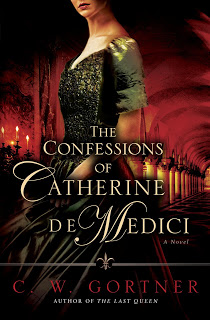
Welcome to the First Annual Historical Holiday Blog Hop hosted by Passages to the Past! I have a new, hardback copy of C.W. Gortner's THE CONFESSIONS OF CATHERINE DE MEDICI to offer one lucky winner here at Writing the Renaissance. I reviewed THE CONFESSIONS back when it was released in 2010 and can assure you it would make a fine gift for that lover of historical fiction on your list. Or keep it yourself and read it curled up in front of a crackling fire with a warm cup of cocoa!


To enter the random drawing, please leave a comment below with your email contact information. Entries will be accepted until 11:59 pm ET on December 17. Winner will be posted sometime December 18. Open to continental US entrants only.

But don't stop here! Dozens of other bloggers are participating in this hop, each hosting a giveaway at her site. Go the Passages to the Past for the complete list and get busy hopping!

While you're at it, be sure to leave a comment at Passages to the Past to enter the drawing for one of four grand prize packages. Your favorite historical fiction authors have donated books, many of them signed:

1. Oleanna by Julie Rose (pb)
2. The Secret Diary of Anne Boleyn by Robin Maxwell (pb)
3. Jane: The Woman Who Loved Tarzan by Robin Maxwell (Audio Books)
4. The King's Daughter by Barbara Kyle (pb)
5. The King's Concubine by Anne O'Brien (pb)
6. Royal Romances: Titillating Tales of Passion and Power in the Palaces of Europe by Leslie Carroll (pb)
7. The Darling Strumpet by Gillian Bagwell (pb)
8. The September Queen by Gillian Bagwell (pb)
9. The Kingmaking by Helen Hollick (pb) *w/signed bookplate
10. The Forever Queen by Helen Hollick (pb) *w/signed bookplate
11. Sea Witch by Helen Hollick (pb) *w/signed bookplate
12. Claude & Camille by Stephanie Cowell (pb)
13. Marrying Mozart by Stephanie Cowell (pb)
14. The Queen's Vow by Christopher Gortner (pb, UK edition)
15. Into the Path of Gods (Book 1, Macsen's Treasure Series) by Kathleen Cunningham Guler (pb)
16. In the Shadow of Dragons (Book 2, Macsen's Treasure Series) by Kathleen Cunningham Guler (pb)
17. The Anvil Stone (Book 3, Macsen's Treasure Series) by Kathleen Cunningham Guler (hc)
18. A Land Beyond Ravens (Book 4, Macsen's Treasure Series) by Kathleen Cunningham Guler (hc) 
19. Pale Rose of England by Sandra Worth (pb)
20. The Rose of York: Love & War by Sandra Worth (pb)
21. A Dance of Manners (A Regency Anthology) by Susan Flanders, Cynthia Breeding, Kristi Ahlers, Gerri Bowen and Erin Hatton (pb)
22. The Book of Lost Fragrances by MJ Rose (hc)
23. The Sumerton Women by D.L. Bogdan (pb)  
24.  Mistress of the Sun by Sandra Gulland (signed pb)
25.  The Master of Verona by David Blixt (hc)
26. Before Versailles by Karleen Koen (pb)
27. Four Sisters, All Queens by Sherry Jones (pb)
28. At the Mercy of the Queen by Anne Barnhill (pb)
29. What You Long For by Anne Barnhill (pb)
30. Cascade by Maryanne O'Hara (signed hc)
31. The Lady's Slipper by Deborah Swift (pb, UK edition)
32. The Plum Tree by Ellen Marie Wiseman (signed pb)
33. The Secret Keeper by Sandra Byrd (pb, with Tower of London Tea Sachets) 
34. The Mischief of the Mistletoe (2 copies - 1 pb, 1 hc - both signed)
35. The Sister Queens by Sophie Perinot
36. The Secret History: A Novel of Empress Theodora by Stephanie Thornton (pb w/bookmark)
37. The King's Grace by Anne Easter Smith (pb)
38. Illuminations by Mary Sharratt (hc)
39. Selene of Alexandria by Faith L. Justice (2 copies - 1 pb, 1 eBook)
40. A Thing Done by Tinney Sue Heath (2 copies, pb)
41. Rebel Puritan by Jo Ann Butler (pb)
42. The Bird Sisters by Rebecca Rasmussen (audio cd's)
43. By Fire, By Water by Mitchell James Kaplan (2 copies, pb)
44. The Painted Girls by Cathy Marie Buchanan (ARC, courtesy of Penguin Publishing)
45. Above All Things by Tanis Rideout (ARC, courtesy of Penguin Publishing)
46. The Fever Tree by Jennifer McVeigh (ARC, courtesy of Penguin Publishing)
47. Movement of Stars by Amy Brill (ARC, courtesy of Penguin Publishing)
48. Teaspoon of Earth and Sea by Dina Nayeri (ARC, courtesy of Penguin Publishing)
49. The Queen's Daughter by Susan Coventry (hc)
50. The Virgin Queen's Daughter by Ella March Chase (pb)
51. Three Maids for a Crown by Ella March Chase (pb) 
52. Mistress of Rome by Kate Quinn (pb) 
53. The Forgotten Queen by D.L. Bogdan (ARC)
54. The Sign of the Weeping Virgin by Alana White
55. A Place Beyond Courage by Elizabeth Chadwick (pb)
56. The Crown by Nancy Bilyeau (signed pb)

57. Second Lisa by Veronica Knox 

Complete contest rules are available at Passages to the Past. Many thanks to the amazing Amy Bruno for organizing the hop.

Thanks for visiting Writing the Renaissance. I hope you'll stay and look around a bit now, or come back soon for a longer visit. Happy reading!

Fête des Lumières Videos


Here are links to videos of the 2012 Fête des lumières in Lyon. The video of the Saint Jean cathedral is a must-see. Be sure to watch it full screen!


Videos courtesy of LYFtv.com.

Friday, December 7, 2012

Review: SPIRIT OF LOST ANGELS by Liza Perrat

As villagers drag a frantic mother to the river to "float" her for witchcraft, she yanks her talisman, a carved bone angel pendant, from her neck and presses it into her daughter's hand. "Wear it always," she tells Victoire. "It will give you strength, and courage."

Victoire Charpentier, heroine of Liza Perrat's debut novel SPIRIT OF LOST ANGELS (Triskele Books 2012), has need of both, and in great quantities. Set during the height of the French Revolution, Victoire's story is one of survival: of poverty, of loss, of depression, imprisonment, and political upheaval. It is the story of a woman who, plagued by melancholy and accused of a crime she cannot remember, escapes from a hellish prison with a new identity and a renewed purpose: to wreak revenge on the nobles that stole her father and her virginity, forced her to abandon her child, and changed the very fabric of her life. It is ultimately a story of vindication, of healing and of new beginnings, a testimony to the ties of blood and the power of words.

SPIRIT's plot moves at a pace that at times leaves the reader breathless. So many misfortunes befall Victoire that one wonders how a woman prone to melancholy could possibly withstand them. Yet weather them she does, with a resourcefulness that never seems forced. Perrat brings an inventive freshness to Victoire's plight and ultimate redemption. A prison friendship with Jeanne de Valois, the notorious con woman behind the infamous Affair of the Necklace that brought down Marie Antoinette, sets Victoire on a new path in life, providing her the resources to live as a single woman in Paris and an entry into the world of the theater and the salon. A literate and skilled storyteller, Victoire writes plays that further the ideals of the Revolution, satires that expose the cruelty and shallowness of the nobility; she translates the feminist tracts of Mary Wollstonecraft Shelley and pens similar pleas of her own. Words become the weapons of her revenge; she uses them both to lay her ghosts to rest and to open the path to a better future for women of the lower stations.

But in the end, it is her roots that Victoire returns, to her village in the Lyonnais, to the family that remains and the inn waiting to be reopened. To the questions that linger, the events she can't remember, the witness who, at long last, eases her guilt. To the future, born of a painful past without which it never would have taken flight. True to her name, Victoire triumphs over adversity, passing on the legacy of strength and courage she received from her mother.

SPIRIT OF LOST ANGELS is itself a triumph for the author, a vivid and evocative first novel that convincingly recreates the tumultuous world of eighteenth century France. Strong writing, unexpected plot twists and a heroine who never surrenders to the seductive tug of oblivion kept this reader turning pages until the story's satisfying end.

***********

Liza grew up in Wollongong, Australia, where she worked as a general nurse and midwife for fifteen years. When she met her French husband on a Bangkok bus, she moved to France, where she has been living for twenty years. She works part-time as a French-English medical translator.

Since she completed a creative writing course ten years ago, several of her short stories have won awards, notably the Writers Bureau annual competition of 2004 and her stories have been published widely in anthologies and small press magazines. Her articles on French culture and tradition have been published in international magazines such as France Magazine and France Today.

She has completed four novels and one short-story collection, and is represented by Judith Murdoch of the Judith Murdoch Literary Agency.

SPIRIT OF LOST ANGELS, published  in May 2012 under the Triskele Books label, is the first in a historical series set against a backdrop of rural France. Her agent is currently trying to sell the second in the series, WOLFSANGEL, and Liza is working on the third story, ANGEL OF ROSES, set in the 14th century plague years of France.

For more information on Liza or her books, please refer to her website or blog.

Liza provided a guest post, published earlier this week, on Lyon's Fête des Lumières.


Monday, December 3, 2012

Lyon's Fête des Lumières: The Black Death Illuminated, by Liza Perrat

Lyon, France is a city dear to my heart, the setting of my first novel. Each December, Lyon stages a spectacular Festival of Lights that draws visitors from all over France and Europe. This year, the festival runs from December 6th-9th. Here to tell us about the festival and its history is historical fiction author Liza Perrat, who lives in a small town on the outskirts of Lyon and whose novel, SPIRIT OF LOST ANGELSI will be reviewing at the end of the week.


The Black Death Illuminated

by Liza Perrat

"Protect us from famine, war and plague, Seigneur," cried the Lyonnaise people in 1628. Alas, their pleas came too late--the bubonic plague had already crossed the Rhône River, terrifying the inhabitants and killing half of them.

The desperate people prayed to the Virgin Mary to return good health to the city until miraculously, in 1643, the plague disappeared and the Lyonnaise people never doubted their divine protection. So, how did this episode of divine intervention become the largest modern-day international light festival?


Well, it all began on December 8, 1852, with the inauguration of a statue of the Virgin Mary, erected on Fourvière hill next to the site of the present-day Basilica. The Lyonnaise people showed their gratitude to Mary by lighting candles on their windowsills, the gesture proving more and more popular as the years passed.

Over a century later, in the 1980s, in conjunction with the advent of the lighting plan, the city of Lyon decided to transform the December 8 festival into the Fête des Lumières (light festival). On the eve of the winter solstice, in a magnificent urban ritual, the city's public places would be illuminated in a different way each year.

Residents, associations, cultural groups, humanitarian associations and the local government work with artists, musical and theatrical performers, photographers and lighting engineers to provide the colored symphony of light that bathes the city in today's celebration of light.

The festival, which attracts over four million visitors to Lyon, includes other light-based activities and lasts four days, with the main events occurring on the 8th. The focal points are generally the Fourvière Basilica, Saint Jean Cathedral, and the Place des Terreaux, where music, dancing, parades and food stalls transform the old district of Lyon into a place flooded with light, beauty and sound.

photo credit: mondoramas

I began attending the festival back in 2002. Crossing the Saône River, my first glimpse of the illuminations was the Fourvière Basilica, overlooking the city on Fourvière hill. Symbolic of the people's devotion to the Virgin Mary, the basilica was constructed between 1872 and 1884. Its oriental and neo-classic columns and columned porticos, blended with mediaeval-style machicolated towers, were lit in spectacularly fluorescent shades of green, blue and violet.

On Place des Terreaux, the ancient stones faded beneath a cinematic screen of stars and moons. Colored lights and shapes danced on the stages of renaissance architecture, and, as a bloodied revolutionary soldier crept across the starry sky, I lost all sense of dimension.

"December 8 has always been a show of thousands of people strolling together on a winter night in a city transformed simply by their presence," said one of the artistic directors. "This moving public is at the heart of the festival, just as it is at the heart of urbanity, each person being a vector of light within the nocturnal landscape."

Since its origin in the nineteenth century, December 8 has taken on an undeniably futuristic allure. But despite the magnificent illuminations, it seems that for the Lyonnaise people, the soul of the light festival remains within the beauty of thousands of tiny candle flames burning in unison along their windowsills. As people come from all over the world to share the rejoicing and emotion of these four breathtaking nights, the Lyonnaise people, lovers of tradition, continue, to pay homage to the Virgin Mary for banishing the Black Death from their midst.

For more information and stunning photos, please refer to the festival's official website.

**********

Liza grew up in Wollongong, Australia, where she worked as a general nurse and midwife for fifteen years. When she met her French husband on a Bangkok bus, she moved to France, where she has been living for twenty years. She works part-time as a French-English medical translator.

Since she completed a creative writing course ten years ago, several of her short stories have won awards, notably the Writers Bureau annual competition of 2004 and her stories have been published widely in anthologies and small press magazines. Her articles on French culture and tradition have been published in international magazines such as France Magazine and France Today.

She has completed four novels and one short-story collection, and is represented by Judith Murdoch of the Judith Murdoch Literary Agency.

SPIRIT OF LOST ANGELS, published  in May 2012 under the Triskele Books label, is the first in a historical series set against a backdrop of rural France. Her agent is currently trying to sell the second in the series, WOLFSANGEL, and Liza is working on the third story, ANGEL OF ROSES, set in the 14th century plague years of France.

For more information on Liza or her books, please refer to her website or blog.


Friday, November 30, 2012

Review: Michelle Moran, THE SECOND EMPRESS

First she wrote three novels about ancient Egypt. Then she set a novel in revolutionary France. For her fifth novel, bestselling author Michelle Moran combines elements of both milieux to create a lavish tale of love, duty and alterity: THE SECOND EMPRESS, A Novel of Napoleon's Court (Crown 2012).

In 1809, Napoleon is at the height of his power but desperate for an heir. He divorces his beloved wife Josephine and demands the hand of young Maria Luisa of Austria, scion of the Hapsburg line that has ruled for centuries. The princess has little choice: if she refuses to wed Napoleon, she will subject her homeland to another bloody campaign and further humiliations. Torn from her family and the man she loves, Maria travels to France to bind herself in a marriage that the Pope refuses to recognize. At Napoleon's court, she lives as a stranger, detested by the Emperor's family, subjected to his cruel tongue and savage caprices, and regarded with suspicion by a populace who beheaded her great-aunt, Marie-Antoinette, little more than a decade before. Grit, pride, and love for the son she bears sustain her and earn her Napoleon's grudging respect. Departing on his ill-fated conquest of Russia, the Emperor appoints her regent; as the French army falters and Austria threatens certain defeat, Marie-Louise must determine where her true duty lies.

Moran sets Marie-Louise at the center of a triptych, flanked on one side by Napoleon's beautiful sister Pauline, and on the other by Pauline's Haitian chamberlain, Paul Moreau. Pauline is as corrupt as Marie-Louise is virtuous, as weak as she is strong. Luscious and alluring as an over-ripe fruit, Pauline is  rotten at the core, riddled by venereal disease and unhealthy desire for her brother. Obsessed with Egyptian history and art, she yearns to marry Napoleon and rule with him as brother-sister couples did along the Nile. Jealousy towards Marie-Louise consumes her, especially once the second empress becomes pregnant with Napoleon's child. Pauline's willful selfishness leads to the death of one lover and makes life an exquisite torture for devoted and dependable Paul, who has adored her--or at least his dream of her--since the two met as young adults in Haiti.

A man of mixed race, Paul finds himself caught between the white and black cultures of Haiti and flees with Pauline during the slave revolt, traveling with her to France as her chamberlain. An educated idealist who earns Napoleon's trust, Paul debates political philosophy with the Emperor, but can never convince him to abolish slavery on the island colony. Paul's "otherness," his limbo-like existence between two worlds, two Paulines (the ingenue of the Haitian idyll and the depraved European courtesan), allows him to forge a link of sympathy with Marie-Louise. Just as the Empress must decide which of her duties to follow, Paul must choose which of his lives to embrace. But whereas Marie-Louise's decision leads her back to family and the love she left behind, Paul finds himself alone, a new man in a strange land, free to forge his way in a place that, paradoxically, has become more of a home for all its changing.

The themes of duty, love and otherness that link Marie-Louise, Pauline and Paul crystallize in the person of Napoleon. A perpetual outsider, a Corsican outcast, Napoleon imposes his will not only on France but the whole of Europe. Duty forces him to abandon Josephine, yet his unquenchable love for her distorts all his other relationships. A volatile, controlling, often despicable tyrant, Moran's Napoleon nevertheless evokes a measure of sympathy. Ever defensive and uncomfortable in his own skin, always seeking but never finding balance, he lashes out at the very people who might heal him, and like them, continues to chase dreams that remain forever out of reach.

Moran's strong characterizations and nuanced themes overcome some confusing politics and uneven pacing towards the end of the novel. Fans of her books will savor this latest offering, while new readers will be happy to learn that she has four other novels for them to read.

Friday, November 16, 2012

Sixteenth Century Quote of the Week


"God Almighty first planted a garden; and indeed it is the purest of human pleasures."

Francis Bacon (1561-1626)
English philosopher, statesman, and scientist
"On Gardens" in The Essays or Counsels, Civil and Moral, by Francis ld. Verulam Viscount St. Albans (1625)

Friday, November 9, 2012

Sixteenth Century Quote of the Week


"Whereas before, sugar was only available in the shops of apothecaries, who kept it exclusively for invalids, today people devour it out of gluttony [...] What used to be a medicine is nowadays eaten as food."

Abraham Ortelius (1527-1598)
Flemish cartographer and geographer
Theatrum Orbis Terrarum (1572)

Wednesday, November 7, 2012

CLAWS OF THE CAT Cover Reveal Tour

Ready for a mystery? Here's the clue:


Did you guess tea? Tea is the second clue in the cover reveal tour for CLAWS OF THE CAT, Susan Spann's debut Shinobi Mystery novel, coming from St. Martin's/Minotaur Books on July 16, 2013. A teahouse features prominently in this novel, set in sixteenth century Kyoto, Japan:

When a samurai is brutally murdered in a Kyoto teahouse, master ninja Hiro Hattori has just three days to find the killer before the dea man's vengeful son kills both the beautiful geisha accused of the crime and Father Mateo, the Jesuit priest that Hiro has pledged his own life to protect. The investigation plunges Hiro and Father Mateo into the dangerous waters of Kyoto's floating world, where they quickly learn that everyone from an elusive teahouse owner to the dead man's dishonored brother has a motive to keep the samurai's death a mystery.

Susan tells me tea came to Japan from China during the eighth century, but initially the beverage was a luxury item consumed mostly by priests and nobles. A monk named Eisai, who founded the Zen school of Buddhism, returned from a trip to China during the twelfth century with another tea-related custom: making tea from powdered leaves rather than steeping the tea leaf whole, which gives the tea a rich green color and stronger flavor. The introduction of powdered tea led to the development of the now-famous Japanese tea ceremony, which involves the ritualistic preparation and consumption of powdered matcha tea.

During the Muromachi period (1533-1573), tea's popularity increased substantially. People of all social classes enjoyed the beverage, and the wealthy often gathered for "tea drinking parties" where they passed cups of tea around the room and tried to guess the name, type and location of each variety sampled. Teahouses rose in popularity, and one of the geisha's many talents was proper preparation of tea for her male patrons.

Fascinating facts all woven into the rich setting and enthralling plot of CLAWS OF THE CAT!

Susan is revealing the cover of CLAWS OF THE CAT over three days. The first bit appeared yesterday at Tammy Salyer's blog; the third piece will appear tomorrow on Heather Webb's. On Friday, Susan is hosting a contest on her own blog: leave a comment on the cover reveal and contest post between the time it appears on Friday morning and midnight Friday night for a chance to win a $20 Barnes & Noble gift card!

Now off to brew a nice cup of tea...

CLAWS OF THE CAT is available for pre-order at Barnes & NobleAmazon.com,  Powell's Books  and booksellers near you.

Sunday, November 4, 2012

A Spoonful of Sugar

When you inspected your child's bag of Halloween sweets, did you find any comfits? Marzipan? Torrone? What about a pennet or some candied lemon rind?

Such were the treats your child might have received on All Soul's Day in Renaissance times.

During the sixteenth century, the sugar industry boomed.  Portuguese and Spanish entrepreneurs planted cane fields and built state-of-the-art refineries in the Caribbean and South America. Sugar flooded onto the European market at a stable price. Though still a luxury item, sugar's ready availability allowed creative cooks to develop it into new and novel treats. Some of the more common ones were:

  • comfits: seeds, spices and nuts coated in sugar. Best-selling varieties included combinations of aniseed, coriander, cinnamon, pine-nuts, pistachios, and hazelnuts. Comfits were manufactured by placing the nuts and spices in a pan and repeatedly coating them with sugar syrup. Each layer had to dry before the next layer was applied; sometimes the comfits were hardened in a stove between coatings.
  • marzipan (or marchpane): a malleable candy dough made from almond paste, confectioner's sugar and rosewater. Marzipan could be sculpted, painted, and trimmed with gold leaf. Nuns often created and sold marzipan fruits and vegetables to support their convents. As a teen, Leonardo da Vinci sculpted figures from marzipan and presented them to the Prince of Milan, whose guests gobbled them up with little appreciation for their artistry. Da Vinci also made marzipan models of cities and military fortifications for Lorenzo de Medici.
  • torrone: a nougat candy made from egg white, honey, sugar and nuts. Layered torrone, challenging and time-consuming to create, became a delicacy of Italian courts.
  • pennets: twisted sticks of pulled sugar mixed with starch and sweet almond oil.
  • candied fruit peel: the chopped rind of citrus fruit preserved in sugar.

In accord with classical teaching, Renaissance healers considered sugar to have medicinal value--it tempered the powerful and often harmful strength of spices and brought them into fuller humoral balance within the body. Most medicines contained sugar, and, being a medicine itself, sugar was sold in various forms and grades at apothecary shops. Apothecaries sold sweet treats as well as plain sugar. Specific treats were prescribed for various ailments: patients with sore throats could suck on chips of damascene sugar, while those with upset stomachs might find relief by eating pennets. To regain their strength after childbirth, women benefited immensely from a healthy intake of marzipan and comfits.

Too bad the reputation of sugar has plummeted in eyes of today's medical community. Imagine feeding your child--or yourself--candy bars and gummy bears without a twinge of guilt!

Now go sneak that Hershey's Kiss from your child's goodie bag. I promise I won't tell!

***********

Sources:
Encyclopedia of Kitchen History by Mary Snodgrass (Routledge 2004)
Making and Marketing Medicine in Renaissance Florence by James               Shaw and Evelyn S. Welch (Rodopi 2011)
Sweets: A History of Candy by Tim Richardson (Bloomsbury 2002)

***********

Read other posts on the topic of "Candy" by members of my writing group:  Marci Jefferson and Susan Spann.

Friday, November 2, 2012

Sixteenth Century Quote of the Week


photo: Janezdrilc
"I believe no happiness can be found worthy to be compared with that of a soul in Purgatory except that of the saints in Paradise; and day by day this happiness grows as God flows into these souls, more and more as the hindrance to His entrance is consumed."

Catherine of Genoa (1447-1510)
Catholic saint, mystic and nurse

Treatise on Purgatory (1551)
Chapter II

Tuesday, October 30, 2012

Daily Life at Fontainebleau


The French newspaper La Croix recently ran a story about daily life at Fontainebleau--daily life in the twenty-first century. The paper interviewed security guards, cleaning services, gardeners, cashiers, as well as administrators in order to better understand what is involved in maintaining this historical treasure and keeping it accessible to the 450,000 people who visit each year. Here are some interesting facts from the article, which is in French:

  • The palace contains 1500 rooms; the grounds cover about 300 acres.
  • Security's biggest fear is fire, which would directly menace eight hundred years' worth of tapestries, furniture, wood carvings and art objects
  • Boars in the park and bats in the eaves often set off security alarms.
  • The public rooms are dusted for 45 minutes daily before opening.
  • It takes the palace horlogier (clock specialist) two hours to wind the forty working clocks in the various salons each day.
  • The cashiers claim the politest visitors are the Japanese; the rudest, the French.
  • The palace welcomes 45,000 students, from grade school through high school, each year. There is a specific tour for each level, supported by an Internet site to prepare the students and teachers for the visit.
  • The French court spent time at the château de Fontainebleau continuously up until 1870. The palace's collections include 40,000 pieces (textiles, furniture, objects from everyday life).
  • Fourteen gardeners take care of the gardens and park.
  • A fontainier (fountain specialist) oversees the water system. A canal, various basins, and seven fountains are fed by two aqueducts and a water-tower. Most of the water system was constructed by François I and relies on nineteen regional streams.
  • The grand canal is drained every forty years, revealing various discarded objects. Three years ago, an elderly couple committed suicide by drowning themselves in it.
  • The jeu de paume (tennis court) was constructed in 1601 by Henri IV and is one of only three operational jeu de paume courts in France. About sixty players use the court to play the original game.
The article includes a slide show of the grounds and people at work there.